Daily Sabah logo

Politics
Diplomacy Legislation War On Terror EU Affairs Elections News Analysis
TÜRKİYE
Istanbul Education Investigations Minorities Expat Corner Diaspora
World
Mid-East Europe Americas Asia Pacific Africa Syrian Crisis Islamophobia
Business
Automotive Economy Energy Finance Tourism Tech Defense Transportation News Analysis
Lifestyle
Health Environment Travel Food Fashion Science Religion History Feature Expat Corner
Arts
Cinema Music Events Portrait Reviews Performing Arts
Sports
Football Basketball Motorsports Tennis
Opinion
Columns Op-Ed Reader's Corner Editorial
PHOTO GALLERY
JOBS ABOUT US RSS PRIVACY CONTACT US
© Turkuvaz Haberleşme ve Yayıncılık 2026

Daily Sabah - Latest & Breaking News from Turkey | Istanbul

  • Politics
    • Diplomacy
    • Legislation
    • War On Terror
    • EU Affairs
    • Elections
    • News Analysis
  • TÜRKİYE
    • Istanbul
    • Education
    • Investigations
    • Minorities
    • Expat Corner
    • Diaspora
  • World
    • Mid-East
    • Europe
    • Americas
    • Asia Pacific
    • Africa
    • Syrian Crisis
    • Islamophobia
  • Business
    • Automotive
    • Economy
    • Energy
    • Finance
    • Tourism
    • Tech
    • Defense
    • Transportation
    • News Analysis
  • Lifestyle
    • Health
    • Environment
    • Travel
    • Food
    • Fashion
    • Science
    • Religion
    • History
    • Feature
    • Expat Corner
  • Arts
    • Cinema
    • Music
    • Events
    • Portrait
    • Reviews
    • Performing Arts
  • Sports
    • Football
    • Basketball
    • Motorsports
    • Tennis
  • Gallery
  • Opinion
    • Columns
    • Op-Ed
    • Reader's Corner
    • Editorial
  • TV

30 million yr-old amber-entombled flower may have been toxic

by

WASHINGTON Feb 15, 2016 - 12:00 am GMT+3
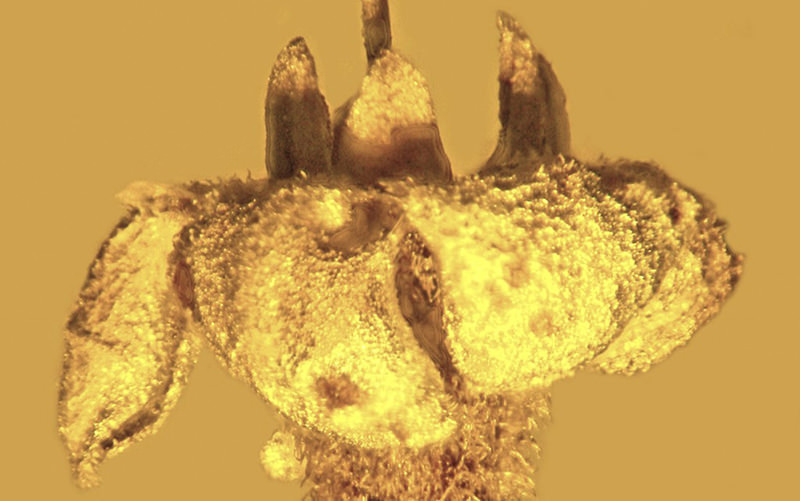
The flower, Strychnos electri, encased in amber, is shown in this handout photo provided by George Poinar of Oregon State University February 15, 2016 (Reuters Photo)
by Feb 15, 2016 12:00 am
Do not let its beauty fool you. A newly identified and exquisitely preserved flower found entombed in amber - fossilized tree sap - may have packed quite a punch.

Scientists announced on Monday the discovery of the flower that lived 20 million to 30 million years ago, named Strychnos electri, inside amber dug out of the side of a mountain in the Dominican Republic.


It was a member of a group of flowers that are today the source of the poisons strychnine and curare. According to the researchers, it also likely boasted toxic compounds.

The scientists found two examples of the small tubular-shaped flower, measuring roughly four-tenths of an inch (10 mm), in the tan-colored amber, and were amazed at the remarkable state of preservation, among the best of any fossil flower.

"These amber pieces are like time capsules, a frozen moment of life that we can now relive and study," Rutgers University botanist Lena Struwe said. "The flower is incredibly well-preserved, not distorted, not compressed, not fragmented into pieces, but looks like it just fell off its branch and dropped into sticky resin."

The flowers lived in a tropical, humid forest alongside a variety of trees, shrubs, grasses and climbing vines, said Oregon State University entomologist and amber expert George Poinar.


"Fossil flowers are rare under any circumstances," Poinar said. "And those in amber provide the only evidence of (ancient) tropical flowers, since the rapid decay of such delicate objects under conditions of high heat and humidity prevents their preservation in sedimentary deposits," the type of rock in which fossils are found.

Amber represents a rich source of entombed fossils dating back as far as 130 million years, including mosquitoes and sand flies, spiders, millipedes, ticks, frogs, lizards and salamanders. In the book "Jurassic Park" and the movies it inspired, it was blood taken from the guts of mosquitoes that provided the DNA needed to create dinosaurs.

Strychnos electri is part of one of the three largest evolutionary lineages of flowering plants, known as the asterids, which also includes the sunflower, potato, coffee and mint families.

"That this piece of amber has survived this intact for so many millions of years and then was found and ended up in our hands to be used for research is serendipitous and fantastic," Struwe said.

The research was published in the journal Nature Plants.
About the author
Research Associate at Center for Islam and Global Affairs (CIGA) at Istanbul Sabahattin Zaim University
  • shortlink copied
  • Last Update: Feb 15, 2016 10:27 pm
    KEYWORDS
    life
    The Daily Sabah Newsletter
    Keep up to date with what’s happening in Turkey, it’s region and the world.
    You can unsubscribe at any time. By signing up you are agreeing to our Terms of Use and Privacy Policy. This site is protected by reCAPTCHA and the Google Privacy Policy and Terms of Service apply.

    No Image
    Istanbul stands behind Gaza in massive New Year's protest rally
    PHOTOGALLERY
    • POLITICS
    • Diplomacy
    • Legislation
    • War On Terror
    • EU Affairs
    • News Analysis
    • TÜRKİYE
    • Istanbul
    • Education
    • Investigations
    • Minorities
    • Diaspora
    • World
    • Mid-East
    • Europe
    • Americas
    • Asia Pacific
    • Africa
    • Syrian Crisis
    • İslamophobia
    • Business
    • Automotive
    • Economy
    • Energy
    • Finance
    • Tourism
    • Tech
    • Defense
    • Transportation
    • News Analysis
    • Lifestyle
    • Health
    • Environment
    • Travel
    • Food
    • Fashion
    • Science
    • Religion
    • History
    • Feature
    • Expat Corner
    • Arts
    • Cinema
    • Music
    • Events
    • Portrait
    • Performing Arts
    • Reviews
    • Sports
    • Football
    • Basketball
    • Motorsports
    • Tennis
    • Opinion
    • Columns
    • Op-Ed
    • Reader's Corner
    • Editorial
    • Photo gallery
    • DS TV
    • Jobs
    • privacy
    • about us
    • contact us
    • RSS
    © Turkuvaz Haberleşme ve Yayıncılık 2021