Daily Sabah logo

Politics
Diplomacy Legislation War On Terror EU Affairs Elections News Analysis
TÜRKİYE
Istanbul Education Investigations Minorities Expat Corner Diaspora
World
Mid-East Europe Americas Asia Pacific Africa Syrian Crisis Islamophobia
Business
Automotive Economy Energy Finance Tourism Tech Defense Transportation News Analysis
Lifestyle
Health Environment Travel Food Fashion Science Religion History Feature Expat Corner
Arts
Cinema Music Events Portrait Reviews Performing Arts
Sports
Football Basketball Motorsports Tennis
Opinion
Columns Op-Ed Reader's Corner Editorial
PHOTO GALLERY
JOBS ABOUT US RSS PRIVACY CONTACT US
© Turkuvaz Haberleşme ve Yayıncılık 2025

Daily Sabah - Latest & Breaking News from Turkey | Istanbul

  • Politics
    • Diplomacy
    • Legislation
    • War On Terror
    • EU Affairs
    • Elections
    • News Analysis
  • TÜRKİYE
    • Istanbul
    • Education
    • Investigations
    • Minorities
    • Expat Corner
    • Diaspora
  • World
    • Mid-East
    • Europe
    • Americas
    • Asia Pacific
    • Africa
    • Syrian Crisis
    • Islamophobia
  • Business
    • Automotive
    • Economy
    • Energy
    • Finance
    • Tourism
    • Tech
    • Defense
    • Transportation
    • News Analysis
  • Lifestyle
    • Health
    • Environment
    • Travel
    • Food
    • Fashion
    • Science
    • Religion
    • History
    • Feature
    • Expat Corner
  • Arts
    • Cinema
    • Music
    • Events
    • Portrait
    • Reviews
    • Performing Arts
  • Sports
    • Football
    • Basketball
    • Motorsports
    • Tennis
  • Gallery
  • Opinion
    • Columns
    • Op-Ed
    • Reader's Corner
    • Editorial
  • TV

Human bones were engraved as part of cannibalistic rituals in the Stone Age, scientists say

by

LONDON Aug 09, 2017 - 12:00 am GMT+3
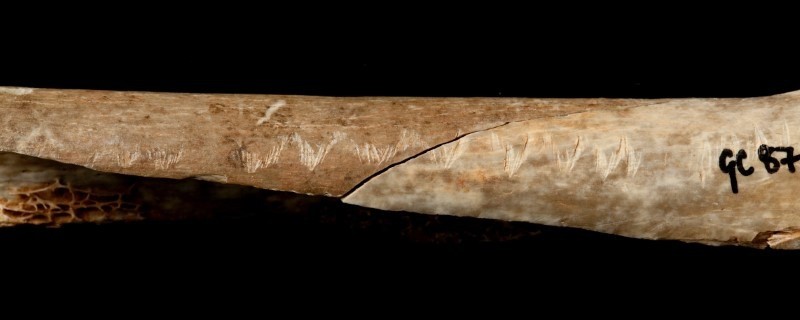
An Upper Palaeolithic engraved human bone associated with ritualistic cannibalism can be seen in this undated photo recieved from the Natural History Museum in London, August 9, 2017. (REUTERS Photo)
by Aug 09, 2017 12:00 am

Engravings on a human bone from a prehistoric archaeological site in a cave in southern England shows that human cannibals ate their prey and then performed ritualistic burials with the remains, scientists said on Wednesday.

The forearm bone appears to have been disarticulated, filleted, chewed, and then engraved with a zig-zag design before being broken to extract bone marrow, said scientists from Britain's Natural History Museum who conducted the analysis.

The finding, published in the journal PLOS ONE, adds to previous studies of bones from the site, called Gough's Cave, thought to be from Britain's Palaeolithic period - the early Stone Age.

Those studies confirmed human cannibalistic behavior and showed some remains had been kept and modified, making human skulls into bowls, or "skull cups".

The zig-zag cuts are undoubtedly engraving marks, the scientists said, and had no utilitarian purpose but were purely artistic or symbolic.
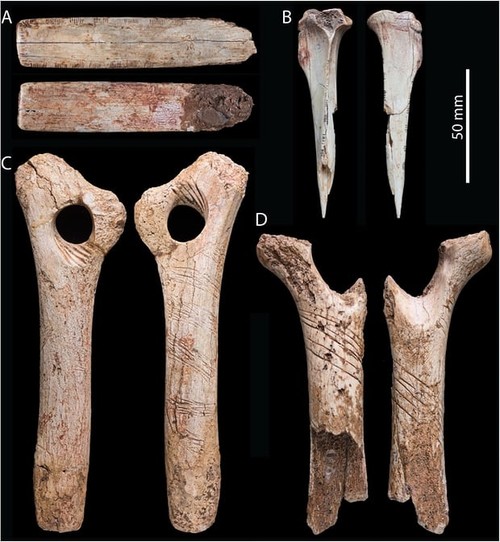
The researchers suggest the engravings may have been part of an elaborate post-death ritual. (Photo courtesy of Bello et al (2017)).Silvia Bello, a Natural History Museum who worked on the study with colleagues from University College London, said the engraved motif was similar to engravings found in other European archaeological sites.

"However, what is exceptional in this case is the choice of raw material - human bone - and the cannibalistic context in which it was produced," she said.

"The engraving was a purposeful component of the cannibalistic practice, rich in symbolic connotations."

Discovered in the 1880's, Gough's Cave in Somerset, southern England, was excavated over several decades ending in 1992.

Archaeological investigations there revealed intensively processed human bones intermingled with butchered remains of large mammals and a range of flint, bone, antler and ivory artefacts.


About the author
Research Associate at Center for Islam and Global Affairs (CIGA) at Istanbul Sabahattin Zaim University
  • shortlink copied
  • Last Update: Aug 09, 2017 10:01 pm
    KEYWORDS
    life
    The Daily Sabah Newsletter
    Keep up to date with what’s happening in Turkey, it’s region and the world.
    You can unsubscribe at any time. By signing up you are agreeing to our Terms of Use and Privacy Policy. This site is protected by reCAPTCHA and the Google Privacy Policy and Terms of Service apply.
    No Image
    In photos: Business owners protest against COVID-19 restrictions in Italy
    PHOTOGALLERY
    • POLITICS
    • Diplomacy
    • Legislation
    • War On Terror
    • EU Affairs
    • News Analysis
    • TÜRKİYE
    • Istanbul
    • Education
    • Investigations
    • Minorities
    • Diaspora
    • World
    • Mid-East
    • Europe
    • Americas
    • Asia Pacific
    • Africa
    • Syrian Crisis
    • İslamophobia
    • Business
    • Automotive
    • Economy
    • Energy
    • Finance
    • Tourism
    • Tech
    • Defense
    • Transportation
    • News Analysis
    • Lifestyle
    • Health
    • Environment
    • Travel
    • Food
    • Fashion
    • Science
    • Religion
    • History
    • Feature
    • Expat Corner
    • Arts
    • Cinema
    • Music
    • Events
    • Portrait
    • Performing Arts
    • Reviews
    • Sports
    • Football
    • Basketball
    • Motorsports
    • Tennis
    • Opinion
    • Columns
    • Op-Ed
    • Reader's Corner
    • Editorial
    • Photo gallery
    • DS TV
    • Jobs
    • privacy
    • about us
    • contact us
    • RSS
    © Turkuvaz Haberleşme ve Yayıncılık 2021