Daily Sabah logo

Politics
Diplomacy Legislation War On Terror EU Affairs Elections News Analysis
TÜRKİYE
Istanbul Education Investigations Minorities Expat Corner Diaspora
World
Mid-East Europe Americas Asia Pacific Africa Syrian Crisis Islamophobia
Business
Automotive Economy Energy Finance Tourism Tech Defense Transportation News Analysis
Lifestyle
Health Environment Travel Food Fashion Science Religion History Feature Expat Corner
Arts
Cinema Music Events Portrait Reviews Performing Arts
Sports
Football Basketball Motorsports Tennis
Opinion
Columns Op-Ed Reader's Corner Editorial
PHOTO GALLERY
JOBS ABOUT US RSS PRIVACY CONTACT US
© Turkuvaz Haberleşme ve Yayıncılık 2025

Daily Sabah - Latest & Breaking News from Turkey | Istanbul

  • Politics
    • Diplomacy
    • Legislation
    • War On Terror
    • EU Affairs
    • Elections
    • News Analysis
  • TÜRKİYE
    • Istanbul
    • Education
    • Investigations
    • Minorities
    • Expat Corner
    • Diaspora
  • World
    • Mid-East
    • Europe
    • Americas
    • Asia Pacific
    • Africa
    • Syrian Crisis
    • Islamophobia
  • Business
    • Automotive
    • Economy
    • Energy
    • Finance
    • Tourism
    • Tech
    • Defense
    • Transportation
    • News Analysis
  • Lifestyle
    • Health
    • Environment
    • Travel
    • Food
    • Fashion
    • Science
    • Religion
    • History
    • Feature
    • Expat Corner
  • Arts
    • Cinema
    • Music
    • Events
    • Portrait
    • Reviews
    • Performing Arts
  • Sports
    • Football
    • Basketball
    • Motorsports
    • Tennis
  • Gallery
  • Opinion
    • Columns
    • Op-Ed
    • Reader's Corner
    • Editorial
  • TV

Remains of 19th century Chinese workers discovered at ancient pyramid in Peru

by

LIMA Aug 25, 2017 - 12:00 am GMT+3
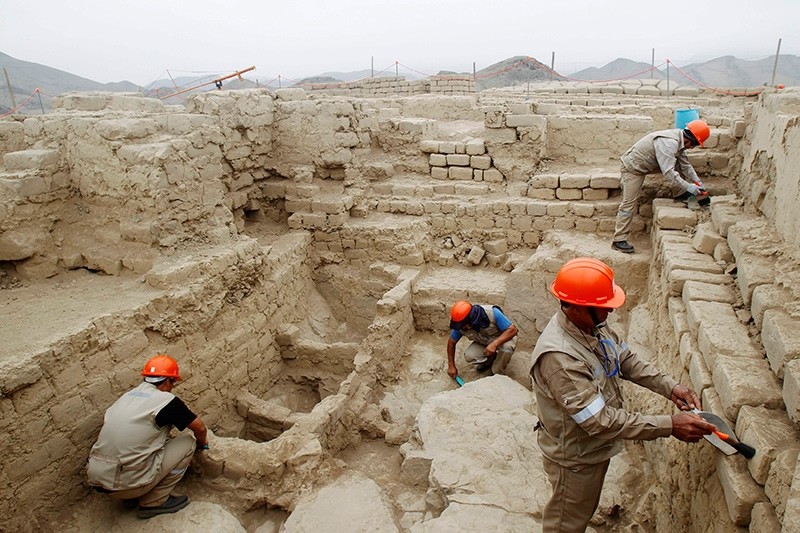
People work at the remains of a coastal pyramid site called El Castillo de Huarmey, 185 miles (299 km) north of Lima, June 27, 2013 (Reuters File Photo)
by Aug 25, 2017 12:00 am

Archaeologists exploring Peru's pre-Colombian past recently unearthed a glimpse of a less prominent chapter in the Andean country's history - the remains of 16 Chinese laborers who toiled in the country over 100 years ago.

The bodies, thought to be those of indentured workers brought to Peru to replace slave labor, were found buried at the top of an adobe pyramid first used by the ancient Ichma people, Roxana Gomez, the lead archaeologist of the site, said on Thursday.

Peru was one of the biggest destinations for Chinese labor in Latin America in the 19th century, a market that thrived after slavery was abolished in the country in 1854.

The Chinese found at the Bellavista pyramid in Lima were buried in the late 1800s and early 1900s and had likely picked cotton at a nearby plantation in "very difficult" conditions, said Gomez.

In a possible sign of how the Chinese gradually emerged from dire poverty in Peru, the first 11 bodies were shrouded in cloth and placed in the ground, while the last five wore blue-green jackets and were buried in wooden coffins, Gomez said.

"In one Chinese coffin, an opium pipe and a small ceramic vessel were included in the funerary ensemble," said Gomez.

Chinese laborers were generally not allowed to be buried at Lima's Catholic cemeteries, forcing them to improvise burial sites, according to Peru's Culture Ministry.

The remains of Chinese laborers were previously found in Lima at other adobe pyramids known as "huacas." Built by the indigenous societies that once ruled much of Peru's Pacific coast, huacas were used as administrative and religious centers where members of the elite were often buried with gold objects, ceramics or human sacrifices.

Gomez said the huacas had a sacred association that might have made them attractive places for burial by Chinese laborers.

The Bellavista huaca was occupied by Ichma starting in about 1000 A.D. and was later annexed by the Incan empire until the arrival of Spanish conquerors who deemed huacas blasphemous.

Italian immigrants later kept vineyards at the base of the site, Gomez added.

"The best way to understand our history is as a continuum of different cultures," said Gomez.

About the author
Research Associate at Center for Islam and Global Affairs (CIGA) at Istanbul Sabahattin Zaim University
  • shortlink copied
  • Last Update: Aug 25, 2017 11:23 am
    KEYWORDS
    life
    The Daily Sabah Newsletter
    Keep up to date with what’s happening in Turkey, it’s region and the world.
    You can unsubscribe at any time. By signing up you are agreeing to our Terms of Use and Privacy Policy. This site is protected by reCAPTCHA and the Google Privacy Policy and Terms of Service apply.
    No Image
    'Kawaii' Monster Cafe in Tokyo next victim of pandemic
    PHOTOGALLERY
    • POLITICS
    • Diplomacy
    • Legislation
    • War On Terror
    • EU Affairs
    • News Analysis
    • TÜRKİYE
    • Istanbul
    • Education
    • Investigations
    • Minorities
    • Diaspora
    • World
    • Mid-East
    • Europe
    • Americas
    • Asia Pacific
    • Africa
    • Syrian Crisis
    • İslamophobia
    • Business
    • Automotive
    • Economy
    • Energy
    • Finance
    • Tourism
    • Tech
    • Defense
    • Transportation
    • News Analysis
    • Lifestyle
    • Health
    • Environment
    • Travel
    • Food
    • Fashion
    • Science
    • Religion
    • History
    • Feature
    • Expat Corner
    • Arts
    • Cinema
    • Music
    • Events
    • Portrait
    • Performing Arts
    • Reviews
    • Sports
    • Football
    • Basketball
    • Motorsports
    • Tennis
    • Opinion
    • Columns
    • Op-Ed
    • Reader's Corner
    • Editorial
    • Photo gallery
    • DS TV
    • Jobs
    • privacy
    • about us
    • contact us
    • RSS
    © Turkuvaz Haberleşme ve Yayıncılık 2021