Daily Sabah logo

Politics
Diplomacy Legislation War On Terror EU Affairs Elections News Analysis
TÜRKİYE
Istanbul Education Investigations Minorities Expat Corner Diaspora
World
Mid-East Europe Americas Asia Pacific Africa Syrian Crisis Islamophobia
Business
Automotive Economy Energy Finance Tourism Tech Defense Transportation News Analysis
Lifestyle
Health Environment Travel Food Fashion Science Religion History Feature Expat Corner
Arts
Cinema Music Events Portrait Reviews Performing Arts
Sports
Football Basketball Motorsports Tennis
Opinion
Columns Op-Ed Reader's Corner Editorial
PHOTO GALLERY
JOBS ABOUT US RSS PRIVACY CONTACT US
© Turkuvaz Haberleşme ve Yayıncılık 2025

Daily Sabah - Latest & Breaking News from Turkey | Istanbul

  • Politics
    • Diplomacy
    • Legislation
    • War On Terror
    • EU Affairs
    • Elections
    • News Analysis
  • TÜRKİYE
    • Istanbul
    • Education
    • Investigations
    • Minorities
    • Expat Corner
    • Diaspora
  • World
    • Mid-East
    • Europe
    • Americas
    • Asia Pacific
    • Africa
    • Syrian Crisis
    • Islamophobia
  • Business
    • Automotive
    • Economy
    • Energy
    • Finance
    • Tourism
    • Tech
    • Defense
    • Transportation
    • News Analysis
  • Lifestyle
    • Health
    • Environment
    • Travel
    • Food
    • Fashion
    • Science
    • Religion
    • History
    • Feature
    • Expat Corner
  • Arts
    • Cinema
    • Music
    • Events
    • Portrait
    • Reviews
    • Performing Arts
  • Sports
    • Football
    • Basketball
    • Motorsports
    • Tennis
  • Gallery
  • Opinion
    • Columns
    • Op-Ed
    • Reader's Corner
    • Editorial
  • TV

Turkish archeologists identify earliest-known images of Turks in ancient Persia’s Persepolis

by Daily Sabah

ISTANBUL Apr 27, 2018 - 12:00 am GMT+3
 IHA Photo
| IHA Photo
by Daily Sabah Apr 27, 2018 12:00 am

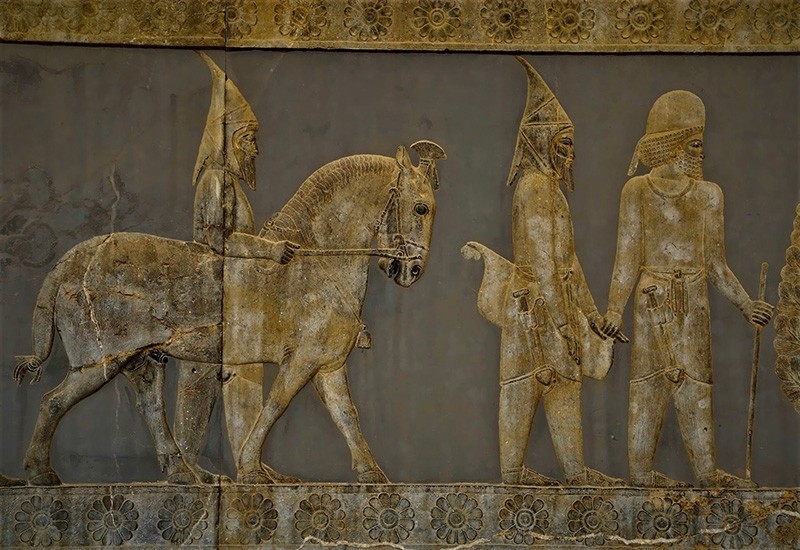
What could be the earliest-known images of Turks, engraved some 2,600 years ago, have been identified in the ancient Persian palace of Apadana in Persepolis, thanks to extensive research by Turkish archeologists from northern Turkey to east of the Caspian Sea.

Professor Şevket Dönmez of Istanbul University's Department of Archeology identified the images to likely be of early Turks, after over a decade of research on ancient Turkish settlements. Dönmez and his team excavated the ancient site of Oluz Höyük in northern Turkey's Amasya for 11 years, uncovering the tombs of prominent Turks who migrated to Anatolia in the 10th and 11th centuries. The team then intensified their exploration in the eastern regions of Azerbaijan and east of the Caspian Sea.

Based on their research, Dönmez concluded that some of the human figures depicted on the stone walls of Persepolis Apadana in modern-day Iran may be the first images of Turks.
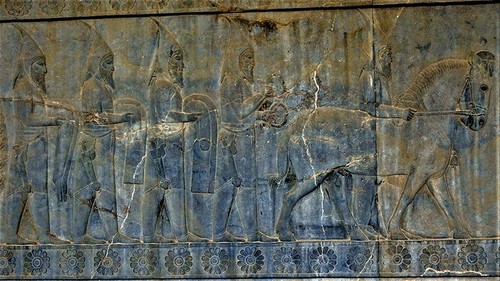
Images of Persians depict their eyes as almond-shaped, whereas other figures in the drawings have narrower eyes and rounder faces, typical of the historical Turkish type who lived in Central Asia.

"Because those facial and anthropological features do not belong to another race in that region, it forced us to relate them directly to the Turks," Dönmez said.

"The physical characteristics in depictions of Saka or Scythian representatives are very similar to the historical Turkish type. The figures with scant beards, slightly-rounded faces and curved eyes reflect the first Turkish type known in history."

Dönmez pointed out that controversies exist over the origin of the Saka, with some historians saying they were more Indo-European than Asian. "Their anthropological and physical appearances clearly show their connection with the Göktürks, Uighurs and Oghuzs after them. In this case, we can say that the first Turkish type known in history is found in Persepolis on a 2,600-year-old relief."

Dönmez said his team's research to the east of the Caspian Sea, which showed the ancient existence of Sakas, supports the theory that Turkish people emerged, grew and gained a well-established historical identity in the Khorasan region, especially between the Syr Darya and Amu Darya rivers.

The term Saka refers to Scythians, the large group of Eurasian nomads on the Eastern Steppe and Tarim Basin.


  • shortlink copied
  • Last Update: Apr 27, 2018 7:38 pm
    KEYWORDS
    life
    The Daily Sabah Newsletter
    Keep up to date with what’s happening in Turkey, it’s region and the world.
    You can unsubscribe at any time. By signing up you are agreeing to our Terms of Use and Privacy Policy. This site is protected by reCAPTCHA and the Google Privacy Policy and Terms of Service apply.
    No Image
    Turkey's Cappadocia hosts International Hot Air Balloon Festival
    PHOTOGALLERY
    • POLITICS
    • Diplomacy
    • Legislation
    • War On Terror
    • EU Affairs
    • News Analysis
    • TÜRKİYE
    • Istanbul
    • Education
    • Investigations
    • Minorities
    • Diaspora
    • World
    • Mid-East
    • Europe
    • Americas
    • Asia Pacific
    • Africa
    • Syrian Crisis
    • İslamophobia
    • Business
    • Automotive
    • Economy
    • Energy
    • Finance
    • Tourism
    • Tech
    • Defense
    • Transportation
    • News Analysis
    • Lifestyle
    • Health
    • Environment
    • Travel
    • Food
    • Fashion
    • Science
    • Religion
    • History
    • Feature
    • Expat Corner
    • Arts
    • Cinema
    • Music
    • Events
    • Portrait
    • Performing Arts
    • Reviews
    • Sports
    • Football
    • Basketball
    • Motorsports
    • Tennis
    • Opinion
    • Columns
    • Op-Ed
    • Reader's Corner
    • Editorial
    • Photo gallery
    • DS TV
    • Jobs
    • privacy
    • about us
    • contact us
    • RSS
    © Turkuvaz Haberleşme ve Yayıncılık 2021