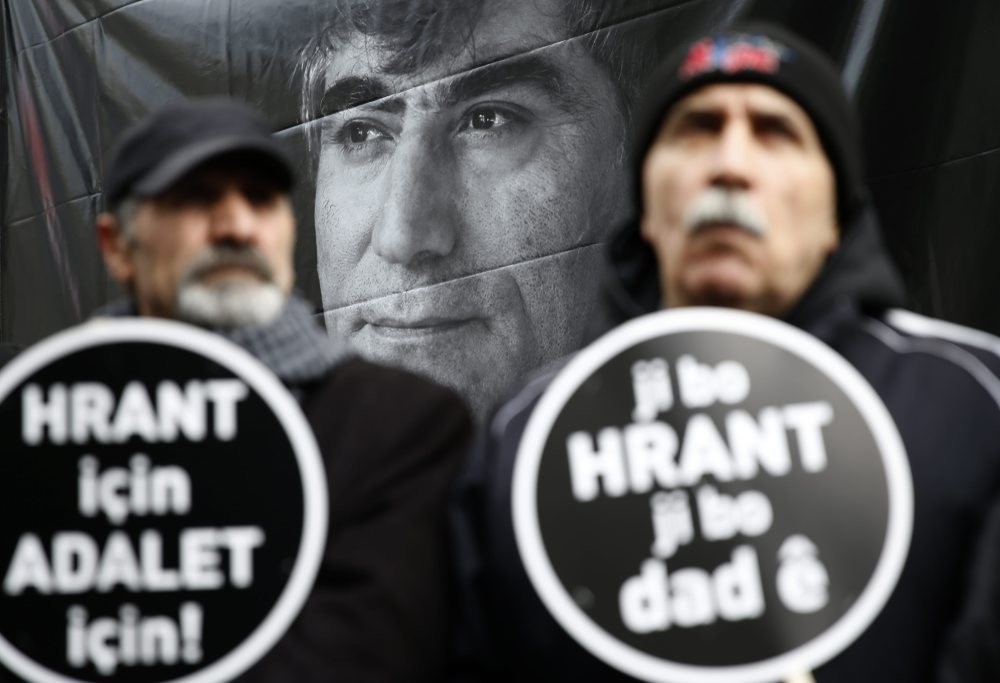
The trial on the 2007 murder of Turkish Armenian journalist Hrant Dink is underway with a new week of hearings amid hope for progress and a further probe into the role of the alleged culprits including former officials with links to FETÖ
Nine years on, the trial on the murder of prominent Turkish Armenian journalist Hrant Dink entered its 12th hearing as a new, expanded legal process into the murder plot's ties to the notorious Gülenist Terror Group (FETÖ) began.
The hearing, which started in a courthouse in Istanbul where Dink was murdered in 2007 in broad daylight, was scheduled to continue throughout the week. Thirty-five suspects including former police chiefs affiliated with FETÖ stand trial for the murder and cover-up.
The murder of Dink, who was editor-in-chief of Agos weekly when he was gunned down by a teenager outside his offices, raised public outrage in a country that has a tense relationship with its Armenian community and Armenia.
Years later, amid a crackdown on FETÖ, which is implicated in a string of crimes from sham trials to the July 15 coup attempt, activists monitoring the trial hope the "real" culprits behind Ogün Samast, the 17-year-old teenager who shot Dink dead, would be punished. Speaking outside the courthouse as the hearings started, Bircan Yorulmaz, who spoke on behalf of activists calling themselves friends of Hrant, said they asked the "perpetrators, masterminds, those who ignored the tip-offs (on the murder plot) and those who extolled the murderers be brought to justice" and that "the murder case be investigated and uncovered totally."The murder was initially considered the work of ultranationalists but it was later revealed that the police and public officials had foreknowledge of the murder plot and deliberately turned a blind eye to the intelligence reports. Defendants, including former police intelligence chief Ramazan Akyürek and former senior police intelligence officer Ali Fuat Yılmazer blame each other on the negligence over the murder plot. Akyürek and Yılmazer are accused of affiliation with FETÖ. Along with Akyürek and Yılmazer, who are currently imprisoned on charges of FETÖ membership, former Istanbul police chief Celalettin Cerrah and other former high-level police officers are standing trial.
The court will hear defenses this week but a ruling was not expected to be issued any time soon due to the scope of the trial where Akyürek and Yılmazer face aggravated life sentences on charges of murder, forgery, abuse of duty and running an armed gang in relation to the murder. Other defendants face sentences of up to 22 years for lesser charges including causing manslaughter by negligence. Two police officers were released in earlier hearings.
The Hrant Dink case originally came to a conclusion in 2012 after an Istanbul court ruled for the conviction of five defendants masterminding the murder and acquitted them of terrorist group charges. After a lengthy legal process and a change of prosecutors and courts, authorities finally turned their attention to links with FETÖ in the murder as the terror cult, through its infiltrators within the police and judiciary, is believed to have manipulated trials and even set up sham trials through trumped-up charges and fabricated evidence. A prosecutor initially assigned to the murder case remains on the run after he was implicated for membership in FETÖ. Rüstem Eryılmaz, a judge who was the former president of the court that handled the Dink murder trial, was also detained in August for membership in FETÖ. Eryılmaz was the judge behind the acquittal of defendants on charges of running a criminal organization.
The terror cult aimed to use the murder of Dink both for a reshuffle in the law enforcement and to fuel ethnic tensions in the country, according to an indictment leaked to the press. The indictment, which forms the basis for the current trial, says Gülen-linked police officers were aware of the murder plot but ignored it or hid the intelligence from their superiors not linked to Gülenists, believing that the discovery of negligence would lead to the dismissal of their superiors and would pave the way for the infiltration of more Gülenists into law enforcement.
The trial also now focuses on the previously ignored role of gendarmerie intelligence officers. Police have recently detained several former officers in connection with the murder.
The investigation into the role of gendarmerie officers in the case may help authorities to shed light on the murder and accelerate the legal process that would help the closure of the case. Gendarmerie officials, like other public officials standing accused, allegedly did not act upon tip-offs that Yasin Hayal, accused of masterminding the murder plot, would kill Dink, predating six months before the murder. Moreover, gendarmerie intelligence officers conducted surveillance at Dink's residence and offices prior to the murder. The investigation also revealed that police officers claiming they were not in contact with a key police informant with knowledge of the murder plot were lying and were actually delivered reports by the informant, further highlighting that the role of law enforcement officials almost amounts to murder.
Keep up to date with what’s happening in Turkey,
it’s region and the world.
You can unsubscribe at any time. By signing up you are agreeing to our Terms of Use and Privacy Policy.
This site is protected by reCAPTCHA and the Google Privacy Policy and Terms of Service apply.