Daily Sabah logo

Politics
Diplomacy Legislation War On Terror EU Affairs Elections News Analysis
TÜRKİYE
Istanbul Education Investigations Minorities Expat Corner Diaspora
World
Mid-East Europe Americas Asia Pacific Africa Syrian Crisis Islamophobia
Business
Automotive Economy Energy Finance Tourism Tech Defense Transportation News Analysis
Lifestyle
Health Environment Travel Food Fashion Science Religion History Feature Expat Corner
Arts
Cinema Music Events Portrait Reviews Performing Arts
Sports
Football Basketball Motorsports Tennis
Opinion
Columns Op-Ed Reader's Corner Editorial
PHOTO GALLERY
JOBS ABOUT US RSS PRIVACY CONTACT US
© Turkuvaz Haberleşme ve Yayıncılık 2025

Daily Sabah - Latest & Breaking News from Turkey | Istanbul

  • Politics
    • Diplomacy
    • Legislation
    • War On Terror
    • EU Affairs
    • Elections
    • News Analysis
  • TÜRKİYE
    • Istanbul
    • Education
    • Investigations
    • Minorities
    • Expat Corner
    • Diaspora
  • World
    • Mid-East
    • Europe
    • Americas
    • Asia Pacific
    • Africa
    • Syrian Crisis
    • Islamophobia
  • Business
    • Automotive
    • Economy
    • Energy
    • Finance
    • Tourism
    • Tech
    • Defense
    • Transportation
    • News Analysis
  • Lifestyle
    • Health
    • Environment
    • Travel
    • Food
    • Fashion
    • Science
    • Religion
    • History
    • Feature
    • Expat Corner
  • Arts
    • Cinema
    • Music
    • Events
    • Portrait
    • Reviews
    • Performing Arts
  • Sports
    • Football
    • Basketball
    • Motorsports
    • Tennis
  • Gallery
  • Opinion
    • Columns
    • Op-Ed
    • Reader's Corner
    • Editorial
  • TV

NASA to set fire in space for science, safety

by

CAPE CANAVERAL Jun 16, 2016 - 12:00 am GMT+3
No Image
by Jun 16, 2016 12:00 am
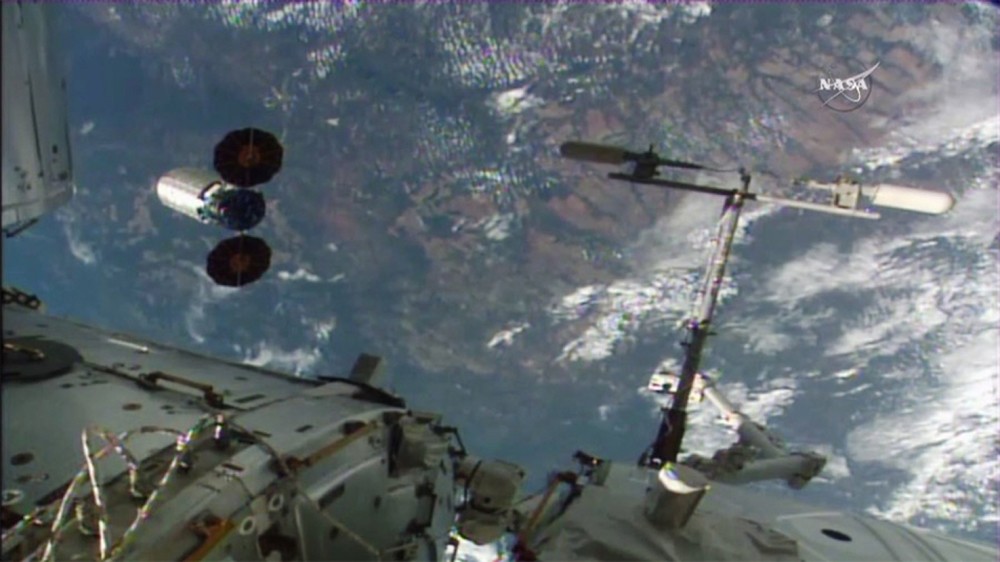
An unmanned cargo ship pulled away from the International Space Station on Tuesday to stage the first of three planned NASA experiments on how big fires grow in space, an important test for astronaut safety.

Previous experiments in space were limited to the incineration of samples no bigger than an index card, said David Urban, lead researcher for the Spacecraft Fire Experiment, or Saffire.


"We tried for years to find a vehicle and a circumstance where this would work and initially we'd get a 'not on my spacecraft' reaction," Urban said during a NASA TV interview.

The National Aeronautics and Space Administration ultimately settled on using an Orbital ATK Cygnus cargo ship, which is designed to burn up in the atmosphere after it departs the space station. The Cygnus, which departed the space station on Tuesday, was launched from Earth in March with more than 7,000 pounds (3,200 kg) of food, supplies and science experiments for the station, a research laboratory that flies about 250 miles (400 km) above the planet.

The cargo included Saffire, a module containing a 38-inch by 19-inch (97 cm by 49 cm) cotton-and-fiberglass material sample that will be set on fire after Cygnus reaches a safe distance from the station.

The experiment will begin with hot wires igniting the sample. Air flowing through ducts will fan the fire, which is expected to last about 20 minutes.


"One of the big questions is how big will the flame get?" Urban said.

Fire behaves differently outside of Earth's atmosphere, so scientists want to test whether microgravity will limit flames and what materials will burn.

The question is not academic. In February 1997, an oxygen-generating canister aboard the Russian Mir space station erupted into a searing flame, blocking the crew's path to an emergency escape ship.

The crew fought the fire with foam extinguishers and water and it eventually burned itself out, leaving a thick residue of soot.

The Saffire experiment will be the largest fire set in space since the accidental blaze on Mir.

Onboard sensors will record temperature, oxygen and carbon dioxide levels, while two cameras snap pictures. The data and images will be relayed to ground control teams over the next four to six days. NASA plans two more Saffire experiments aboard future Cygnus spacecraft.
About the author
Research Associate at Center for Islam and Global Affairs (CIGA) at Istanbul Sabahattin Zaim University
  • shortlink copied
  • KEYWORDS
    life
    The Daily Sabah Newsletter
    Keep up to date with what’s happening in Turkey, it’s region and the world.
    You can unsubscribe at any time. By signing up you are agreeing to our Terms of Use and Privacy Policy. This site is protected by reCAPTCHA and the Google Privacy Policy and Terms of Service apply.

    No Image
    Livestock-guarding Kangal dogs pride of Turkey
    PHOTOGALLERY
    • POLITICS
    • Diplomacy
    • Legislation
    • War On Terror
    • EU Affairs
    • News Analysis
    • TÜRKİYE
    • Istanbul
    • Education
    • Investigations
    • Minorities
    • Diaspora
    • World
    • Mid-East
    • Europe
    • Americas
    • Asia Pacific
    • Africa
    • Syrian Crisis
    • İslamophobia
    • Business
    • Automotive
    • Economy
    • Energy
    • Finance
    • Tourism
    • Tech
    • Defense
    • Transportation
    • News Analysis
    • Lifestyle
    • Health
    • Environment
    • Travel
    • Food
    • Fashion
    • Science
    • Religion
    • History
    • Feature
    • Expat Corner
    • Arts
    • Cinema
    • Music
    • Events
    • Portrait
    • Performing Arts
    • Reviews
    • Sports
    • Football
    • Basketball
    • Motorsports
    • Tennis
    • Opinion
    • Columns
    • Op-Ed
    • Reader's Corner
    • Editorial
    • Photo gallery
    • DS TV
    • Jobs
    • privacy
    • about us
    • contact us
    • RSS
    © Turkuvaz Haberleşme ve Yayıncılık 2021