Daily Sabah logo

Politics
Diplomacy Legislation War On Terror EU Affairs Elections News Analysis
TÜRKİYE
Istanbul Education Investigations Minorities Expat Corner Diaspora
World
Mid-East Europe Americas Asia Pacific Africa Syrian Crisis Islamophobia
Business
Automotive Economy Energy Finance Tourism Tech Defense Transportation News Analysis
Lifestyle
Health Environment Travel Food Fashion Science Religion History Feature Expat Corner
Arts
Cinema Music Events Portrait Reviews Performing Arts
Sports
Football Basketball Motorsports Tennis
Opinion
Columns Op-Ed Reader's Corner Editorial
PHOTO GALLERY
JOBS ABOUT US RSS PRIVACY CONTACT US
© Turkuvaz Haberleşme ve Yayıncılık 2026

Daily Sabah - Latest & Breaking News from Turkey | Istanbul

  • Politics
    • Diplomacy
    • Legislation
    • War On Terror
    • EU Affairs
    • Elections
    • News Analysis
  • TÜRKİYE
    • Istanbul
    • Education
    • Investigations
    • Minorities
    • Expat Corner
    • Diaspora
  • World
    • Mid-East
    • Europe
    • Americas
    • Asia Pacific
    • Africa
    • Syrian Crisis
    • Islamophobia
  • Business
    • Automotive
    • Economy
    • Energy
    • Finance
    • Tourism
    • Tech
    • Defense
    • Transportation
    • News Analysis
  • Lifestyle
    • Health
    • Environment
    • Travel
    • Food
    • Fashion
    • Science
    • Religion
    • History
    • Feature
    • Expat Corner
  • Arts
    • Cinema
    • Music
    • Events
    • Portrait
    • Reviews
    • Performing Arts
  • Sports
    • Football
    • Basketball
    • Motorsports
    • Tennis
  • Gallery
  • Opinion
    • Columns
    • Op-Ed
    • Reader's Corner
    • Editorial
  • TV

Remains of British explorer unarthed in London train line excavation

by Associated Press

LONDON Jan 28, 2019 - 10:55 pm GMT+3
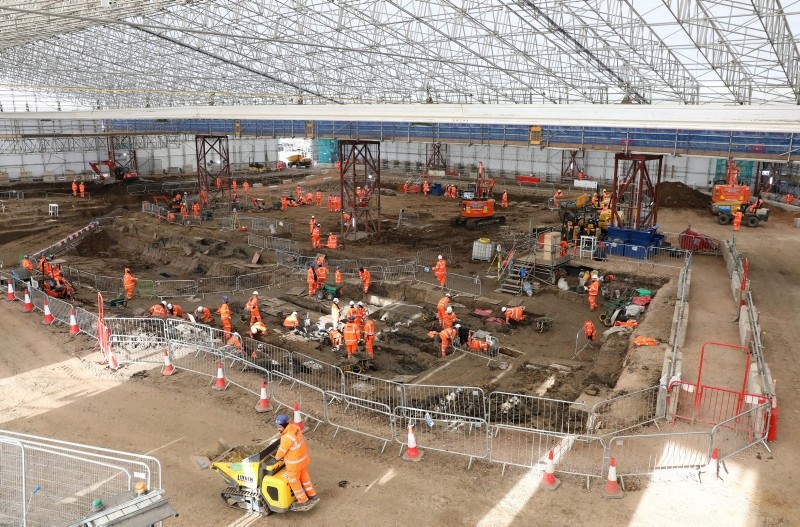
An image taken on Jan. 18, 2019 and issued by HS2 showing a general view of the archaeological excavation and research works at St James's Gardens in Euston, London (AP Photo)
by Associated Press Jan 28, 2019 10:55 pm

The remains of a noted Royal Navy explorer who led the first known circumnavigation of Australia have been found by archaeologists excavating a burial ground where a railway station is planned.

The archaeologists identified the remains of Captain Matthew Flinders by the lead plate placed on top of his coffin. He was buried at St. James's burial ground in 1814 but the headstone was removed in the 1840s, leaving the precise location of his grave a mystery.

Flinders made a number of important journeys and was commander of HMS Investigator when he navigated the entire coast of Australia, confirming it was a continent.

A number of places in Australia have been named after him, including Flinders Station in Melbourne and the town of Flinders in Victoria. A statue honoring him was unveiled in London by Prince William on the bicentenary of his death in 2014.

Officials believe other notables are in the burial ground, including Bill Richmond, a slave born in New York who as a free Londoner gained prominence as a boxer, and James Christie, a naval officer who in 1766 founded the auction house that bears his name.
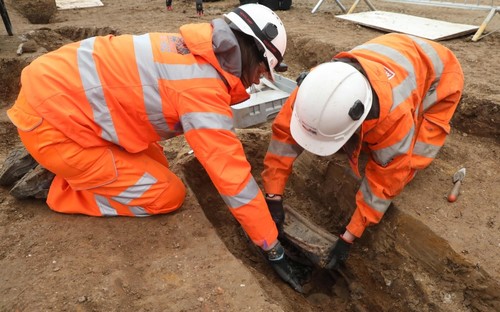


This recent handout photo released on January 25, 2019, from the HS2 project shows archaeologists removing the coffin plate of Royal Navy captain Matthew Flinders, during the archaeological excavation and research works at St James's Gardens near Euston train station in London as part of the HS2 high-speed rail project (AFP Photo)

Experts plan to remove tens of thousands of skeletons from the burial ground, where a rail station for a new high-speed rail line will be built.

HS2, which is building the rail line from London to Birmingham, said the remains of Flinders and roughly 40,000 others will be re-buried at a location to be announced.

Helen Wass, heritage director at HS2, hailed the discovery.

"Given the number of human remains at St. James's, we weren't confident that we were going to find him," she said Friday. "We were very lucky that Captain Flinders had a breastplate made of lead, meaning it would not have corroded."

She said his skeleton will now be studied, in part to gauge what impact life at sea had on him.

  • shortlink copied
  • KEYWORDS
    life
    The Daily Sabah Newsletter
    Keep up to date with what’s happening in Turkey, it’s region and the world.
    You can unsubscribe at any time. By signing up you are agreeing to our Terms of Use and Privacy Policy. This site is protected by reCAPTCHA and the Google Privacy Policy and Terms of Service apply.
    No Image
    An open air museum: The Luxor Temple
    PHOTOGALLERY
    • POLITICS
    • Diplomacy
    • Legislation
    • War On Terror
    • EU Affairs
    • News Analysis
    • TÜRKİYE
    • Istanbul
    • Education
    • Investigations
    • Minorities
    • Diaspora
    • World
    • Mid-East
    • Europe
    • Americas
    • Asia Pacific
    • Africa
    • Syrian Crisis
    • İslamophobia
    • Business
    • Automotive
    • Economy
    • Energy
    • Finance
    • Tourism
    • Tech
    • Defense
    • Transportation
    • News Analysis
    • Lifestyle
    • Health
    • Environment
    • Travel
    • Food
    • Fashion
    • Science
    • Religion
    • History
    • Feature
    • Expat Corner
    • Arts
    • Cinema
    • Music
    • Events
    • Portrait
    • Performing Arts
    • Reviews
    • Sports
    • Football
    • Basketball
    • Motorsports
    • Tennis
    • Opinion
    • Columns
    • Op-Ed
    • Reader's Corner
    • Editorial
    • Photo gallery
    • DS TV
    • Jobs
    • privacy
    • about us
    • contact us
    • RSS
    © Turkuvaz Haberleşme ve Yayıncılık 2021