The Turkish house once maintained a balance between nature, the neighborhood and oneself. Today, that balance has been lost; speed, crowding and solitude have become the primary elements of our new architecture.
In the past, houses were built not just for shelter, but for living and finding meaning. The Turkish house was the embodiment of human harmony with nature. The direction of the sun, the flow of the wind and even the neighbor's window were taken into account. Door knockers were meticulously designed to announce who was coming; courtyards were positioned to open to the sky and windows to the world. Every corner of the house offered both privacy and participation in life. With modernization, our way of life and the spirit of the spaces we inhabit have changed. After the verticality of Gothic, the ostentation of Baroque and the ornamentation of Rococo, modern architecture began to speak the language of speed and functionality. Turkish houses with gardens, bay windows and courtyards were replaced by apartment buildings rising floor by floor. Entire neighborhood cultures were squeezed into concrete blocks that leaned against each other.
This new construction transformed relationships as it transformed buildings. Street noises diminished, neighborly bonds weakened and children moved from yards and gardens to screens. Sunlight no longer entered through windows, but through phone screens. This transformation, which began with television, accelerated in the digital age; individuals began to watch their own reflections, not the street. Neighborhoods were dispersed and people's contact with the outside world weakened.
Industrialization and migration transformed both the form and memory of cities. The crowds moving from rural areas to cities brought with them their old habits, but as the city bore this burden, it lost its identity. The traditional fabric was replaced by faceless structures. Sezai Karakoç's words are more understandable today: "Cities also have their believers, their disbelievers, their nihilists." Indeed, while some cities retain the elegance of the past, others have lost their spirituality under its lights. Modern urbanism has, in fact, created a new form of loneliness.
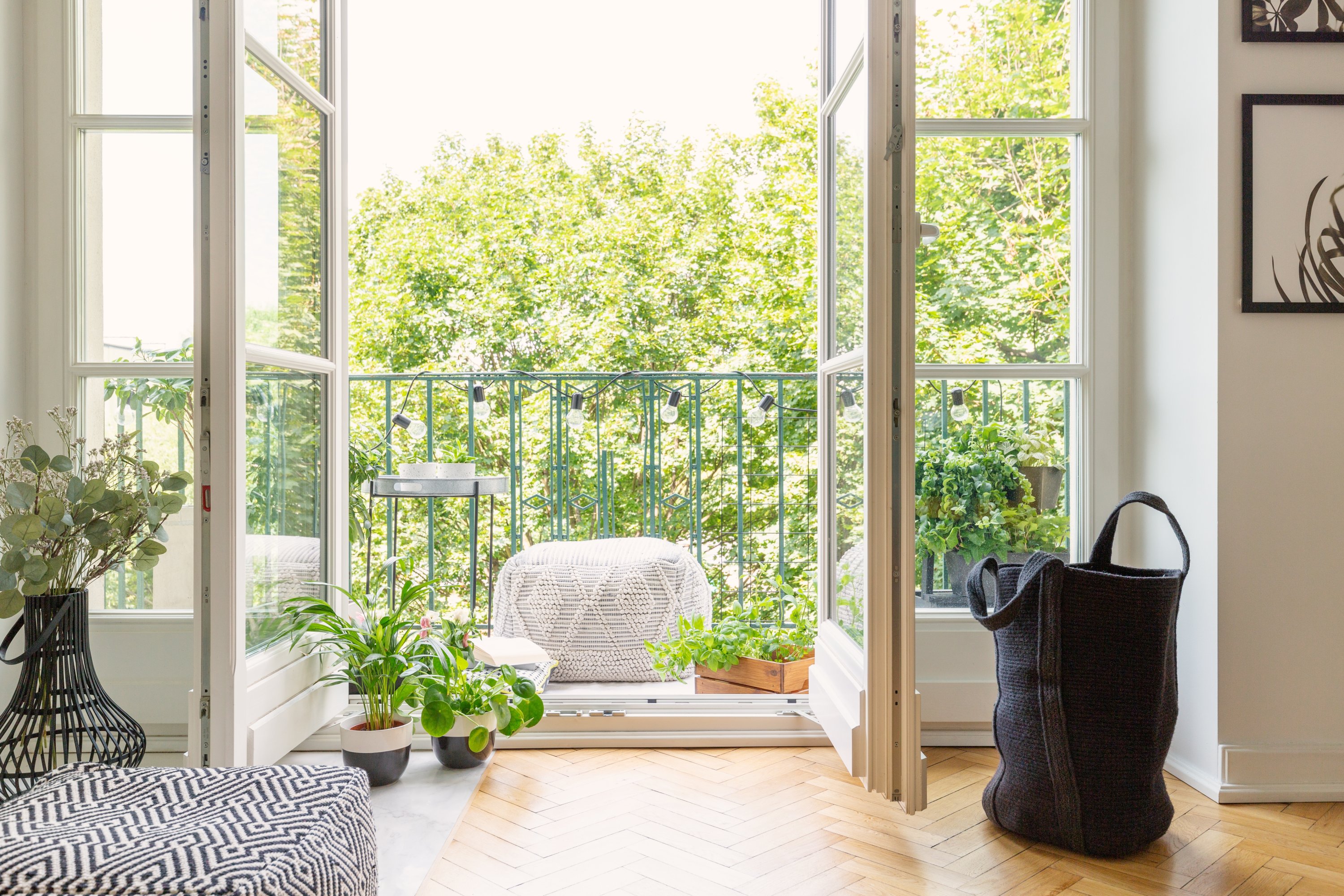
The balcony once represented a small threshold where one could see oneself and breathe while looking out. Watching the street, existing unseen in the crowd, was a natural way to participate in the world from within. The balcony was the simplest contact one had with the city; neither entirely inside nor entirely outside.
In his poem "Balcony," Sezai Karakoç associates this loss with the consciousness of death. He argues that modern architecture, by making one forget death, has diminished life itself. When death is no longer the cornerstone of life, the depth of a person is lost. By commemorating death alongside children, motherhood and life, Karakoç evokes the unity of existence.
Turgut Uyar, however, considers the concept of a balcony differently. “I want to go out on the balcony, take a breath; everything is so distant, yet so close,” he says, describing the encounter between oneself and one's inner world while gazing at the outside world. His balcony holds not death, but the weight of existence. In Uyar's poetry, the “natural” is the most authentic state of humanity. In the line, “One should never speak of polyester or plastic,” he establishes a clear distance from the artificial. In the world of poetry, plastic is a metaphor that obscures the soul and formalizes life. Confirming this line, today's cities are increasingly confined to an increasingly “artificial” reality. Having lost touch with the natural, humans no longer wander where they live, but among the surfaces they create.
The line between Uyar's breath and Karakoç's remembrance points to two things modern man has lost: awareness and depth. The balcony, more than a habit of a time, was a symbol of man's relationship with space. What was lost with its absence was not a space opening to the outside world, but a distance where thought flourished. Now, humanity has lost the boundaries by which to measure its own existence.
Karakoç's warning is even clearer today: as the city rises, the soul descends; people are trapped not by the place they inhabit, but by the meanings they have forgotten.