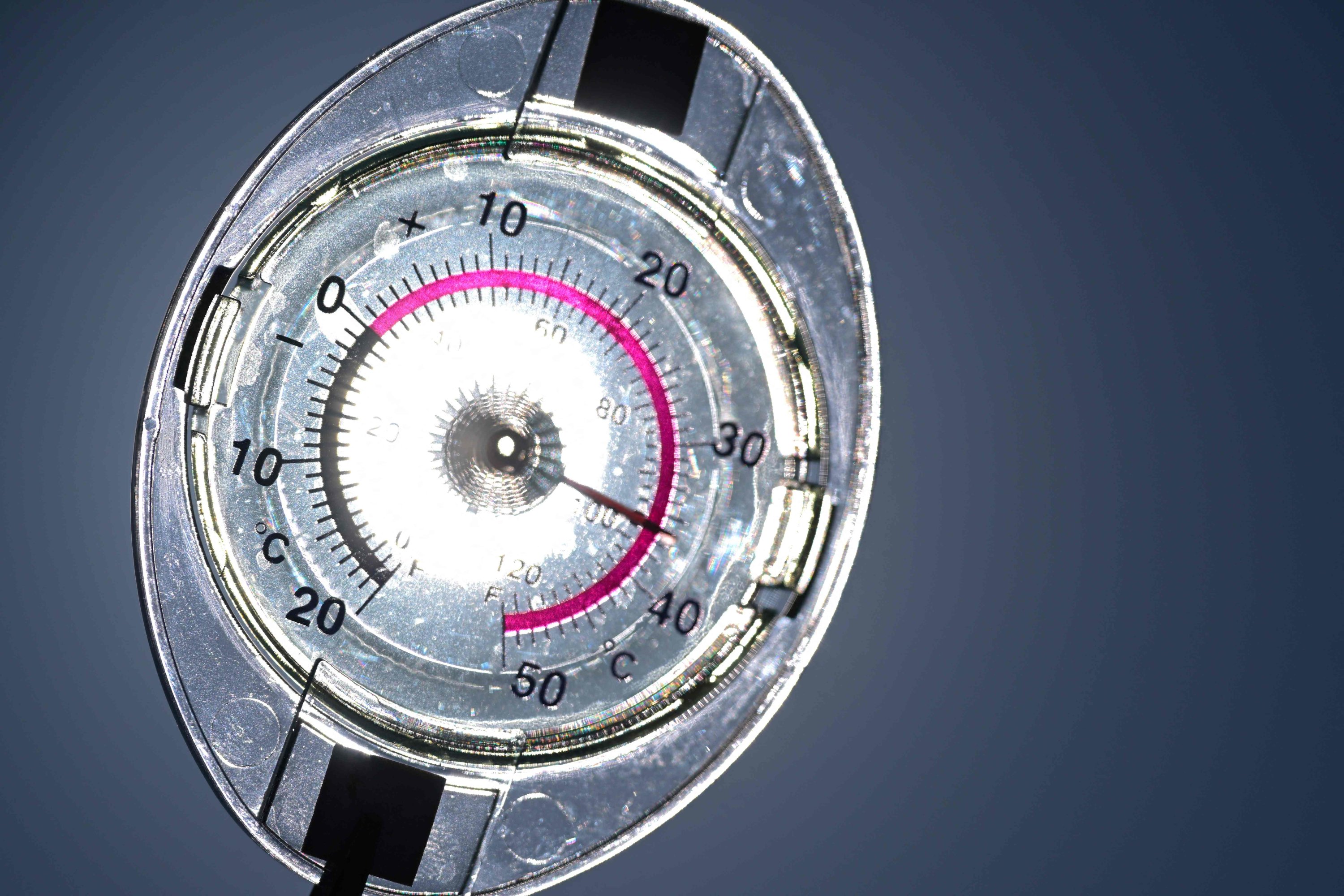
As the first quarter of the 21st century draws to a close, Europe finds itself in the unenviable position of being the world’s fastest-warming continent, confronting increasingly disastrous consequences of climate change that are raising uncertainty about its future.
Over the past 25 years, Europe has experienced intense political, technological and social change. Alongside wars, economic crises and rapid innovation, climate change has steadily intensified, pushing governments to adopt increasingly ambitious – and urgent – responses.
One of the key advances in the fight against climate change was the Paris Agreement, which marked its 10th anniversary this year. The treaty is the first universal, legally binding global climate accord and aims to keep global warming well below 2 degrees Celsius (3.6 degrees Farenhiet) above pre-industrial levels, ideally limiting it to 1.5 degrees Celsius.
But as one of the continents most at risk, according to the EU's Copernicus Climate Change Service, Europe has been forced to move beyond long-term targets and confront impacts unfolding in real time.
Since the mid-1990s, Europe has warmed by around 0.53 degrees Celsius per decade. In response, the EU has rolled out a series of measures, from market-based tools to sweeping regulatory frameworks, to curb emissions and adapt to a changing climate.
In 2005, the EU launched the world’s first large-scale carbon market, the EU Emissions Trading System, aiming to reduce industrial carbon emissions.
In 2019, the landmark European Green Deal followed, setting a target of cutting emissions by at least 50% by 2030, rising towards 55%, while legally enshrining climate neutrality by 2050 through the European Climate Law.
But as technological change accelerates, global power balances shift and climate skepticism persists in parts of the world, the question remains: where does the continent stand in its decades-long fight against the climate crisis?
Europe’s geography makes it particularly vulnerable to warming. With more land than ocean, proximity to the rapidly heating Arctic and cleaner air that allows more solar radiation to reach the surface, the continent is warming about twice as fast as the global average.
According to Copernicus, the EU’s Earth observation program, the 10 warmest years on record in Europe have all occurred since 2007. The three hottest have all been recorded since 2020, with 2024 the warmest year ever observed. Preliminary data show 2025 is on track to rank among the top two warmest years alongside 2023.
Globally, Copernicus data indicate that the three-year average temperature for 2023-2025 is on track to rise above 1.5 degrees Celsius above pre-industrial levels for the first time.
The revised projections mean the 1.5 degrees Celsius benchmark could be reached globally by May 2029 – far earlier than the initial projection of March 2045.
Samantha Burgess, deputy director of the Copernicus Climate Change Service, told Anadolu Agency (AA) the pace of warming has clearly accelerated over the past two decades, with the last three years standing out as "really exceptional.”
The world wasted a lot of time through "inaction,” she added.
"It’s really important to reflect that extreme events will only get worse in a warmer climate, and it’s really those extreme events that impact people,” she warned.
The European Environment Agency estimates that storms, floods and heat waves caused between 85,000 and 145,000 deaths across Europe in the four decades leading to 2020, with heat waves responsible for more than 85% of the toll. Economic losses amounted to as much as 520 billion euros ($609 billion) in the same period.
And from the deadly floods in Germany and Belgium in 2021 to the 2024 deluge in Spain’s Valencia region, alongside recurring heatwaves and drought, extreme weather events are becoming more frequent, intense and destructive.
Greenhouse gas emissions remain the main driver of climate change, and at the global level, they continue to rise despite mounting warnings.
"We're still seeing, year in, year out, record levels of greenhouse gases in the atmosphere, which means our climate continues to warm,” Burgess also agreed.
Within Europe, however, the emissions picture is more mixed.
The EU has committed to climate neutrality by 2050, and recent years have brought rapid growth in renewable energy. Burgess said record levels of renewable power generation over the past two years show that investment in the energy transition is paying off.
According to a European Parliament report, EU carbon dioxide emissions fell 37% between 1990 and 2023.
Anders Levermann, a climate scientist at the Potsdam Institute for Climate Impact Research, told AA that Europe is "well equipped” to accelerate progress through tools such as the Emissions Trading System and the Carbon Border Adjustment Mechanism.
But he warned that weakening these policies would be a major setback.
"If the EU does not implement or water down the Emission Trading Scheme or the Carbon Border Adjustment, that would really throw us back in time,” Levermann warned.
Even meeting current targets, he cautioned, will not be enough unless emissions fall to zero.
"Carbon dioxide from burning oil, gas, and coal stays in the atmosphere for hundreds of years. That means that as long as we bring something up, it'll get warmer. It's not that we can have a little bit of Carbon dioxide emissions and it'll be fine. We need to get to zero,” Levermann said.
He argued that temperatures will continue to rise as long as the bloc fails to change the structure of its economy.
"We can give targets for 2100 or so, but warming will continue until we've changed the way we produce energy,” Levermann said.
"Climate crunch time is here,” a 2024 U.N. report warned, calling for global mobilization at an unprecedented scale and pace. Without dramatic cuts to greenhouse gas emissions, the world could face an inevitable and catastrophic 3.1 degrees Celsius temperature rise, according to the report.
Yet despite the threat, both experts expressed cautious optimism, while stressing the need for swift and effective action.
"The global warming that we are seeing now was caused by emissions from 20 years ago. So, whatever we are doing now is going to change the climate only in 20 years,” Levermann said.
He stressed that Europe, and nations around the world, will have to adapt to the climate change that is still to come.
Levermann noted that as long as oil, gas and coal continue to be burned, global temperatures will keep rising. Known fossil-fuel reserves alone, he said, are sufficient to raise temperatures by up to 15 degrees Celsius.
"It's 3 degrees Celsius now, and it will be 30 degrees Celsius then. Just add 30 degrees Celsius to whatever temperature you're currently living in – that's not the same place as it was before,” he said. "There is no doubt that we have to stop this.”
"Better late than too late,” he said. "The question is simple for any country on earth: Are you a winner country that prepares for the future or are you trying to cling to the old stuff for as long as you can?”
Burgess, meanwhile, pointed to encouraging signs at the local level. She said the number of European cities with climate adaptation plans has doubled over the past five years, reflecting growing awareness and action.
"I’m really optimistic,” she said. "We’re seeing those success stories across Europe, and they're being implemented, not only at the national level, but also at the local level.”
Burgess also stressed the need to emphasize the benefits of climate action rather than focusing solely on the costs.
For instance, greening cities by expanding parks and tree cover delivers broad benefits for society – helping to cool urban areas, reduce flood risks, improve air quality and mental health, while also boosting biodiversity.
And the cost of delay is high.
"We will regret not getting to net zero sooner,” she said. "The only way we can try and reduce those impacts in the future is to turn off the tap of global greenhouse gas emissions.”