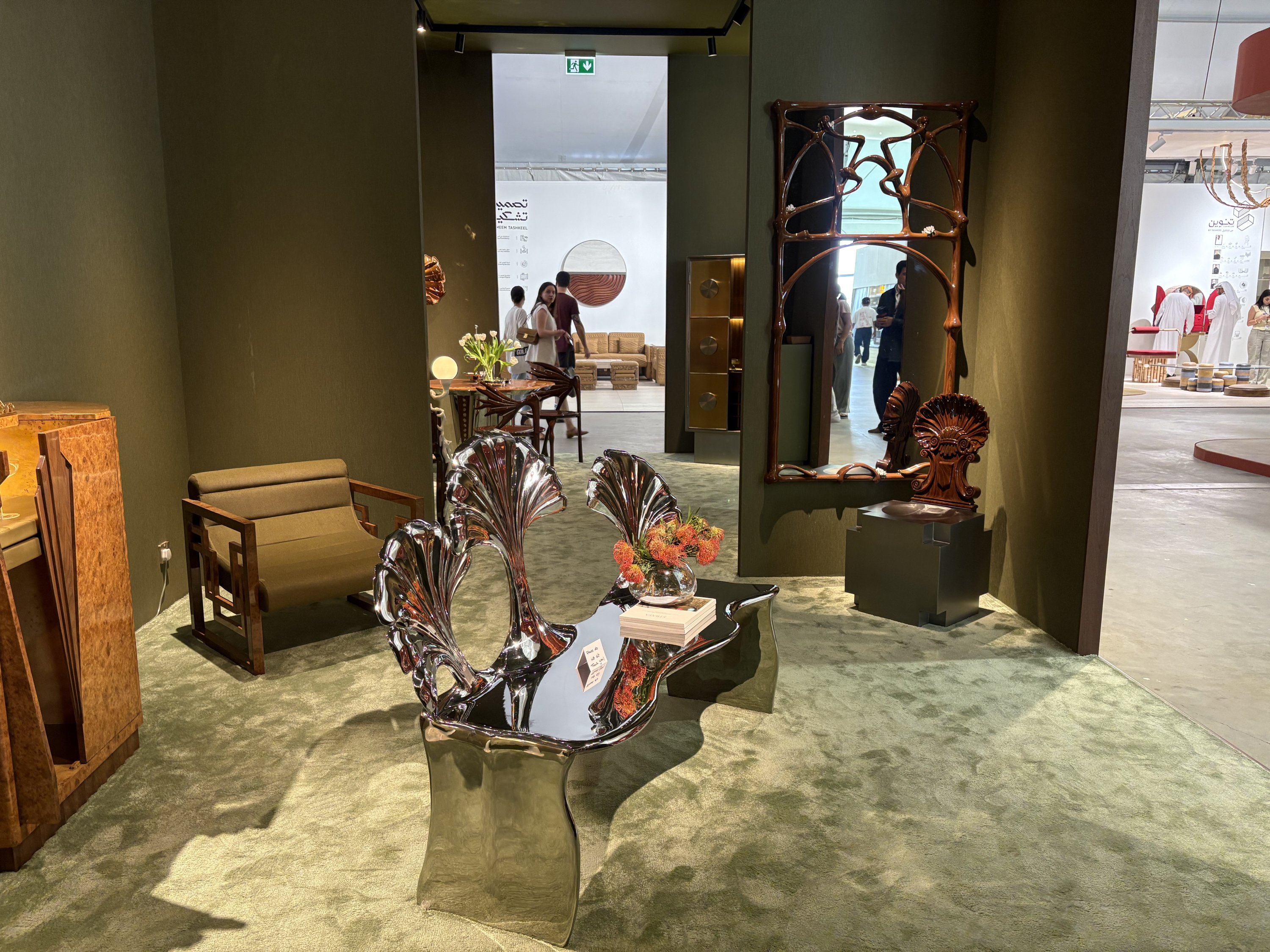
Dubai has long perfected the art of bringing the world together. From gastronomy to fashion and now, increasingly, to design the city stands as a crossroads of cultures, ideas and creative visions. What I find remarkable about Dubai is not just its architectural ambition or futuristic skyline, but how it curates connection. The city gives genuine importance to cross-cultural event spaces where collaboration replaces competition and creativity becomes a shared language.
This year, as Dubai Design Week returned for its 11th edition, that vision felt more alive than ever. Themed “Community,” the festival celebrated design as a social connector, a way of shaping how we live, build and come together. Across installations, exhibitions and public talks, the week explored the intersection of heritage, technology and collective experience. It wasn’t just about objects or interiors; it was about people, stories and the invisible threads that bind them.
One of my first stops was the Japanese installation by Nikken Sekkei in collaboration with Sobokuya, a traditional carpentry studio. Crafted entirely without nails or metal, using the age-old sashimono technique, the pavilion merged the meditative stillness of a tea room with the warmth of a modern cafe. It embodied what I love most about Japanese design, the harmony between precision and poetry. Standing there, I thought of how spaces can hold silence and how silence, too, can connect us.
Stories from "Bahrain" and "Beyond Another" standout was Maraj Studio’s “Stories of the Isle and the Inlet,” an award-winning installation founded by Bahraini architects Latifa Alkhayat and Maryam Aljomairi. Their work delved into the ecological and cultural narratives of Nabih Saleh Island, weaving architecture with memory, geography and emotion. It wasn’t just an installation; it felt like an act of preservation.
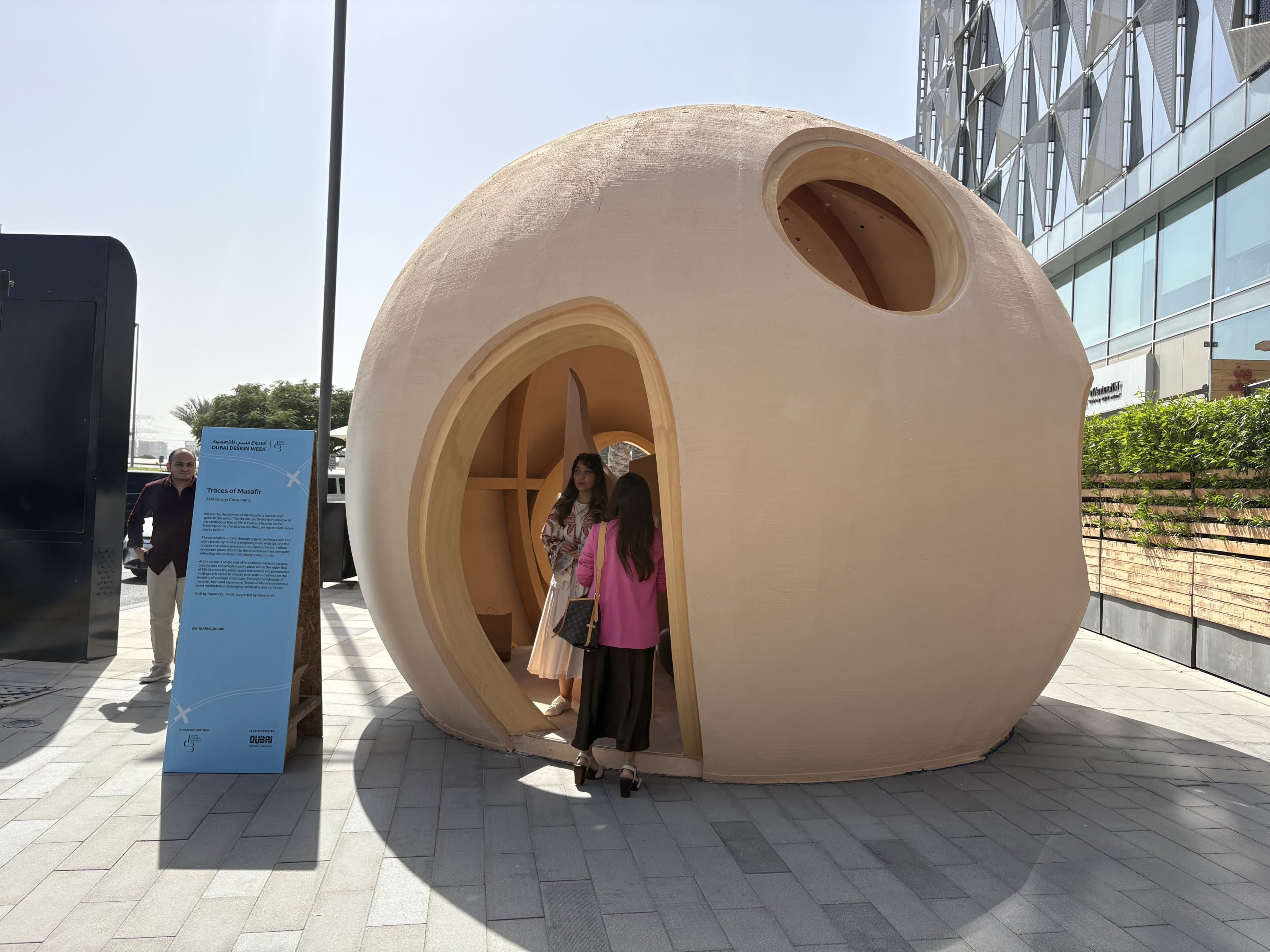
In addition to the eye-catching installations that filled Dubai Design Week, one piece stood out for its quiet poetry, “Traces of Musafir” by ANA Design Consultants, founded by Aslı Naz Atasoy. A circular pavilion of sand paths that appear and disappear underfoot, it captures the fleeting journey of the traveler, the musafir.
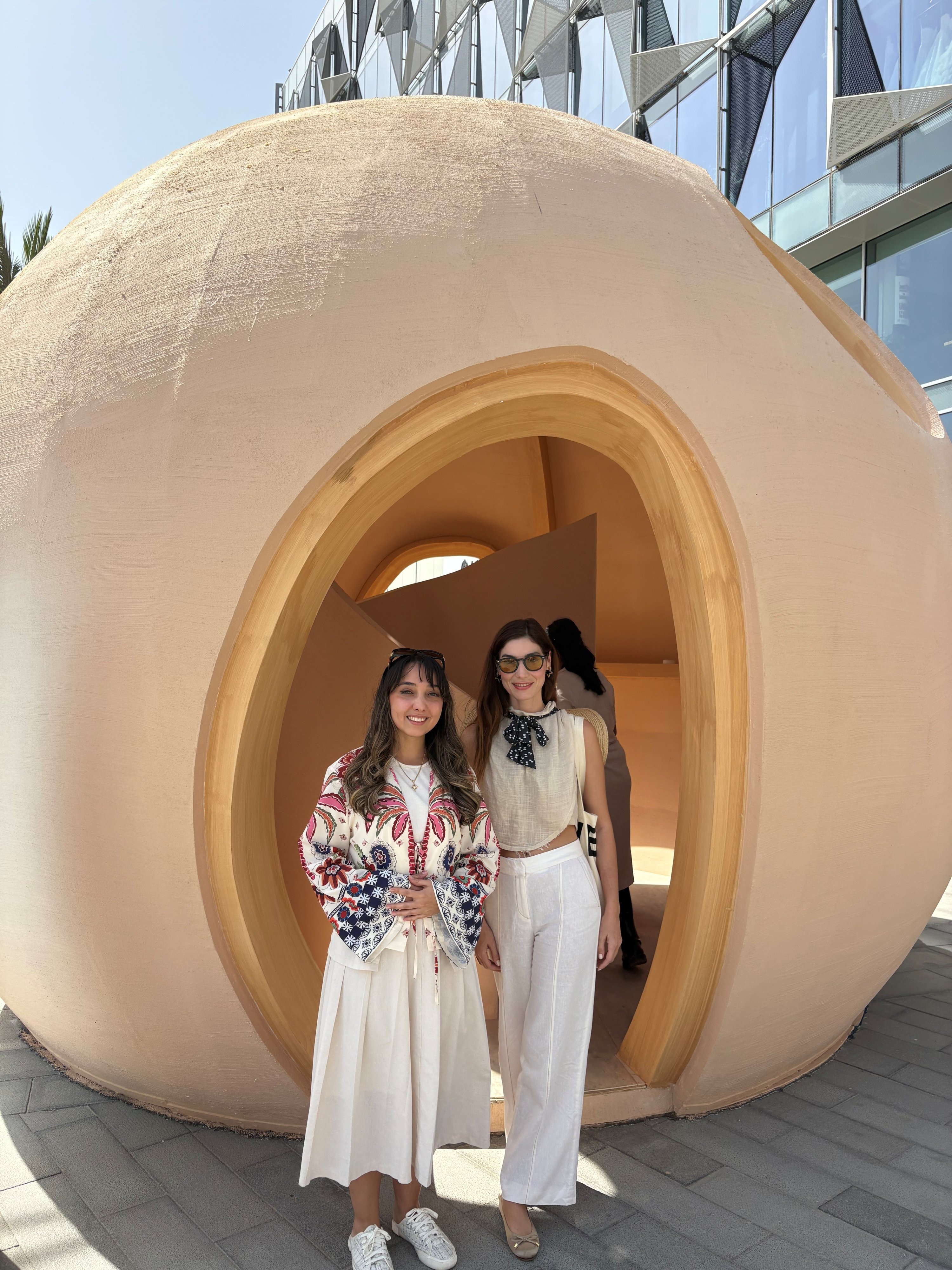
Atasoy described it as “a meditation on impermanence and the quiet traces each person leaves behind.” I loved its simplicity and depth. At its center, a single seat invited you to stop to breathe, to contemplate your place in the wider rhythm of life. It reminded me how design, at its most powerful, can whisper instead of shout.
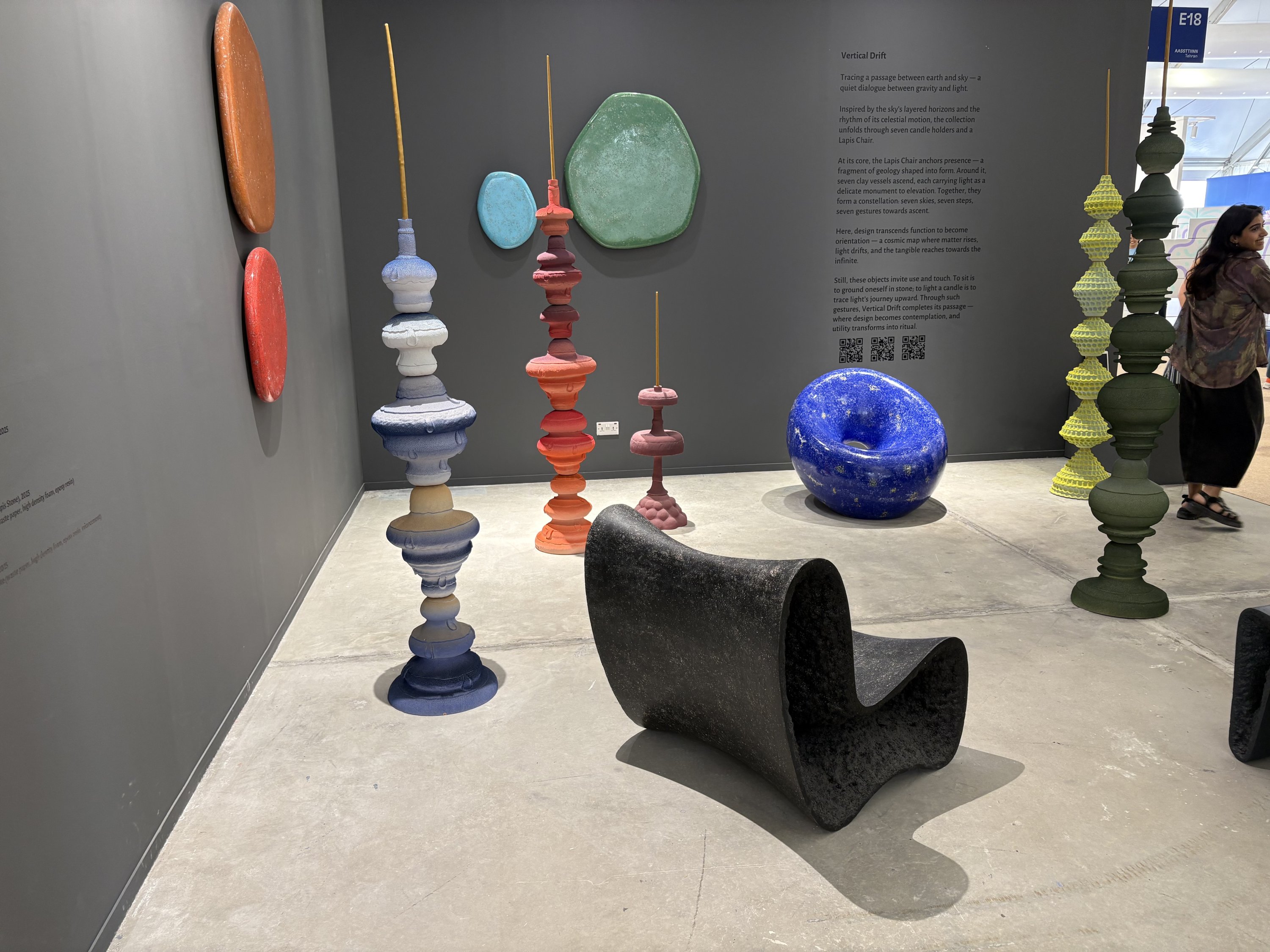
Running parallel to the festival was Downtown Design, held on the "d3 Waterfront Terrace," a fair that blends commercial sophistication with artistic soul. Now in its 12th edition, it remains the region’s ultimate hub for contemporary design, a vibrant meeting place where global brands, regional studios and design lovers come together to connect, create and get inspired. As Mette Degn-Christensen, its director, told me, “I want visitors to feel a sense of discovery. Even returning exhibitors are presented in new ways.” And she was right. From Kartell and Poltrona Frau to new voices like Stellar Works and Calico Wallpaper, the fair’s energy was infectious. Regional perspectives shone brightly, particularly Pakistan’s mother-and-son duo, Saira Ahsan and Yousaf Shahbaz, whose Strata collection of furniture inlaid with mother-of-pearl was an emotional highlight. “It’s our story, told through material and craft,” Yousaf told me, and you could feel that story in every shimmering surface.
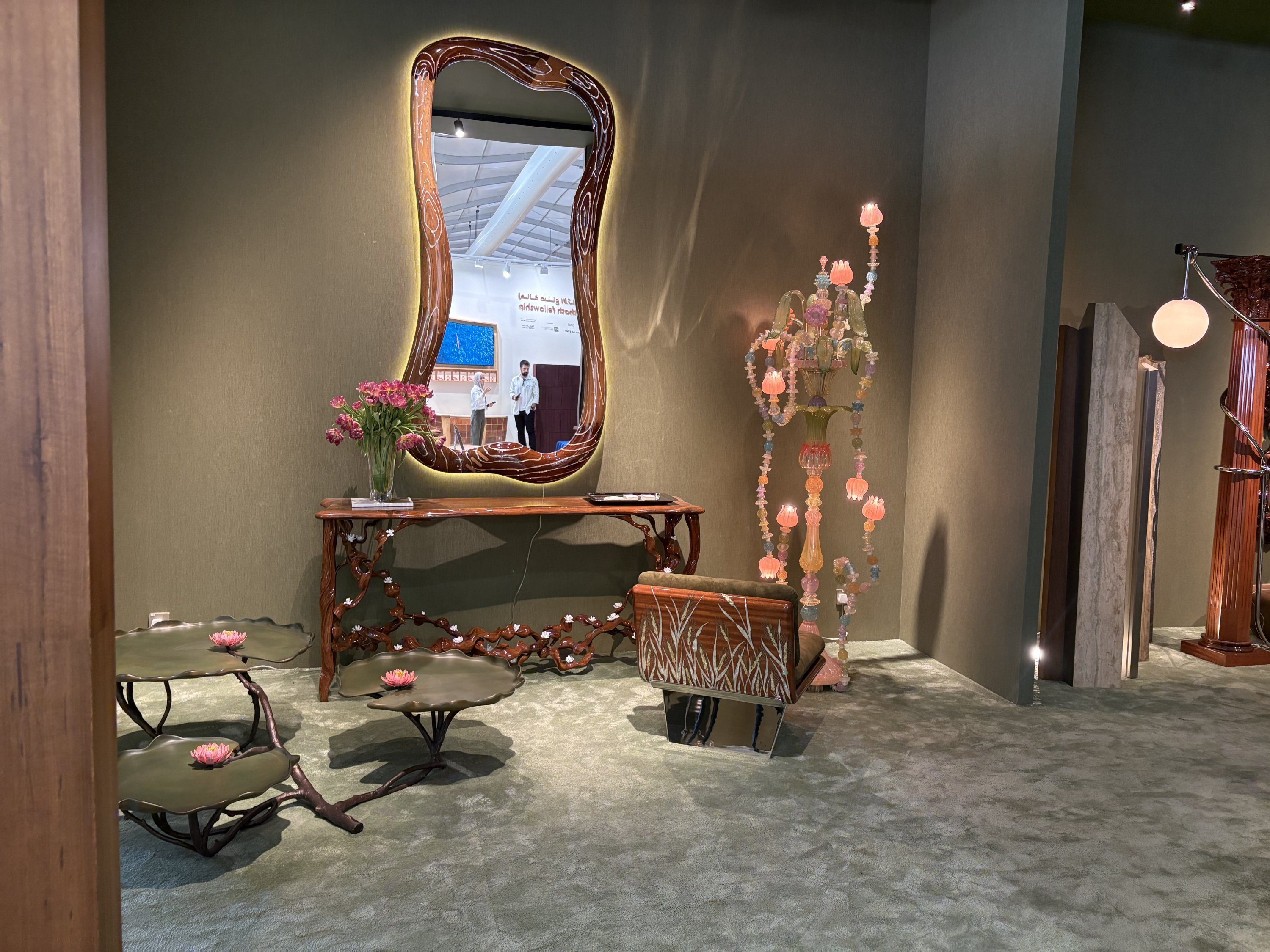
Other booths celebrated regional narratives from Zawyeh Gallery’s evocative Palestinian works to Asateer Studio’s reinterpretation of Emirati motifs in modular wall dividers. Each project felt like a conversation between past and present, craftsmanship and innovation.
Leaving the fair, I realized that what Dubai Design Week and Downtown Design achieve together goes far beyond aesthetics. They turn design into a living dialogue between nations, generations and disciplines. They remind us that beauty is not just what we see, but what we share. In a city often defined by its grandeur, this week offered something more intimate: a collective heartbeat. One that belongs not to Dubai alone, but to everyone who believes that creativity, at its best, is an act of connection.