Daily Sabah logo

Politics
Diplomacy Legislation War On Terror EU Affairs Elections News Analysis
TÜRKİYE
Istanbul Education Investigations Minorities Expat Corner Diaspora
World
Mid-East Europe Americas Asia Pacific Africa Syrian Crisis Islamophobia
Business
Automotive Economy Energy Finance Tourism Tech Defense Transportation News Analysis
Lifestyle
Health Environment Travel Food Fashion Science Religion History Feature Expat Corner
Arts
Cinema Music Events Portrait Reviews Performing Arts
Sports
Football Basketball Motorsports Tennis
Opinion
Columns Op-Ed Reader's Corner Editorial
PHOTO GALLERY
JOBS ABOUT US RSS PRIVACY CONTACT US
© Turkuvaz Haberleşme ve Yayıncılık 2026

Daily Sabah - Latest & Breaking News from Turkey | Istanbul

  • Politics
    • Diplomacy
    • Legislation
    • War On Terror
    • EU Affairs
    • Elections
    • News Analysis
  • TÜRKİYE
    • Istanbul
    • Education
    • Investigations
    • Minorities
    • Expat Corner
    • Diaspora
  • World
    • Mid-East
    • Europe
    • Americas
    • Asia Pacific
    • Africa
    • Syrian Crisis
    • Islamophobia
  • Business
    • Automotive
    • Economy
    • Energy
    • Finance
    • Tourism
    • Tech
    • Defense
    • Transportation
    • News Analysis
  • Lifestyle
    • Health
    • Environment
    • Travel
    • Food
    • Fashion
    • Science
    • Religion
    • History
    • Feature
    • Expat Corner
  • Arts
    • Cinema
    • Music
    • Events
    • Portrait
    • Reviews
    • Performing Arts
  • Sports
    • Football
    • Basketball
    • Motorsports
    • Tennis
  • Gallery
  • Opinion
    • Columns
    • Op-Ed
    • Reader's Corner
    • Editorial
  • TV
  • Life
  • Health
  • Environment
  • Travel
  • Food
  • Fashion
  • Science
  • Religion
  • History
  • Feature
  • Expat Corner

Cats can contract coronavirus from humans and each other, study finds, prompting WHO probe

by Compiled from Wire Services

ISTANBUL Apr 09, 2020 - 9:01 am GMT+3
Cats that are under the care and protection of the Mayor's Animal Care Unit office are seen inside a cage at their facilities amid the coronavirus outbreak in Bogota, Colombia, April 2, 2020. (Reuters Photo)
by Compiled from Wire Services Apr 09, 2020 9:01 am

Cats big or small can become infected with the new coronavirus but dogs appear not to be vulnerable, according to a study published Wednesday, prompting the World Health Organization (WHO) to say it will take a closer look at the transmission of the virus between humans and pets.

The study, published on the website of the journal Science on Wednesday, found that ferrets can also become infected with SARS-CoV-2, the scientific term for the virus that causes the COVID-19 disease.

Dogs, chickens, pigs and ducks are not likely to catch the virus, however, the researchers found.

The study was aimed at identifying which animals are vulnerable to the virus so they can be used to test experimental vaccines to fight the COVID-19 pandemic, which has killed more than 83,000 people worldwide since it emerged in China in December.

SARS-CoV-2 is believed to have spread from bats to humans. Except for a few reported infections in cats and dogs, there has not been strong evidence that pets can be carriers.

A tiger at the Bronx Zoo in New York City who developed a dry cough and loss of appetite after contact with an infected zookeeper tested positive for the coronavirus Sunday.

The study, based on research conducted in China in January and February, found cats and ferrets highly susceptible to the virus when researchers attempted to infect the animals by introducing viral particles via the nose.

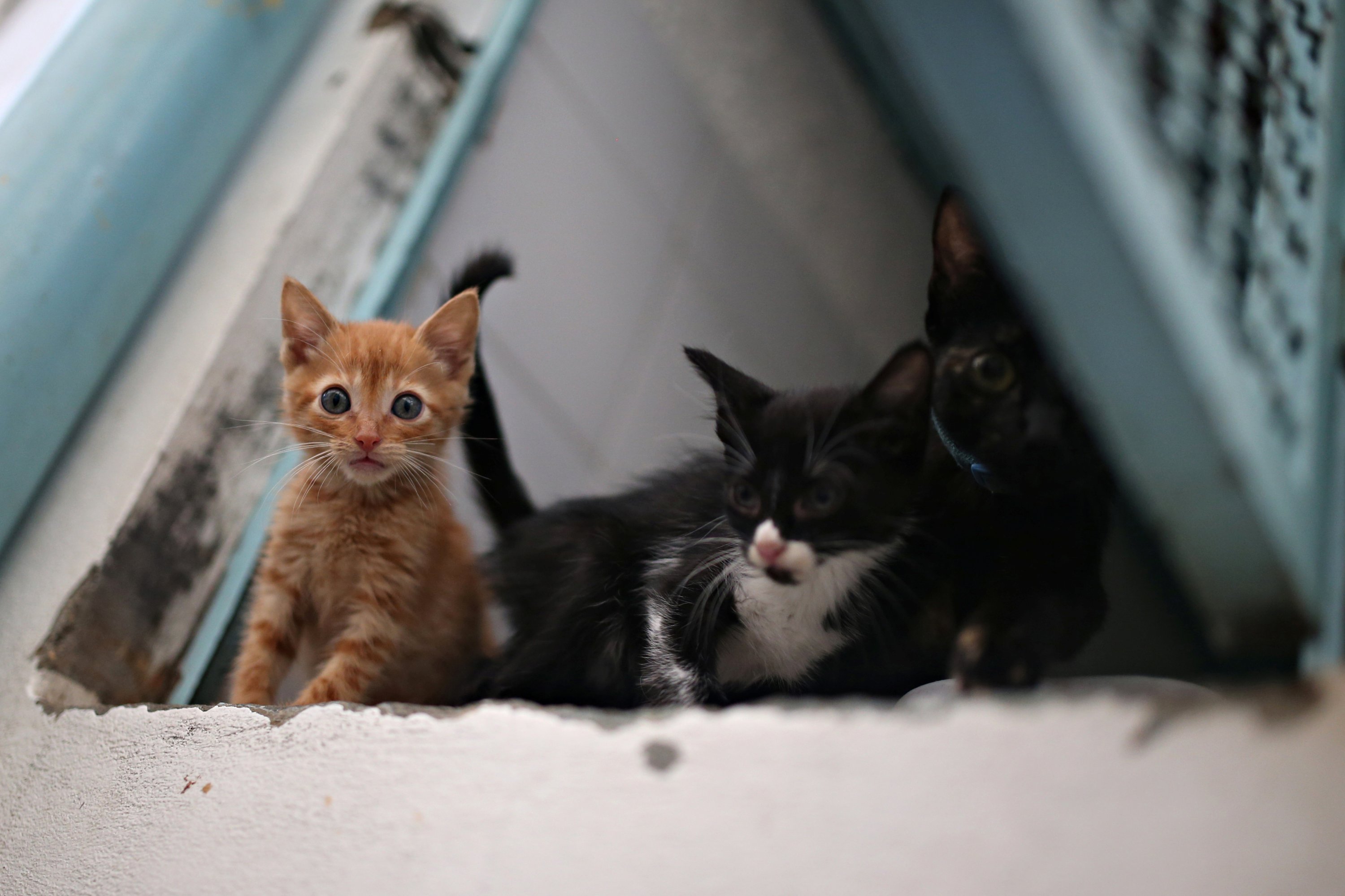
They also found cats can infect each other via respiratory droplets. Infected cats had the virus in the mouth, nose and small intestine. Kittens exposed to the virus had massive lesions in their lungs, nose and throat.

"Surveillance for SARS-CoV-2 in cats should be considered as an adjunct to the elimination of COVID-19 in humans," the authors wrote.

In ferrets, the virus was found in the upper respiratory tract but did not cause severe disease.

Antibody tests showed dogs were less likely to catch the virus, while inoculated pigs, chickens and ducks were not found to have any strain of the virus.

"It's both interesting and not terribly surprising in the sense that with the original SARS epidemic, civet cats were implicated as one of the vectors that may have transmitted virus to humans," said Daniel Kuritzkes, head of infectious diseases at Boston's Brigham and Women's Hospital.

"What these data do provide is support for the recommendation that people who are with COVID-19 should be distancing themselves, not only from other household members but also from their household pets, so as not to transmit the virus to their pets, particularly to cats or other felines," he said.

"If somebody has been diagnosed with COVID-19 in a household, or they have been exposed to someone who was and are in quarantine, they should treat their pet just like any other human in their family," said Dr. Rustin Moore, the dean of Ohio State University's College of Veterinary Medicine.

He added, "that means maintaining social distancing, no touching, petting, cuddling, or hugging."

The WHO said Wednesday it is working with its partners to look more closely at the role of pets in the health crisis.

Based on the evidence so far, WHO epidemiologist Maria Van Kerkhove told a news conference, "We don't believe that they are playing a role in transmission but we think that they may be able to be infected from an infected person."

The WHO's top emergencies expert Mike Ryan asked people not to retaliate against animals over the outbreak.

"They're beings in their own right and they deserve to be treated with kindness and respect. They are victims like the rest of us," he said.


  • shortlink copied
  • Last Update: Apr 09, 2020 10:37 am
    KEYWORDS
    covid-19 outbreak cats coronavirus transmission ferrets pets world health organization
    The Daily Sabah Newsletter
    Keep up to date with what’s happening in Turkey, it’s region and the world.
    You can unsubscribe at any time. By signing up you are agreeing to our Terms of Use and Privacy Policy. This site is protected by reCAPTCHA and the Google Privacy Policy and Terms of Service apply.
    No Image
    Top 10 best value European cities for holidaymakers announced
    PHOTOGALLERY
    • POLITICS
    • Diplomacy
    • Legislation
    • War On Terror
    • EU Affairs
    • News Analysis
    • TÜRKİYE
    • Istanbul
    • Education
    • Investigations
    • Minorities
    • Diaspora
    • World
    • Mid-East
    • Europe
    • Americas
    • Asia Pacific
    • Africa
    • Syrian Crisis
    • İslamophobia
    • Business
    • Automotive
    • Economy
    • Energy
    • Finance
    • Tourism
    • Tech
    • Defense
    • Transportation
    • News Analysis
    • Lifestyle
    • Health
    • Environment
    • Travel
    • Food
    • Fashion
    • Science
    • Religion
    • History
    • Feature
    • Expat Corner
    • Arts
    • Cinema
    • Music
    • Events
    • Portrait
    • Performing Arts
    • Reviews
    • Sports
    • Football
    • Basketball
    • Motorsports
    • Tennis
    • Opinion
    • Columns
    • Op-Ed
    • Reader's Corner
    • Editorial
    • Photo gallery
    • DS TV
    • Jobs
    • privacy
    • about us
    • contact us
    • RSS
    © Turkuvaz Haberleşme ve Yayıncılık 2021