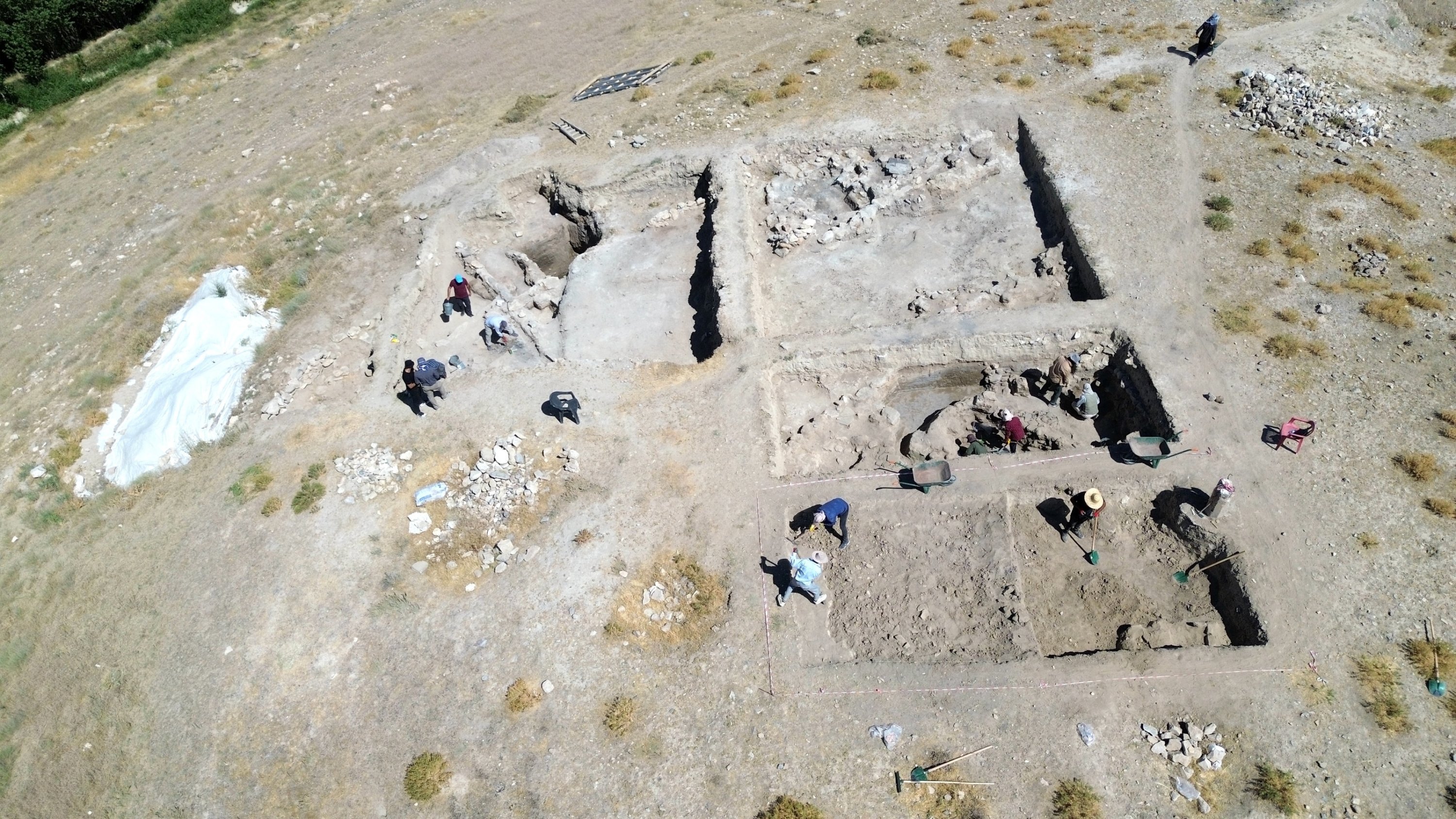
Archaeological excavations at the Iremir Mound in Türkiye’s Van province are uncovering traces of life dating back around 5,500 years to the Early Bronze Age.
Excavations at the mound, discovered seven years ago in the Otbiçer neighborhood, have brought to light settlement remains and artifacts dating to periods predating the Urartian civilization.
The excavations are being carried out with the permission of the General Directorate of Cultural Heritage and Museums under the scientific supervision of professor Hanifi Biber, a faculty member in the Department of Archaeology at Van Yüzüncü Yıl University. A 15-member team of archaeologists, anthropologists, art historians, as well as undergraduate, graduate and doctoral students is working at the site.
Researchers are documenting remains from different periods, examining unearthed artifacts using scientific methods and gathering evidence about the region’s past.
The findings are expected to provide important insights into settlement patterns, daily life and cultural practices during the Early Bronze Age, around 5,500 years ago.
Biber told Anadolu Agency (AA) that excavations at İremir Mound have been underway for about seven years and that the mound is particularly important for understanding periods predating the Urartians.
“Excavations at İremir Mound generally date to what we call the Karaz or Early Transcaucasian period, which corresponds to the Early Bronze Age. We started this year’s work a week ago. We are continuing our research based on the architectural remains uncovered in previous years. In earlier excavations, we found storage buildings in one of our trenches. This year, we have resumed work in different areas to determine the extent of these storage buildings,” he said.
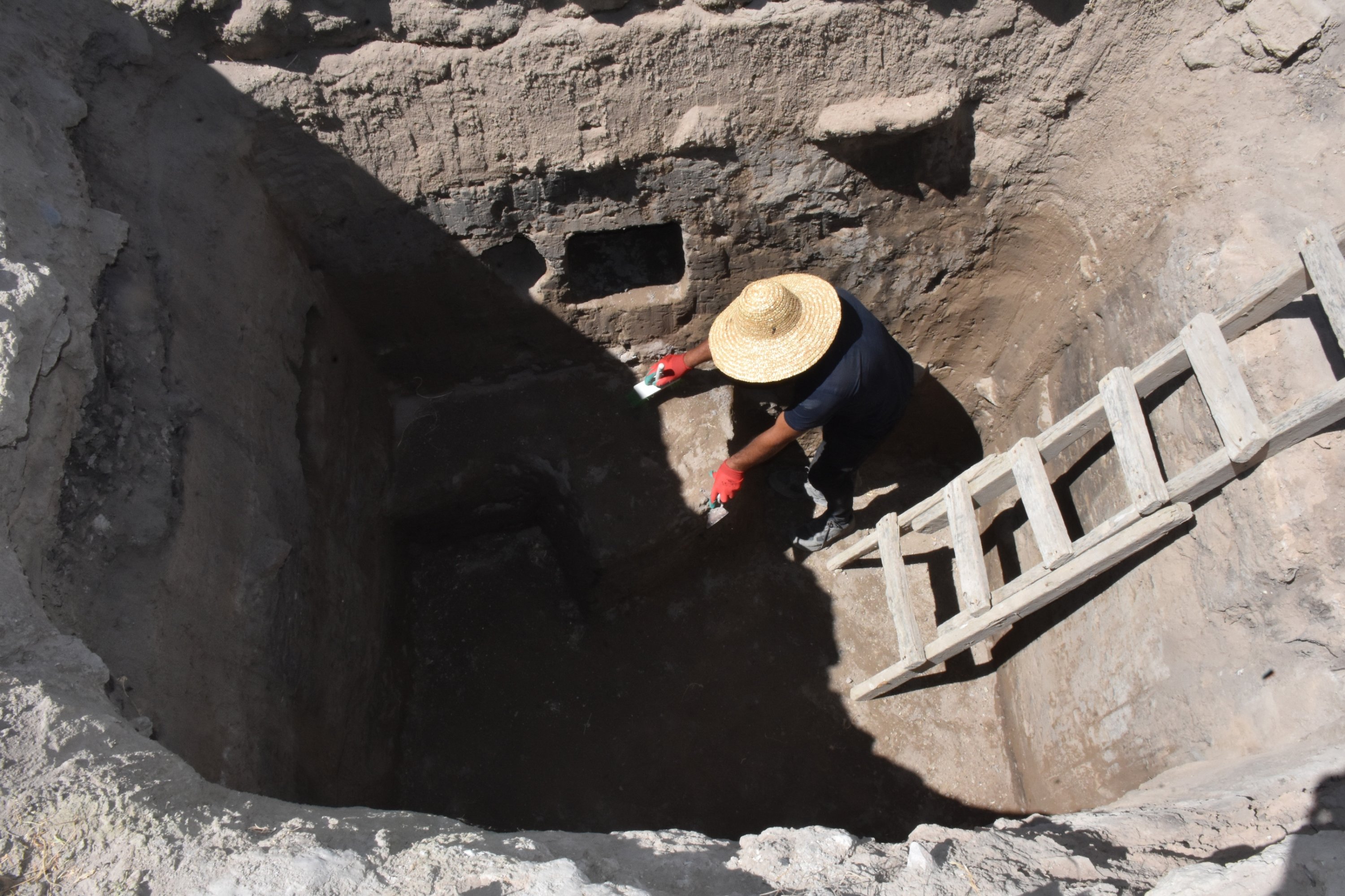
Noting that important archaeological excavations are being carried out at numerous sites across Van, Biber said:
Biber said Van’s history extends far beyond the Urartian period, noting that archaeological research has documented human settlement in the region as early as the Chalcolithic period. The team is also working to determine how far back the history of İremir Mound dates.
“When Van is mentioned, people naturally think of the Urartians, but that period is limited to the Iron Age. Van’s history goes much further back,” Biber said. “As a result of our seven years of work, we have established that the mound has a history dating back at least 5,500 years.”
He said the excavations aim to shed light on the daily lives and food traditions of past communities, as well as the region’s flora and other aspects of their culture.
“Last year, we found a large storage jar inside a structure we believe was used as a storage building, along with charred wheat grains around it. These findings allowed us to learn more about the storage facilities of the Karaz culture and the grains they used, such as barley and wheat,” he said.
Biber said the excavation site could eventually be developed for tourism.
“Once the architectural remains are fully uncovered and made visible, the site could be opened to tourism following restoration and landscaping. If such an environment is created under the guidance of the relevant authorities, this could become another tourism destination in Van alongside Van Castle, Çavuştepe Castle and Akdamar Island,” he said.