
logo

Politics
Diplomacy Legislation War On Terror EU Affairs Elections News Analysis
TÜRKİYE
Istanbul Education Investigations Minorities Expat Corner Diaspora
World
Mid-East Europe Americas Asia Pacific Africa Syrian Crisis Islamophobia
Business
Automotive Economy Energy Finance Tourism Tech Defense Transportation News Analysis
Lifestyle
Health Environment Travel Food Fashion Science Religion History Feature Expat Corner
Arts
Cinema Music Events Portrait Reviews Performing Arts
Sports
Football Basketball Motorsports Tennis
Opinion
Columns Op-Ed Reader's Corner Editorial
PHOTO GALLERY
JOBS ABOUT US RSS PRIVACY CONTACT US
© Turkuvaz Haberleşme ve Yayıncılık 2026

Daily Sabah - Latest & Breaking News from Turkey | Istanbul

  • Politics
    • Diplomacy
    • Legislation
    • War On Terror
    • EU Affairs
    • Elections
    • News Analysis
  • TÜRKİYE
    • Istanbul
    • Education
    • Investigations
    • Minorities
    • Expat Corner
    • Diaspora
  • World
    • Mid-East
    • Europe
    • Americas
    • Asia Pacific
    • Africa
    • Syrian Crisis
    • Islamophobia
  • Business
    • Automotive
    • Economy
    • Energy
    • Finance
    • Tourism
    • Tech
    • Defense
    • Transportation
    • News Analysis
  • Lifestyle
    • Health
    • Environment
    • Travel
    • Food
    • Fashion
    • Science
    • Religion
    • History
    • Feature
    • Expat Corner
  • Arts
    • Cinema
    • Music
    • Events
    • Portrait
    • Reviews
    • Performing Arts
  • Sports
    • Football
    • Basketball
    • Motorsports
    • Tennis
  • Gallery
  • Opinion
    • Columns
    • Op-Ed
    • Reader's Corner
    • Editorial
  • TV
  • Life
  • Health
  • Environment
  • Travel
  • Food
  • Fashion
  • Science
  • Religion
  • History
  • Feature
  • Expat Corner

Ancient Roman bath in Türkiye traces 2,000 years of quakes

by Anadolu Agency

ANKARA Nov 19, 2026 - 8:01 am GMT+3
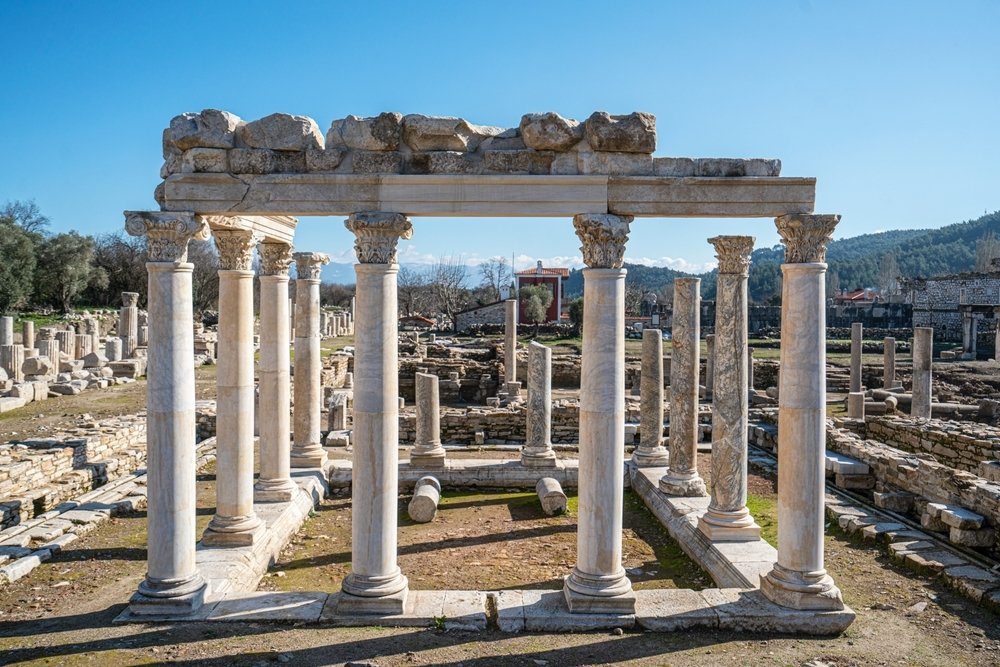
An undated general view of the ancient city of Stratonikeia, Muğla, Türkiye. (Shutterstock Photo)
by Anadolu Agency Nov 19, 2026 8:01 am

Researchers have reconstructed nearly 2,000 years of history at an ancient Roman bath complex in southwestern Türkiye, revealing how major earthquakes shaped its construction, restoration and eventual collapse.

The study, conducted by researchers from Ankara and Pamukkale universities and published in the journal Archaeological and Anthropological Sciences, examined the remains of a bath complex in the ancient city of Stratonikeia in Türkiye's Muğla province.

Scientists analyzed bricks, mortar and sediment from the bath's cold room, known as the frigidarium, and an adjacent exercise courtyard to determine when the structure was built, repaired and damaged.

Combining a dating technique that measures energy stored in minerals with archaeological evidence and historical earthquake records, the researchers identified three major phases in the complex's history.

The bath's original construction was dated to the late first or early A.D. second century, a period of extensive urban development in Stratonikeia under Roman rule.

A major restoration phase was dated to between A.D. 365 and 499, with the highest probability around A.D. 375.

Researchers said the findings were consistent with reconstruction following a powerful earthquake off Crete in A.D. 365 that caused widespread destruction across the eastern Mediterranean.

Coins minted in A.D. 613 and found beneath a layer of rubble helped narrow the date of the bath's final major collapse to between A.D. 613 and 850, with the highest probability around A.D. 633.

The researchers suggested that a major earthquake in the early seventh century may have caused the complex to lose its monumental function, although the exact date could not be established.

Eren Şahiner, a professor at Ankara University's Earth Sciences Application and Research Center, said the research shed light on how ancient communities responded to natural disasters and rebuilt their settlements.

"We can see the destructive impact of earthquakes and how they affect the population and urbanization of a region," he told Anadolu Agency (AA).

Şahiner added that the findings could help scientists better understand the long-term effects of earthquakes on cities and their populations.

shortlink copied
Last Update: Nov 19, 2026 12:06 pm
KEYWORDS
earthquake stratonikeia ancient city excavations
The Daily Sabah Newsletter
Keep up to date with what’s happening in Turkey, it’s region and the world.
You can unsubscribe at any time. By signing up you are agreeing to our Terms of Use and Privacy Policy. This site is protected by reCAPTCHA and the Google Privacy Policy and Terms of Service apply.
No Image
Sagalassos: Where history meets the clouds at 1,750 meters
PHOTOGALLERY
  • POLITICS
  • Diplomacy
  • Legislation
  • War On Terror
  • EU Affairs
  • News Analysis
  • TÜRKİYE
  • Istanbul
  • Education
  • Investigations
  • Minorities
  • Diaspora
  • World
  • Mid-East
  • Europe
  • Americas
  • Asia Pacific
  • Africa
  • Syrian Crisis
  • İslamophobia
  • Business
  • Automotive
  • Economy
  • Energy
  • Finance
  • Tourism
  • Tech
  • Defense
  • Transportation
  • News Analysis
  • Lifestyle
  • Health
  • Environment
  • Travel
  • Food
  • Fashion
  • Science
  • Religion
  • History
  • Feature
  • Expat Corner
  • Arts
  • Cinema
  • Music
  • Events
  • Portrait
  • Performing Arts
  • Reviews
  • Sports
  • Football
  • Basketball
  • Motorsports
  • Tennis
  • Opinion
  • Columns
  • Op-Ed
  • Reader's Corner
  • Editorial
  • Photo gallery
  • DS TV
  • Jobs
  • privacy
  • about us
  • contact us
  • RSS
© Turkuvaz Haberleşme ve Yayıncılık 2021