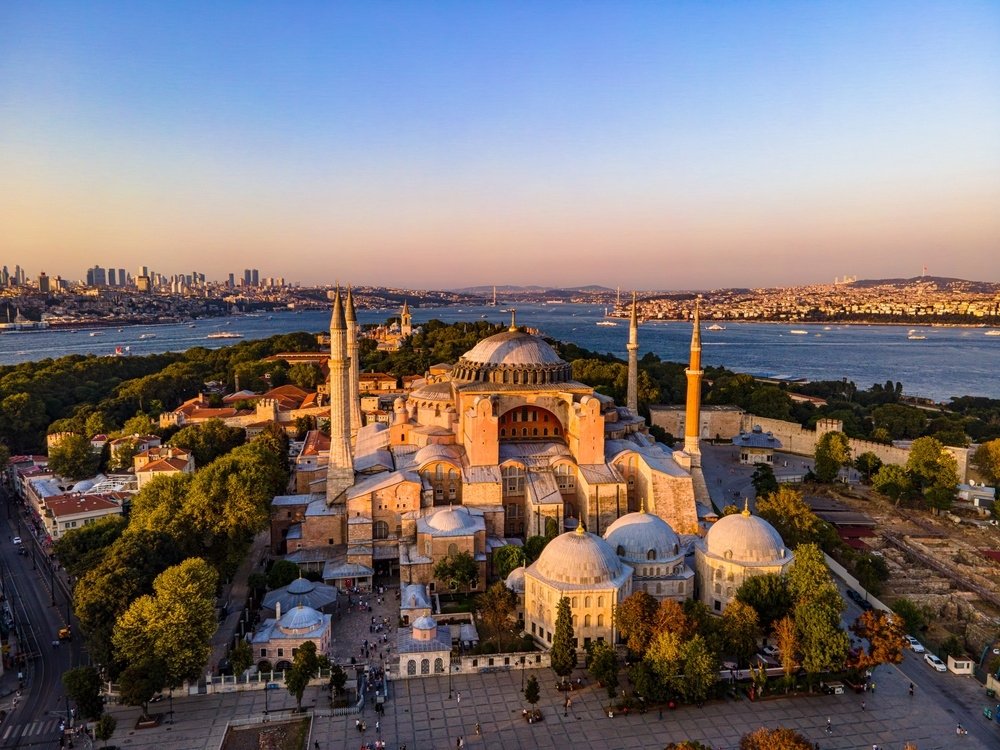
Professor Hasan Fırat Diker, a member of the Scientific Committee of the Hagia Sophia Grand Mosque, spoke at BlackBox, the cultural and arts venue inside the Türkiye Iş Bankası Museum of Painting and Sculpture.
Diker delivered a talk titled “The Archaeology of Hagia Sophia” as part of the “Istanbul Conversations” series organized by Iş Sanat and hosted by Cengiz Özdemir.
The event explored Hagia Sophia’s centuries-long history through the lens of archaeology. Accompanied by a presentation, Diker discussed the building’s transformations over the years, its archaeological layers, architectural features and place in Istanbul’s history.
Diker explained that the Romans built an extensive infrastructure system beneath Hagia Sophia. Beyond serving as a place of prayer, the site also functioned as a protected and secure area and a hub for distributing the city’s water supply.
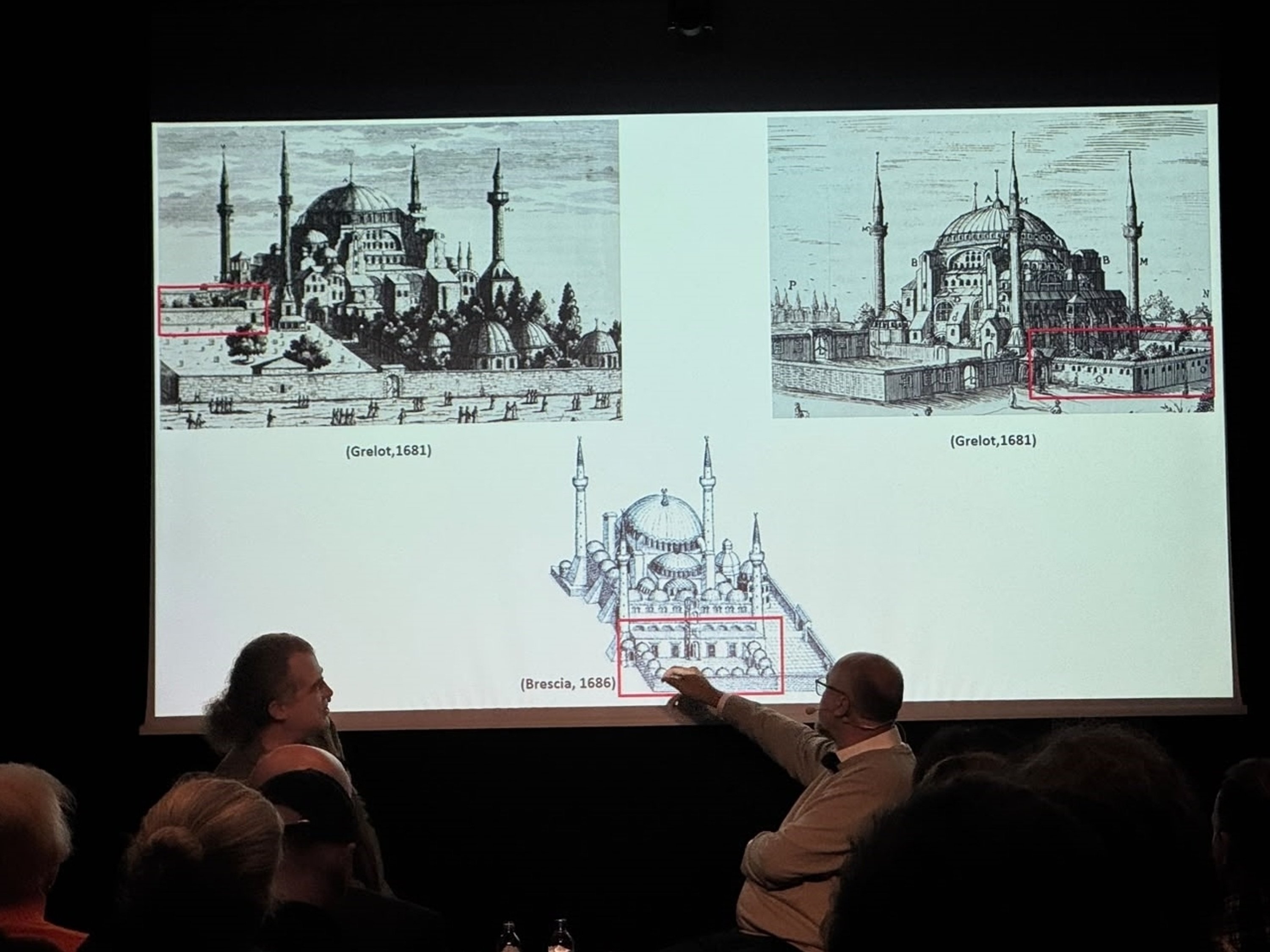
He said traces of the building’s colonnaded courtyard could be followed through European travelers’ accounts dating back to the 17th century. He also shed light on the complex of layered structures that once stood at the site, traces of which remain today even though the buildings themselves no longer survive.
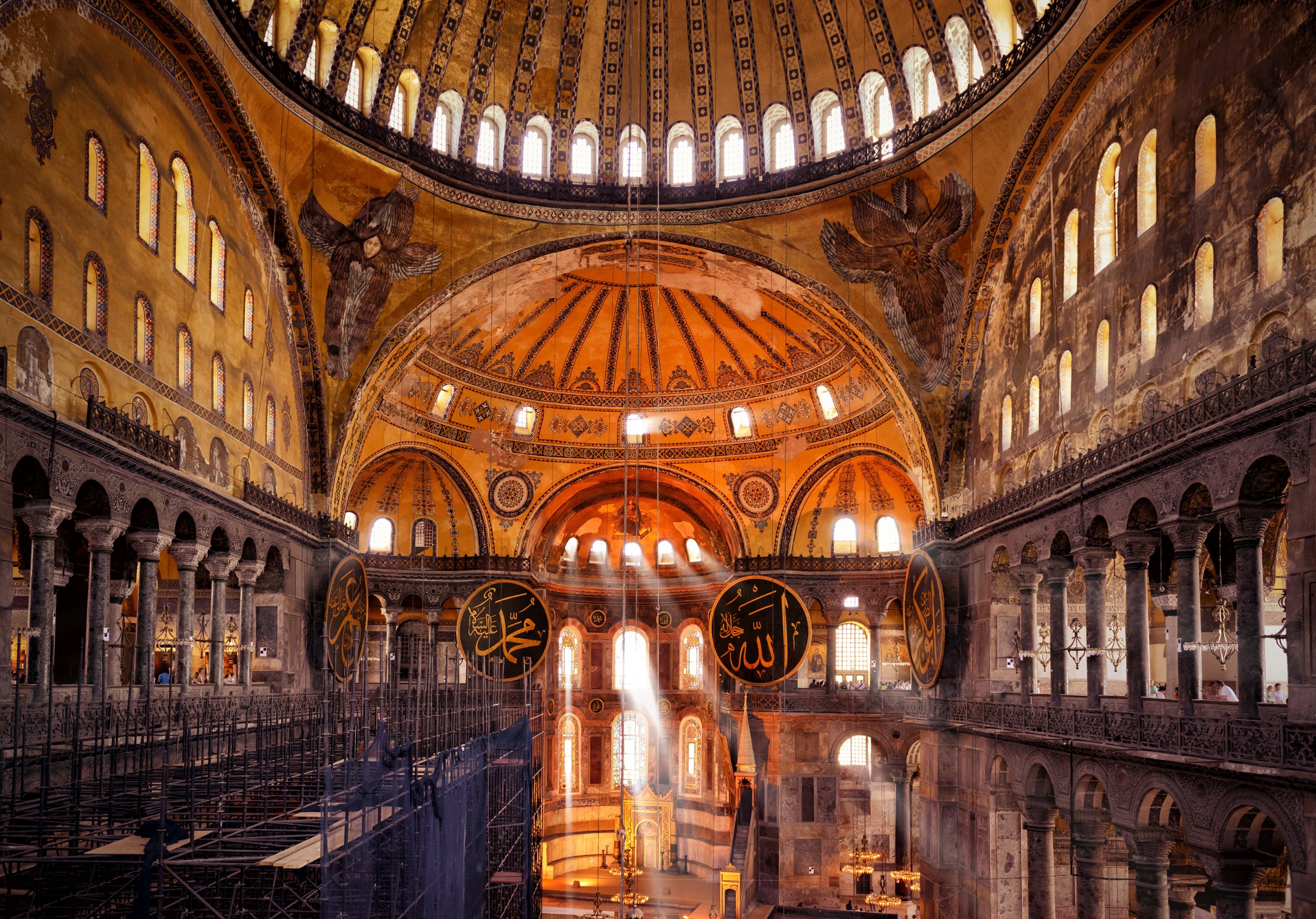
Diker highlighted Hagia Sophia’s complex architectural design, explaining that the first church built on the site was destroyed by fire in the fifth century. A second Hagia Sophia was subsequently built but was burned down and destroyed during the Nika riots. The structure standing today is the third Hagia Sophia.
The first Hagia Sophia was built on greywacke bedrock and lies about 2.3 meters (7.5 feet) below the current structure, Diker said.
“Of course, there were no excavation trucks like those we have today, so the city was built layer upon layer, with the ruins of earlier structures gradually buried beneath new construction,” he said.
Diker also discussed excavations carried out at the site in 1935 and 1936 by the German Archaeological Institute and a team from the United States.
“We are happy today to be continuing the work Atatürk initiated 90 years ago and hopefully bringing it to completion,” he said.
Diker said German archaeologist Alfons Maria Schneider was the first to uncover and document the upper section of a Roman street beneath Hagia Sophia, dating to the fifth century. The scientific committee is now working on the lower section of the street.
He also traced the history of the Fatih Madrasa, commissioned by Ottoman Sultan Mehmed II, or Mehmed the Conqueror, beside Hagia Sophia. The institution remained in place until 1869.
“That year, during the reign of Sultan Abdülaziz, the city’s mayor, Server Pasha, had the madrasa demolished on the grounds that it disrupted Hagia Sophia’s silhouette. Server Pasha even proposed demolishing one of the minarets under the pretext of widening the road,” Diker said.
The madrasa was rebuilt in 1874 after the Sheikh al-Islam of the time asked the sultan to restore it in 1873. It was later used for a period as an orphanage, but the building was demolished again, with objections raised over the presence of such an institution in Hagia Sophia’s garden.
In 2014, efforts by Hayrullah Cengiz, Hagia Sophia’s last museum director, brought plans to reconstruct the madrasa back onto the agenda. Construction began in 2017, and the building was nearing completion in 2020 when Hagia Sophia was reconverted into a mosque. It was subsequently handed over to Fatih Sultan Mehmet Vakıf University.
Diker said the infrastructure beneath Hagia Sophia had been documented by Schneider and the American Institute of Byzantine Studies in 1943. In 2017, his team carried out scanning and documentation work both inside and outside the structure.
The tunnels beneath Hagia Sophia form an intricate network resembling a subway system, he said. The Romans had designed the extensive infrastructure around 1,600 years ago to channel rainwater from the street and drain it into the sea.
Diker said work in the tunnels was still ongoing. Since February 2025, the team has removed approximately 3,000 metric tons of mud and debris.
Diker explained that one side of the main Roman thoroughfare beneath Hagia Sophia extended from Sarayburnu, the promontory at Istanbul’s historic peninsula, to Little Hagia Sophia. The team has cleared 170 meters (558 feet) of the road so far, work that had never previously been undertaken on this scale.
He emphasized that Hagia Sophia’s northeastern side contains some of the site’s most complex archaeological layers. In 1946, Muzaffer Ramazanoğlu discovered a hypogeum – an underground burial chamber – in the area, consisting of four adjoining rooms.
The team has cleared both the upper and lower sections of the hypogeum, Diker said.
“We went another 1.5 meters (5 feet) below the hypogeum. The area was filled with mud. This section predates Hagia Sophia itself,” he said.
Diker added that the committee was carrying out meticulous work to make larger sections of the underground infrastructure accessible to visitors. The team also plans to develop an exhibition project to present the findings to the public.