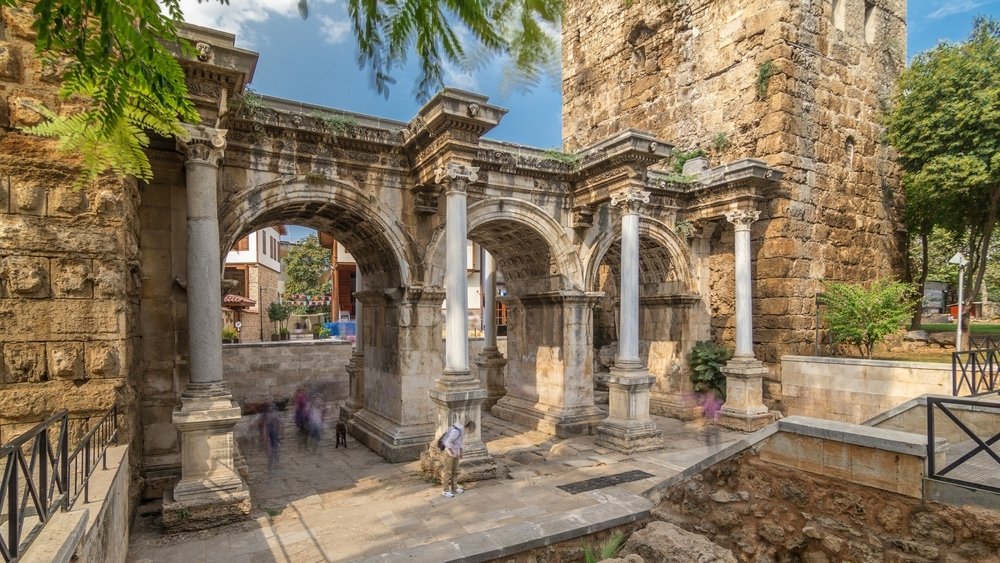
Hadrian’s Gate, one of the landmarks of Antalya’s historic Kaleiçi district, has stood for nearly 1,900 years, reflecting the city’s rich history with its ornate decorations and impressive architecture.
Hadrian’s Gate, popularly known as “Üçkapılar” (Three Gates), is one of Antalya’s best-preserved historical landmarks.
The structure was built as a monumental triumphal arch atop the city walls in A.D. 130 to commemorate Roman Emperor Hadrian’s visit to Antalya. It is made largely of white marble, with the exception of the column shafts.
The gate consists of three symmetrical arches, each 4.15 meters (13.6 feet) wide and 6.18 meters (20.3 feet) high. Its towers, which stand at around 15 meters (49.2 feet) high, make the structure particularly striking, while the gate itself reaches 8 meters (26.2 feet) in height.
Richly decorated with reliefs and carvings, the gate features coffered sections on its ceiling adorned with flower patterns resembling daisies, along with fruit and leaf motifs. The decorations are believed to represent crops grown in Antalya and the surrounding area in antiquity, as well as the fertility of the region.
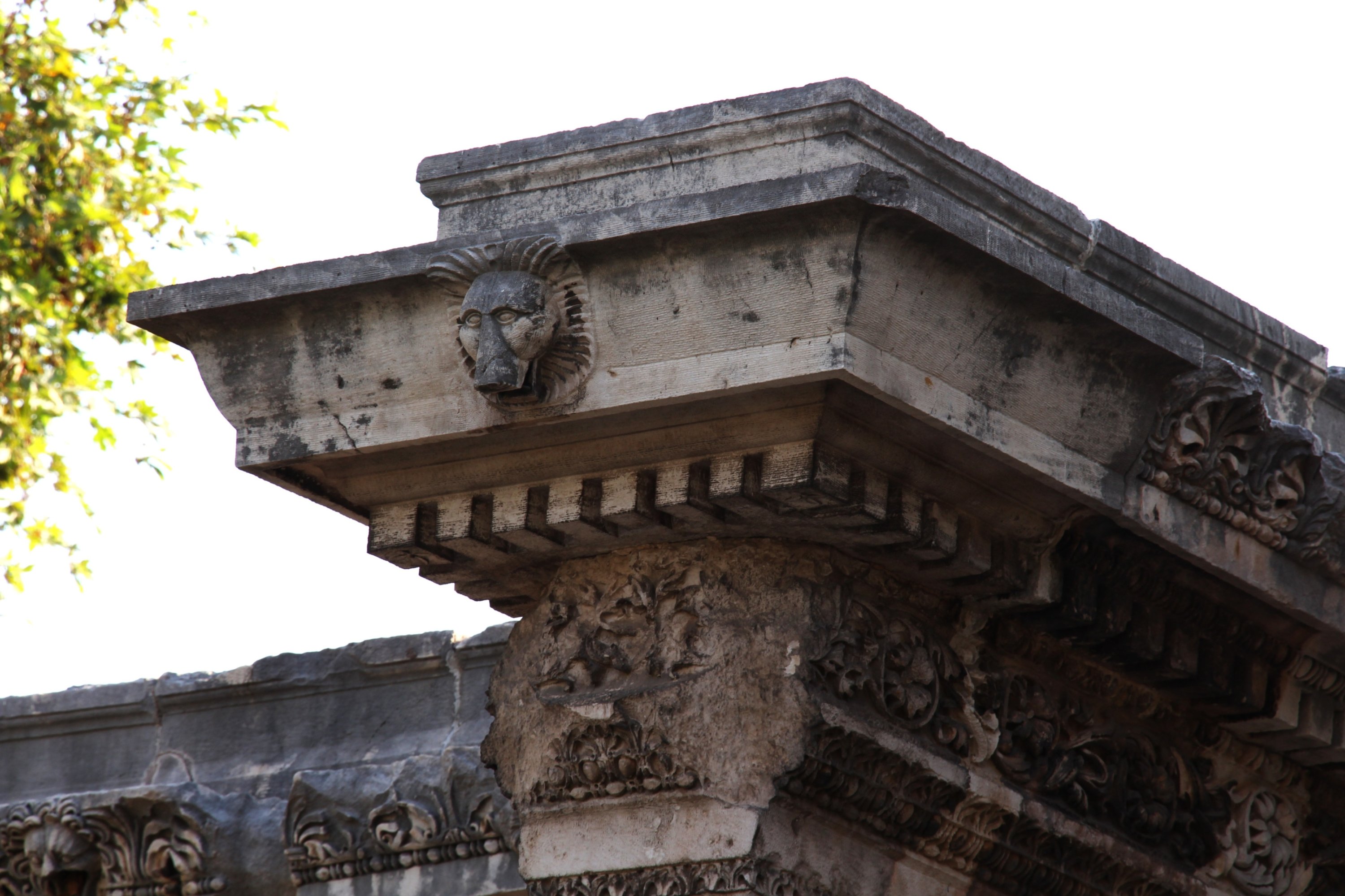
Lion-head figures adorn the cornice of Hadrian’s Gate, while defensive towers stand on either side of the structure.
The southern tower dates to the Roman period, while the lower section of the northern tower dates back to antiquity. Its upper section was built during the reign of Seljuk Sultan Alaeddin Keykubad I.
The gate remained hidden behind the city walls for many years, which helped protect it from external elements. It was uncovered again in 1882 after the remains of the walls were removed.
Following an extensive restoration in 1959, Hadrian’s Gate continues to serve as an important link between Antalya’s historic character and modern urban life.
One of the city’s most popular historical landmarks among both local and foreign tourists, the gate has also become a favorite spot for photographs. It was recently illuminated as part of a project carried out by the Antalya Governorship.
The new lighting gives the historic structure a different appearance in the evening and at night, bringing its architectural details into sharper relief while allowing the gate to showcase Antalya’s historical and cultural character after dark.
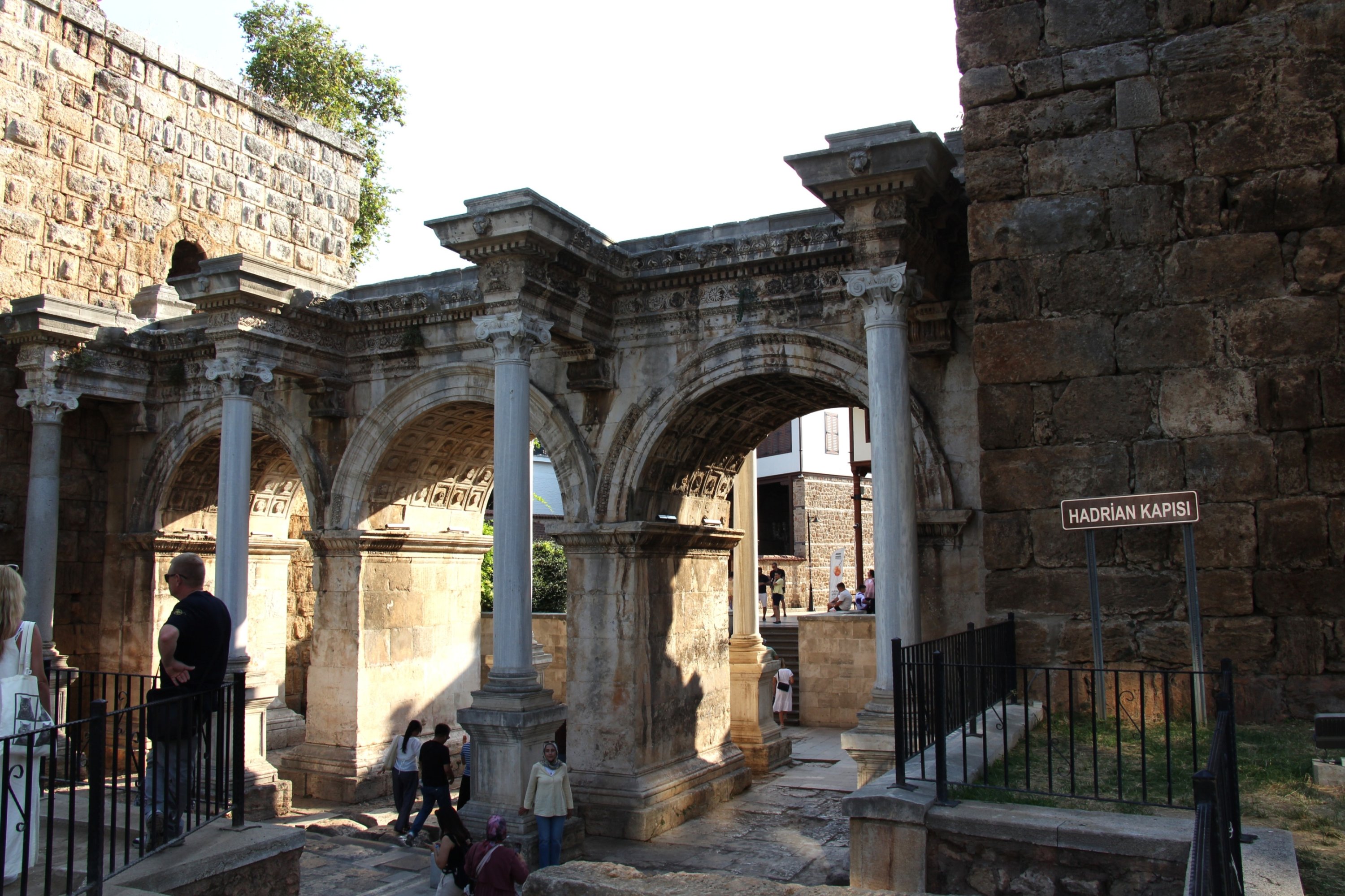
Antalya Governor Hulusi Şahin told Anadolu Agency (AA) that the lighting of Hadrian’s Gate was part of a project carried out by the Governorship through the General Directorate for Cultural Heritage and Museums.
Şahin said the Governorship covered the cost of the project and that the lighting work had been completed.
“The lighting process has been completed. From what I can see, everyone is pleased with it. We are considering continuing the project and expanding the lighting along that stretch of the city walls,” he said.