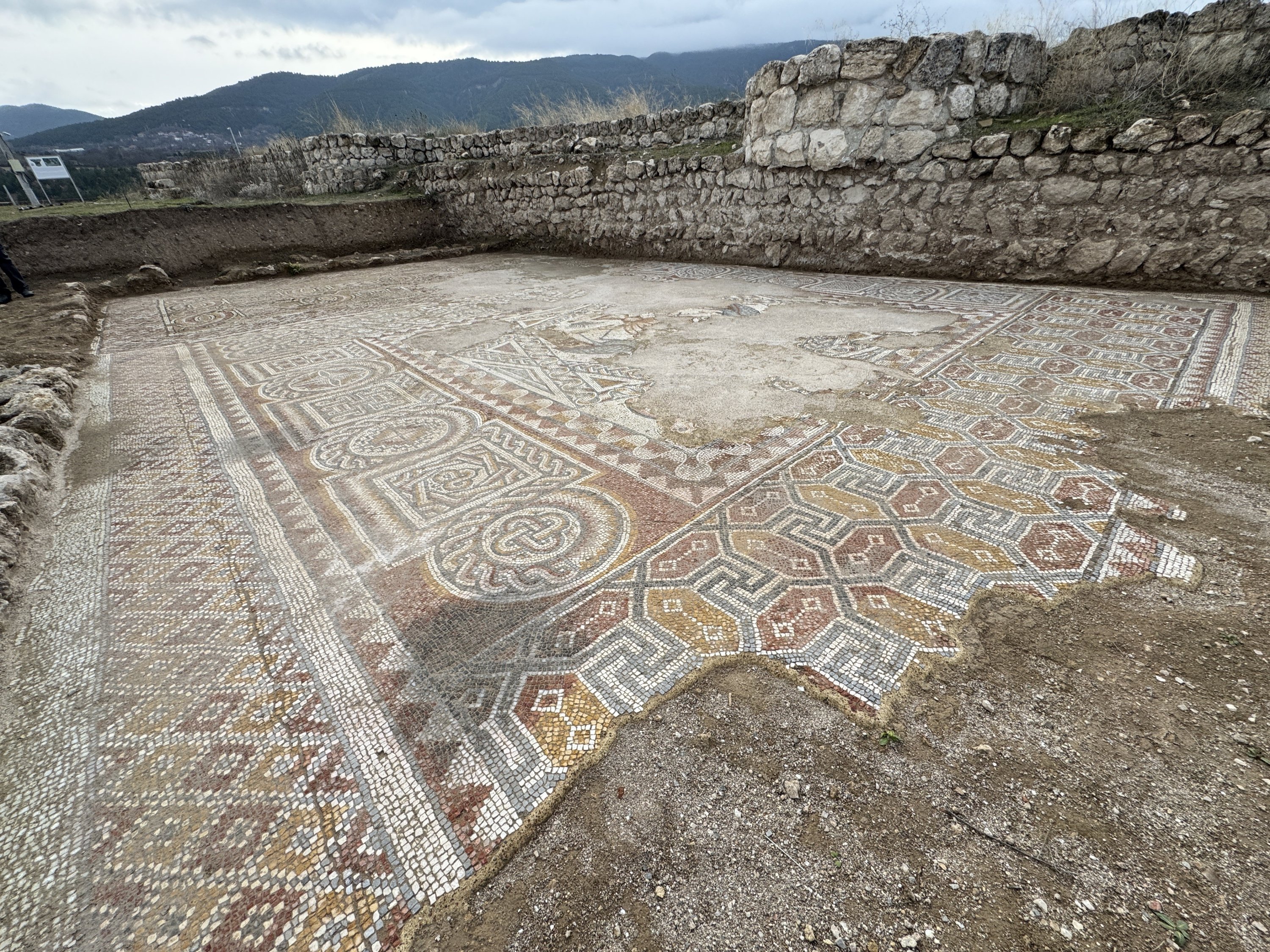
Excavations in the ancient city of Hadrianopolis in the Turkish Black Sea region province of Karabuk have uncovered a fourth-century AD reception hall featuring rare mosaic designs, scholars said Wednesday.
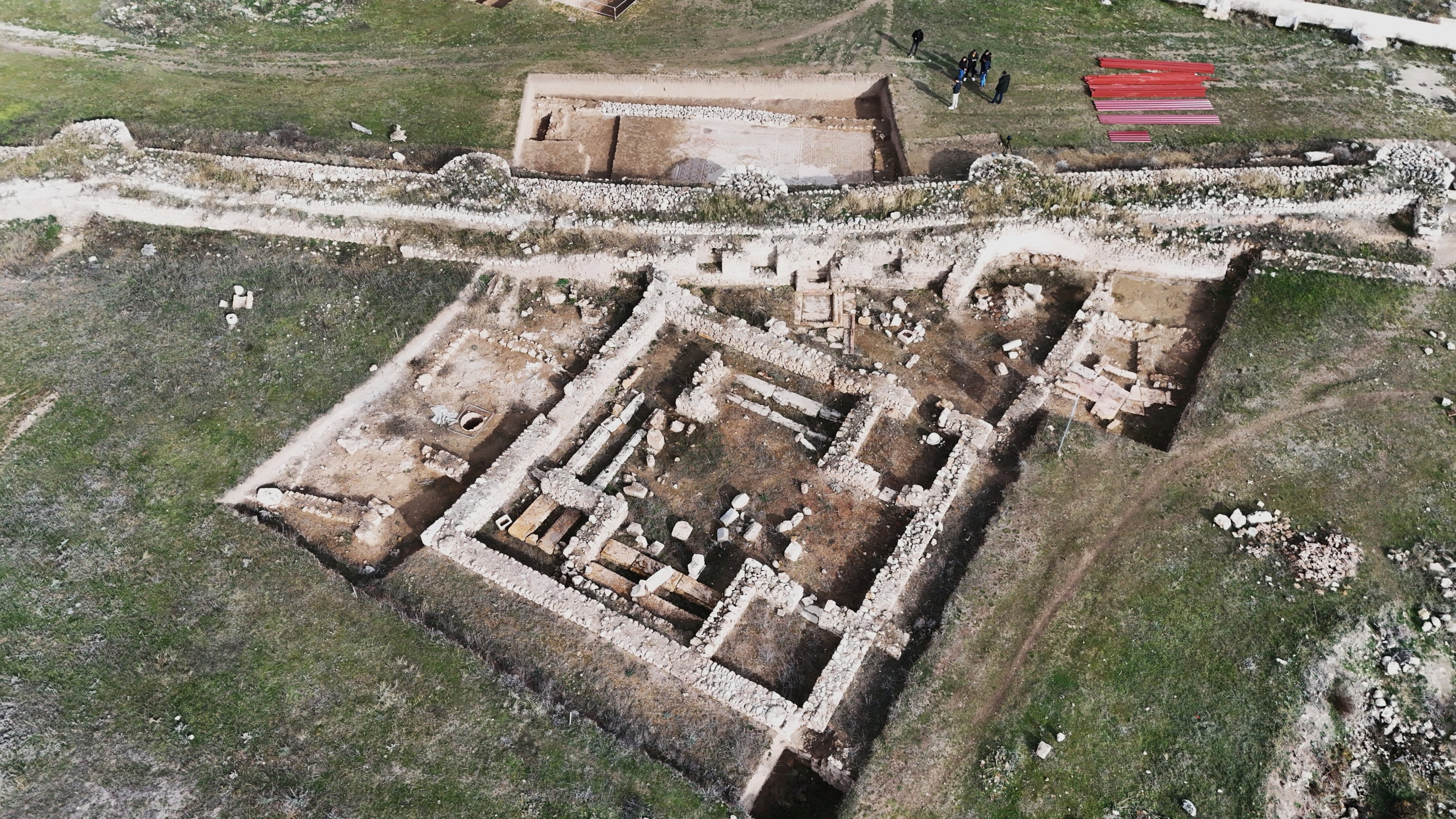
Led by archaeologist Ersin Çelikbaş of Karabük University, this year’s dig, carried out under the Turkish Culture and Tourism Ministry’s Heritage for the Future Project in Eskipazar, focused on the site’s inner citadel, where a large mosaic-floored chamber was revealed.
"We identified this room as a reception hall, indicating it belonged to a palace complex at Hadrianopolis,” Çelikbaş told reporters, calling the find "highly significant” for Black Sea and Anatolian archaeology.
The mosaics feature peacocks drinking from a fountain, geometric patterns, ribbon designs, an eight-pointed star, and motifs not previously recorded in academic literature. About 80% of the mosaic surface has survived intact.
Some human figures were also detected, though mostly damaged. Çelikbaş said further work will continue in 2026 to uncover additional palace sections.
"We still cannot determine whether the figure is mythological or religious,” he said, noting that the mosaics show exceptionally striking patterns.
He added that the discoveries are highly significant for Anatolian archaeology, emphasizing that some motifs, including one in particular, have been identified here for the first time and have never before been recorded in the region.
Serkan Civa, the mayor of Eskipazar, said interest in Hadrianopolis is steadily growing, adding that the site recently received official "ruins” status and will soon offer new visitor facilities to accommodate the rising number of guests.