Daily Sabah logo

Politics
Diplomacy Legislation War On Terror EU Affairs Elections News Analysis
TÜRKİYE
Istanbul Education Investigations Minorities Expat Corner Diaspora
World
Mid-East Europe Americas Asia Pacific Africa Syrian Crisis Islamophobia
Business
Automotive Economy Energy Finance Tourism Tech Defense Transportation News Analysis
Lifestyle
Health Environment Travel Food Fashion Science Religion History Feature Expat Corner
Arts
Cinema Music Events Portrait Reviews Performing Arts
Sports
Football Basketball Motorsports Tennis
Opinion
Columns Op-Ed Reader's Corner Editorial
PHOTO GALLERY
JOBS ABOUT US RSS PRIVACY CONTACT US
© Turkuvaz Haberleşme ve Yayıncılık 2025

Daily Sabah - Latest & Breaking News from Turkey | Istanbul

  • Politics
    • Diplomacy
    • Legislation
    • War On Terror
    • EU Affairs
    • Elections
    • News Analysis
  • TÜRKİYE
    • Istanbul
    • Education
    • Investigations
    • Minorities
    • Expat Corner
    • Diaspora
  • World
    • Mid-East
    • Europe
    • Americas
    • Asia Pacific
    • Africa
    • Syrian Crisis
    • Islamophobia
  • Business
    • Automotive
    • Economy
    • Energy
    • Finance
    • Tourism
    • Tech
    • Defense
    • Transportation
    • News Analysis
  • Lifestyle
    • Health
    • Environment
    • Travel
    • Food
    • Fashion
    • Science
    • Religion
    • History
    • Feature
    • Expat Corner
  • Arts
    • Cinema
    • Music
    • Events
    • Portrait
    • Reviews
    • Performing Arts
  • Sports
    • Football
    • Basketball
    • Motorsports
    • Tennis
  • Gallery
  • Opinion
    • Columns
    • Op-Ed
    • Reader's Corner
    • Editorial
  • TV
  • Life
  • Health
  • Environment
  • Travel
  • Food
  • Fashion
  • Science
  • Religion
  • History
  • Feature
  • Expat Corner

T. Rex oddball: Goose-necked dinosaur resembles diving bird

by Reuters

Washington Dec 03, 2022 - 6:20 pm GMT+3
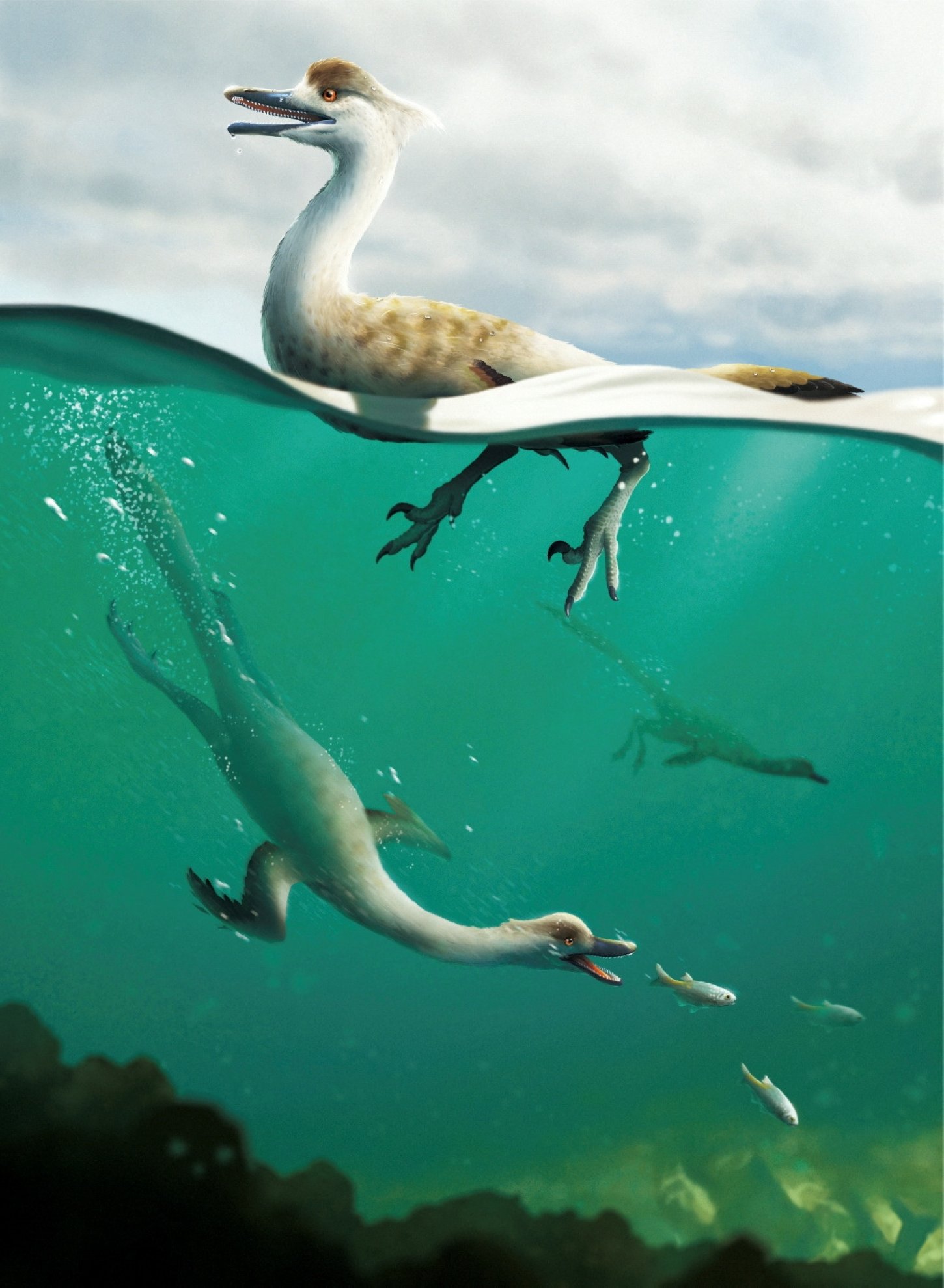
An artist's life reconstruction of the bird-like Cretaceous Period dinosaur Natovenator polydontus, which boasted a streamlined body resembling those of diving birds and lived about 72 million years ago in what is now the Gobi Desert of Mongolia. (Handout via Reuters)
by Reuters Dec 03, 2022 6:20 pm

There are always a few weirdos in the bunch – and the family that includes Tyrannosaurus rex is no exception. A newly described dinosaur from Mongolia – the size of a goose and looking a bit like one, too – fits that description.

The dinosaur, called Natovenator polydontus, lived about 72 million years ago during the Cretaceous Period and was built like a diving bird with a streamlined body while possessing a goose-like elongated neck and a long flattened snout with a mouth bearing more than 100 small teeth, scientists said on Thursday. It almost surely was covered in feathers, they added.

"Natovenator has many peculiar characteristics," said paleontologist Yuong-Nam Lee of Seoul National University in South Korea, lead author of the research published in the journal Communications Biology.

While it was a cousin of the speedy little predator Velociraptor, Natovenator was adapted to a semi-aquatic lifestyle in a freshwater ecosystem, perhaps floating on rivers and lakes, paddling with its front limbs, and using its flexible neck to catch fish and insects or diving underwater to capture its prey, the researchers said.

Its well-preserved remains – a skeleton about 70% complete – were unearthed in the Gobi Desert, which has been a treasure trove for dinosaur fossils over the decades.

Natovenator is part of the dinosaur group called theropods – sharing traits including bipedalism – best known for large meat-eaters including Tyrannosaurus, Tarbosaurus and Giganotosaurus. But the theropods, many of which were feathered, branched out in unusual directions with examples such as long-clawed ground sloth-like Therizinosaurus, ostrich-like Struthiomimus, termite-eating Mononykus and the entire bird lineage.

"The diversity of theropod dinosaurs by the end of the Cretaceous is totally amazing," said University of Alberta paleontologist and study co-author Philip Currie.

"I believe there will be more discoveries of fascinating, bizarre theropods in the future," Lee added.

Not many of the dinosaurs called "non-avian" – in other words, not the birds – are known to have lived a semi-aquatic lifestyle. A close relative of Natovenator named Halszkaraptor, described in 2017, lived a similar lifestyle at roughly the same time in the same region. Both had a very bird-like appearance and were closely related to the bird lineage.

Natovenator measured about 18 inches (45 centimeters) long, with a skull about 3 inches long. Its front limbs appeared somewhat flattened, perhaps as an adaptation for paddling and swimming. The streamlining of its body is shown by ribs that point toward the tail, as in diving birds, an arrangement that reduces drag in the water and allows efficient swimming.

"Natovenator – which means 'swimming thief' – is an amazing little animal for several reasons. First, it is small and delicate. When we found it, we were uncertain as to its identification because it looked more like a lizard or mammal skeleton than a dinosaur. Once it was prepared, we realized it was a theropod dinosaur, but what kind? Finally, it made sense once Halszkaraptor was described," Currie said.

"It is very specialized for living in an environment not typical for an animal related to Velociraptor and its other relatives. Most people think of dinosaurs as specialized land animals, not competing with crocodiles in the water," Currie added.

There were various diving birds during the Cretaceous, including North America's Hesperornis, which reached about 6 feet (1.8 meters) long, but none are known from the area Natovenator inhabited.

"More than 30 different lineages of tetrapods (terrestrial vertebrates) have independently invaded water ecosystems," Lee said. "Why not dinosaurs?"


  • shortlink copied
  • KEYWORDS
    dinosaurs t rex goose cretaceous period paleontology
    The Daily Sabah Newsletter
    Keep up to date with what’s happening in Turkey, it’s region and the world.
    You can unsubscribe at any time. By signing up you are agreeing to our Terms of Use and Privacy Policy. This site is protected by reCAPTCHA and the Google Privacy Policy and Terms of Service apply.
    No Image
    Warping your view: Japan's 'Tunnel of Light' art installation
    PHOTOGALLERY
    • POLITICS
    • Diplomacy
    • Legislation
    • War On Terror
    • EU Affairs
    • News Analysis
    • TÜRKİYE
    • Istanbul
    • Education
    • Investigations
    • Minorities
    • Diaspora
    • World
    • Mid-East
    • Europe
    • Americas
    • Asia Pacific
    • Africa
    • Syrian Crisis
    • İslamophobia
    • Business
    • Automotive
    • Economy
    • Energy
    • Finance
    • Tourism
    • Tech
    • Defense
    • Transportation
    • News Analysis
    • Lifestyle
    • Health
    • Environment
    • Travel
    • Food
    • Fashion
    • Science
    • Religion
    • History
    • Feature
    • Expat Corner
    • Arts
    • Cinema
    • Music
    • Events
    • Portrait
    • Performing Arts
    • Reviews
    • Sports
    • Football
    • Basketball
    • Motorsports
    • Tennis
    • Opinion
    • Columns
    • Op-Ed
    • Reader's Corner
    • Editorial
    • Photo gallery
    • DS TV
    • Jobs
    • privacy
    • about us
    • contact us
    • RSS
    © Turkuvaz Haberleşme ve Yayıncılık 2021