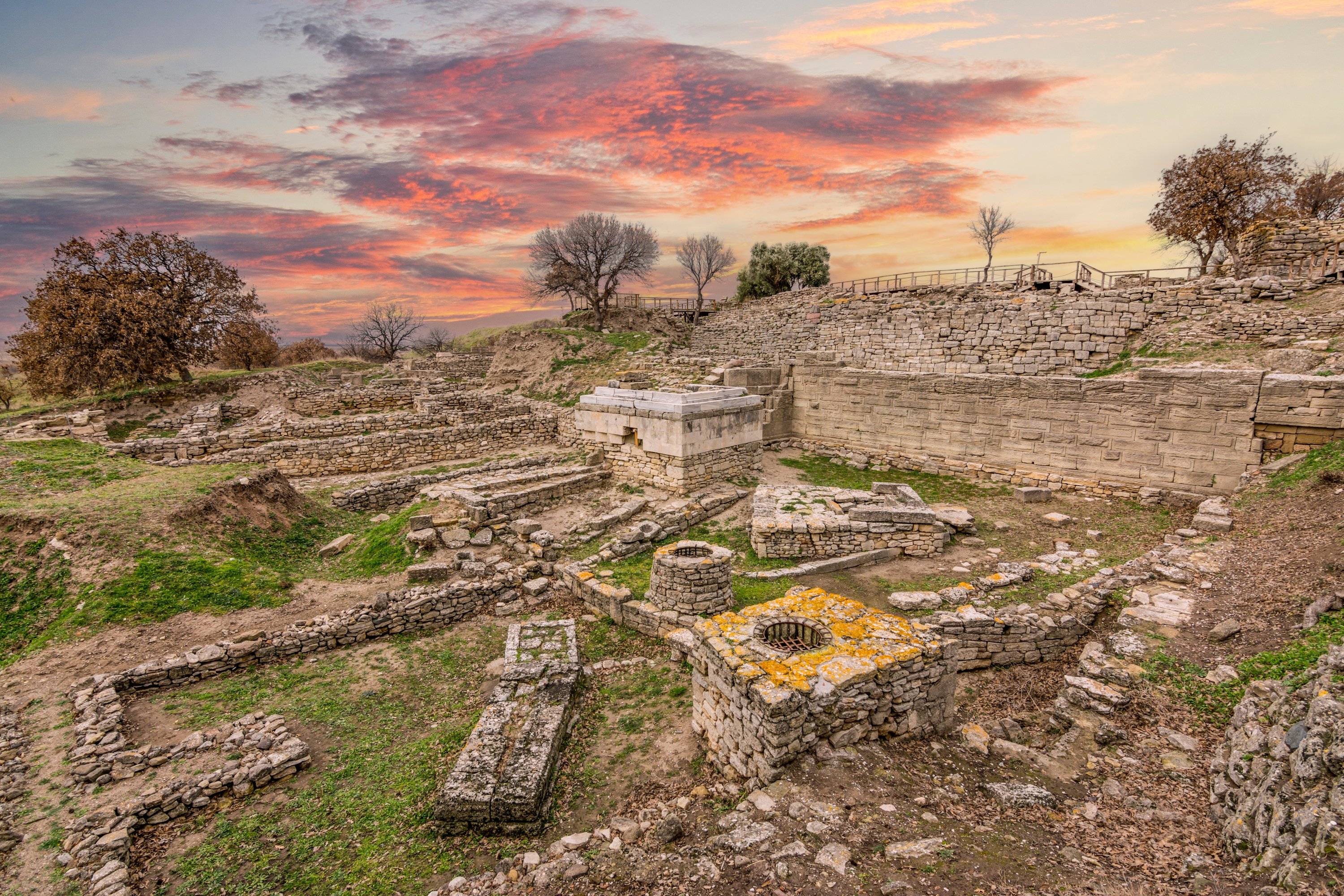
Excavations at the ancient city of Troy, located in Çanakkale province, northwestern Türkiye, and home to a 5,600-year-old civilization associated with the Trojan Wars, are uncovering a 2,000-year-old Roman-era street rooted in the founding mythology of the Roman Empire.
The ancient city of Troy was added to UNESCO’s World Heritage List in 1998. The ancient city, which was destroyed and rebuilt numerous times throughout history due to wars, fires and earthquakes, attracts thousands of local and foreign tourists every year. Visitors to the archaeological site also have the opportunity to visit the Troy Museum, which opened in 2019 and displays nearly 2,000 artifacts.
Excavations continue as archaeologists work to uncover a 2,000-year-old Roman-era street as part of the Culture and Tourism Ministry’s “Heritage for the Future Project,” aiming to open it up to visitors in the coming years.
The ancient city of Troy was central to the mythology surrounding the founding of the Roman Empire.
Professor Rüstem Aslan, head of the excavations at the ancient city of Troy, said they are focusing this year on excavations in Troy’s Lower City from the Hellenistic and Roman periods. “We are currently working on a very large and important street from the Roman period,” he said. “We will uncover the section of this street leading toward the archaeological site.”
During the Roman period, Troy developed into a very large city. Aslan said this was because Emperor Augustus strengthened the city through financial support and in other ways following his visit to Troy in 20 B.C.
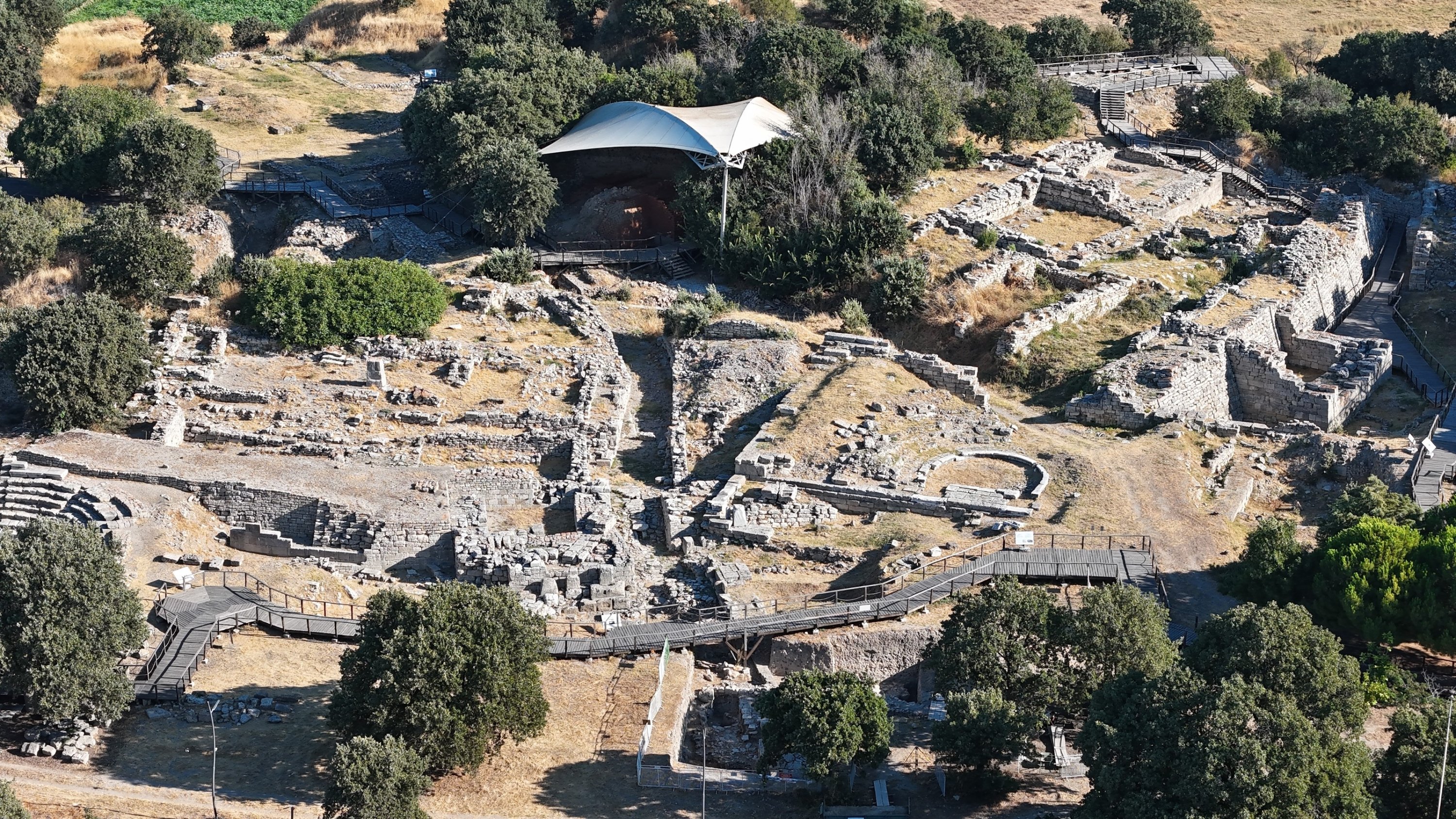
“The reason for this, as we know, was that Augustus commissioned his poet Vergil to write the Aeneid,” he explained, “In the Aeneid, the last Trojan leaves Troy, which has been burned and destroyed, and travels west, carrying his father Anchises on his back and holding his son’s hand, eventually founding the main city of Rome. The Roman Empire based its founding mythology on Troy.”
“Everyone drew inspiration from the history of this city and its remains,” Aslan said, and because of that “After Augustus, there was virtually no Roman soldier, emperor, politician or artist who did not come here.”
He said they aim to reveal how the city functioned during the Roman period. “This was what we call an insula system, with large streets running east to west and north to south, and houses and shops on both sides of these streets,” he said, “Based on the magnetic surveys carried out during the excavations in the Korfmann period in previous years, we can more or less understand the layout of the city.”
Aslan said the team is focusing this year on uncovering the Roman street and advancing toward the section leading to the archaeological site. The goal is to eventually open the area to visitors, allowing them to see Troy’s Roman-era streets, roads and structures.
He said the road being excavated dates to the Roman period and was in use from around the 20s B.C. until about A.D. 500. Historical sources indicate that two major earthquakes struck the area in the 500s, after which the city was rebuilt, Aslan said.