Daily Sabah logo

Politics
Diplomacy Legislation War On Terror EU Affairs Elections News Analysis
TÜRKİYE
Istanbul Education Investigations Minorities Expat Corner Diaspora
World
Mid-East Europe Americas Asia Pacific Africa Syrian Crisis Islamophobia
Business
Automotive Economy Energy Finance Tourism Tech Defense Transportation News Analysis
Lifestyle
Health Environment Travel Food Fashion Science Religion History Feature Expat Corner
Arts
Cinema Music Events Portrait Reviews Performing Arts
Sports
Football Basketball Motorsports Tennis
Opinion
Columns Op-Ed Reader's Corner Editorial
PHOTO GALLERY
JOBS ABOUT US RSS PRIVACY CONTACT US
© Turkuvaz Haberleşme ve Yayıncılık 2026

Daily Sabah - Latest & Breaking News from Turkey | Istanbul

  • Politics
    • Diplomacy
    • Legislation
    • War On Terror
    • EU Affairs
    • Elections
    • News Analysis
  • TÜRKİYE
    • Istanbul
    • Education
    • Investigations
    • Minorities
    • Expat Corner
    • Diaspora
  • World
    • Mid-East
    • Europe
    • Americas
    • Asia Pacific
    • Africa
    • Syrian Crisis
    • Islamophobia
  • Business
    • Automotive
    • Economy
    • Energy
    • Finance
    • Tourism
    • Tech
    • Defense
    • Transportation
    • News Analysis
  • Lifestyle
    • Health
    • Environment
    • Travel
    • Food
    • Fashion
    • Science
    • Religion
    • History
    • Feature
    • Expat Corner
  • Arts
    • Cinema
    • Music
    • Events
    • Portrait
    • Reviews
    • Performing Arts
  • Sports
    • Football
    • Basketball
    • Motorsports
    • Tennis
  • Gallery
  • Opinion
    • Columns
    • Op-Ed
    • Reader's Corner
    • Editorial
  • TV
  • Life
  • Health
  • Environment
  • Travel
  • Food
  • Fashion
  • Science
  • Religion
  • History
  • Feature
  • Expat Corner

Türkiye’s Havran figs have 8,000-year-old roots: Archaeologists

by Anadolu Agency

BALIKESIR, Türkiye Sep 14, 2026 - 11:17 am GMT+3
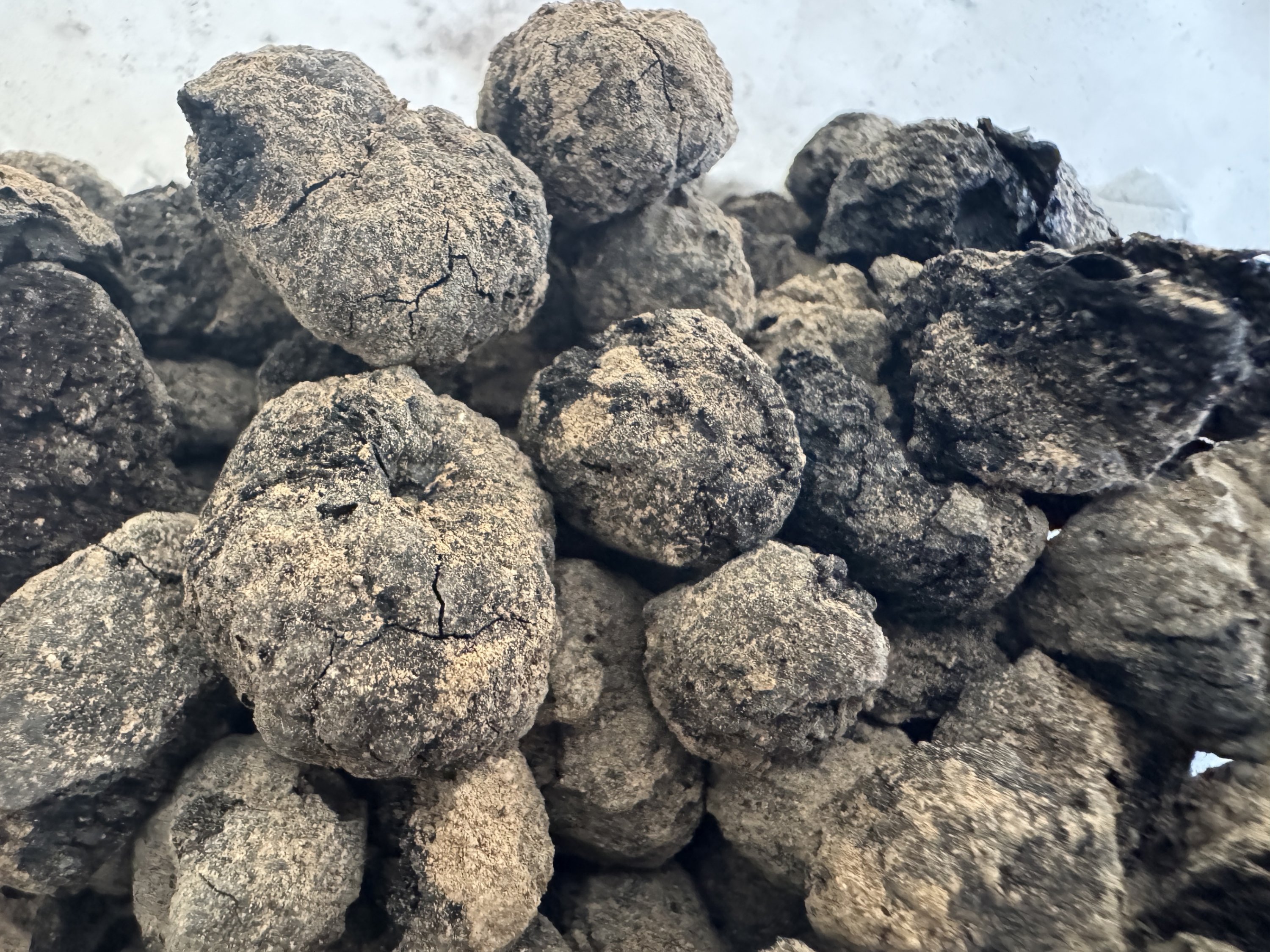
A close-up view of carbonized figs dating to 6300 B.C., found at Andık Cave, Balıkesir, Türkiye, Sept. 10, 2026. (AA Photo)
by Anadolu Agency Sep 14, 2026 11:17 am

Archaeologists have uncovered 8,000-year-old remains of the black fig for which the Havran district of northwestern Türkiye is known, revealing that the fruit has grown in the region since the Neolithic period.

The carbonized figs were discovered during excavations at Andık Cave, on Kocaçal Hill, about 2 kilometers (1.2 miles) from Havran’s Inönü neighborhood.

A carbon-14 analysis conducted at the Scientific and Technological Research Council of Türkiye’s Marmara Research Center dated the remains to around 6300 B.C.

Derya Yalçıklı, an archaeology professor at Çanakkale Onsekiz Mart University, is leading the excavations with authorization from the Culture and Tourism Ministry.

The Balıkesir Kuvayi Milliye Museum Directorate, Balıkesir Metropolitan Municipality and Havran Municipality are supporting the project.

Andık Cave, which was discovered in 1949 by archaeologist Kılıç Kökten, reaches a depth of 59 meters (194 feet) and contains several galleries.

Getting to the site presents a daily challenge for the excavation team. Setting out from their excavation house at dawn, the archaeologists travel by off-road vehicle along a trail to Kocaçal Hill.

At the end of the road, they load their water supplies onto a donkey and walk about 500 meters (1,640 feet) through narrow, rugged terrain to reach the cave.

There, the team has uncovered numerous ceramic vessels and tools made of stone and bone. A painting on one of the cave walls depicts a mountain summit and a leopard.

Cave used for millennia

Yalçıklı told Anadolu Agency (AA) that the cave was used over a long period, with its entrance serving both as a storage area and for ritual purposes.

"The use begins mainly in the Early Bronze Age and continues until the middle of the Late Bronze Age. In terms of dates, it covers a period extending to around the middle of 3000 B.C.,” he said.

The team also found evidence of limited use during the Byzantine period, while the earliest evidence of human activity at the site dates to after 6700 B.C.

Yalçıklı said this year’s excavations had revealed better-preserved archaeological layers than initially expected, including habitation areas and floor surfaces.

"We found habitation units and floors, allowing us to identify different levels of occupation,” he said. "The collection consists mainly of bone, stone and cutting tools because these periods saw little or no use of metal.”
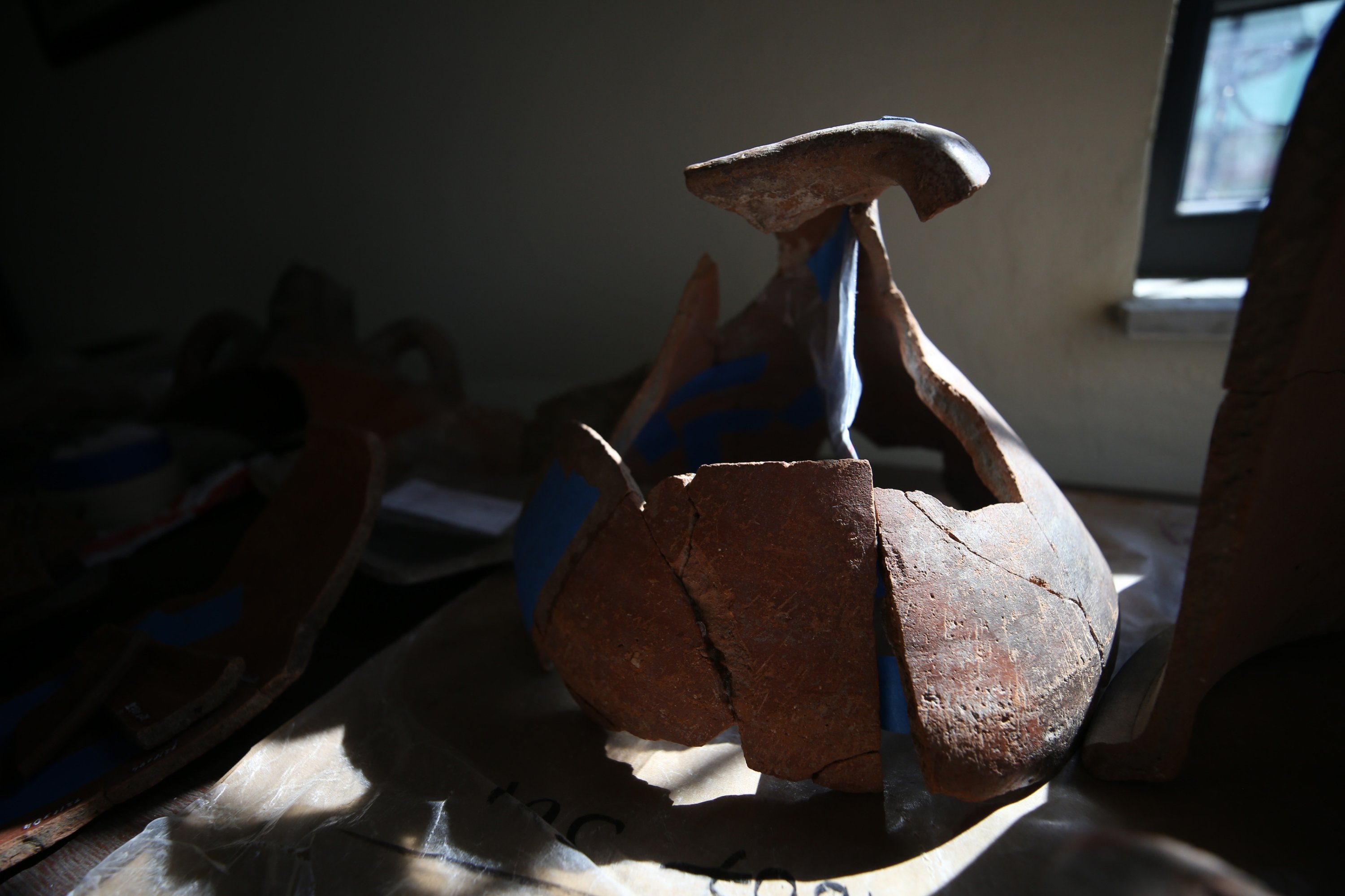
A pottery vessel unearthed during excavations at Andık Cave, Balıkesir, Türkiye, Sept. 10, 2026. (AA Photo)

The layers provide previously unknown information about prehistoric communities in the part of Balıkesir that extends toward the Aegean region, he added.

"This year, we encountered very interesting floor arrangements. We do not know of many such arrangements inside caves,” he said.

"We have identified inside the cave, in phases before pottery was used, a floor arrangement similar to those constructed in houses. This is a very important result both for the region and for Anatolian archaeology.”

Figs found stored

The excavation team also discovered remains of food consumed by the cave’s Neolithic inhabitants, including barley, wheat and figs.

Yalçıklı said the charred fig remains were particularly well preserved and were found in unusually large numbers.

"Havran’s geographically indicated fig is one of the district’s most important products. We found it in a carbonized state,” he said.

"Carbon-14 testing showed that the fig remains date to 6300 B.C. We can therefore say that Havran’s famous fig has existed in this region since the Neolithic period.”

The figs appeared to have been gathered and stored together, suggesting that they formed part of the inhabitants’ diet.

"We find barley, wheat and many other products in these layers, but the figs were preserved very well and their number is quite high,” Yalçıklı said.

"They had been piled up and stored in one place. This shows that figs were among the fruits used for food at the time.”

Havran Mayor Emin Ersoy said the municipality was providing its full support for the excavations and welcomed the discovery.


  • shortlink copied
  • Last Update: Sep 14, 2026 2:17 pm
    KEYWORDS
    figs excavation neolithic period
    The Daily Sabah Newsletter
    Keep up to date with what’s happening in Turkey, it’s region and the world.
    You can unsubscribe at any time. By signing up you are agreeing to our Terms of Use and Privacy Policy. This site is protected by reCAPTCHA and the Google Privacy Policy and Terms of Service apply.
    No Image
    Rare solar eclipse captivates skywatchers across continents
    PHOTOGALLERY
    • POLITICS
    • Diplomacy
    • Legislation
    • War On Terror
    • EU Affairs
    • News Analysis
    • TÜRKİYE
    • Istanbul
    • Education
    • Investigations
    • Minorities
    • Diaspora
    • World
    • Mid-East
    • Europe
    • Americas
    • Asia Pacific
    • Africa
    • Syrian Crisis
    • İslamophobia
    • Business
    • Automotive
    • Economy
    • Energy
    • Finance
    • Tourism
    • Tech
    • Defense
    • Transportation
    • News Analysis
    • Lifestyle
    • Health
    • Environment
    • Travel
    • Food
    • Fashion
    • Science
    • Religion
    • History
    • Feature
    • Expat Corner
    • Arts
    • Cinema
    • Music
    • Events
    • Portrait
    • Performing Arts
    • Reviews
    • Sports
    • Football
    • Basketball
    • Motorsports
    • Tennis
    • Opinion
    • Columns
    • Op-Ed
    • Reader's Corner
    • Editorial
    • Photo gallery
    • DS TV
    • Jobs
    • privacy
    • about us
    • contact us
    • RSS
    © Turkuvaz Haberleşme ve Yayıncılık 2021