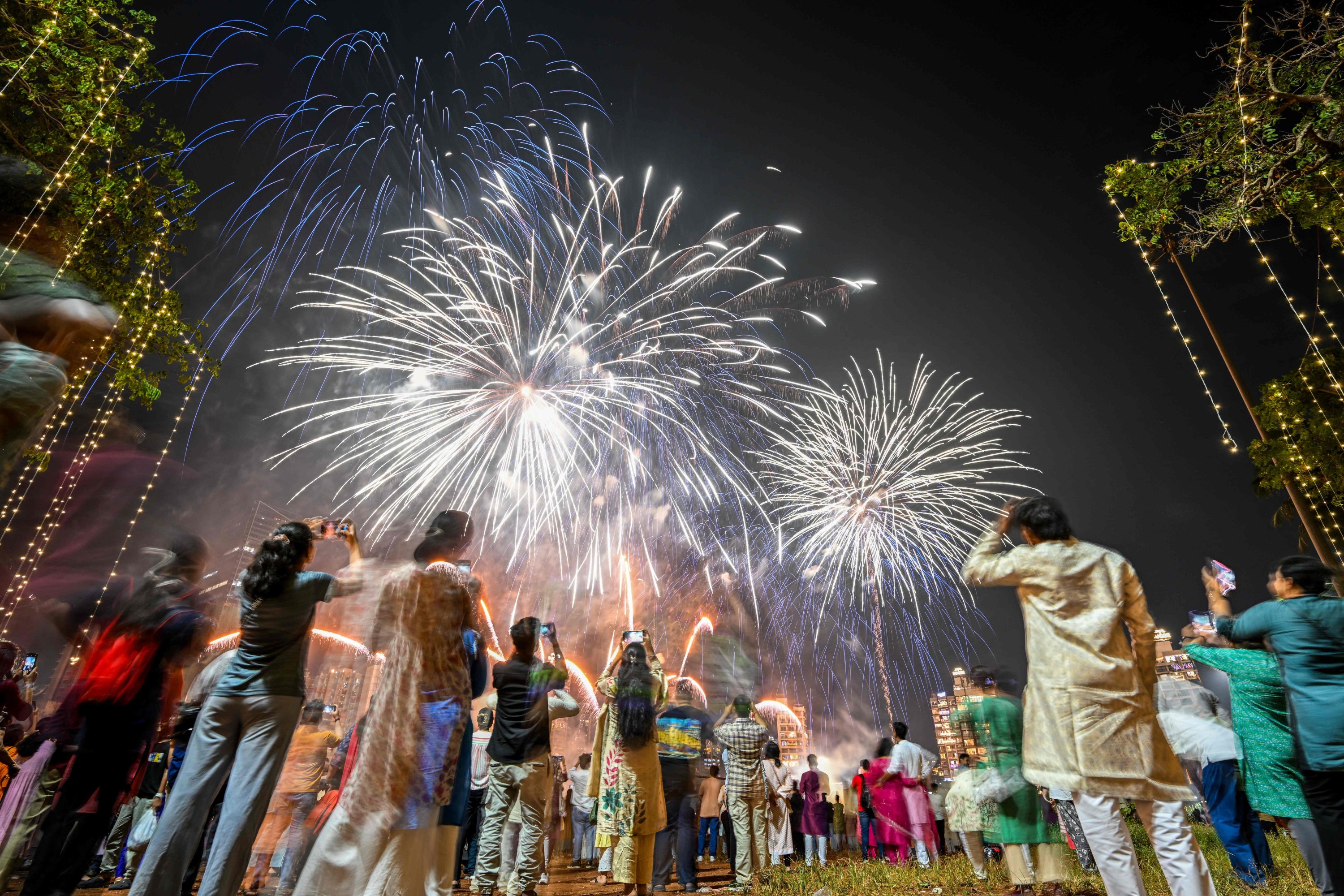
India's festival of lights, Diwali, was announced on Wednesday as an addition to UNESCO's intangible cultural heritage list, sparking celebrations.
The U.N.'s cultural agency, meeting in the Indian capital New Delhi from Tuesday to Thursday, is examining dozens of nominations from as many as 78 countries.
The new announcements will join UNESCO's list of cultural heritage, whose purpose is to "raise awareness of the diversity of these traditions" and protect them in the future.
The Delhi government is organizing several events, including special illumination of buildings and decoration across major roads, along with a massive lamp-lighting ceremony.
As one of Hinduism's most significant festivals, millions of Indians celebrate Diwali, also known as Deepavali, not just in India but globally.
Many people, including those from the Sikh and Jain religious communities, observe it as a five-day festival which symbolises the triumph of good over evil.
Celebrations, which happen on the new moon day in either late October or November, usually see the lighting of lamps and the bursting of firecrackers.
In much of north India, Diwali marks the return of the Hindu Lord Rama to Ayodhya after defeating the demon king Ravana.
The festival is also strongly associated with the worship of Lakshmi, the goddess of wealth and prosperity.
"A joyous moment as Deepavali, the festival of lights marking the triumph of good over evil and the return of Lord Rama to his kingdom, Ayodhya, which is celebrated globally, is added to the UNESCO Intangible Cultural Heritage list," India's foreign ministry said on X.