
Daily Sabah logo

Politics
Diplomacy Legislation War On Terror EU Affairs Elections News Analysis
TÜRKİYE
Istanbul Education Investigations Minorities Expat Corner Diaspora
World
Mid-East Europe Americas Asia Pacific Africa Syrian Crisis Islamophobia
Business
Automotive Economy Energy Finance Tourism Tech Defense Transportation News Analysis
Lifestyle
Health Environment Travel Food Fashion Science Religion History Feature Expat Corner
Arts
Cinema Music Events Portrait Reviews Performing Arts
Sports
Football Basketball Motorsports Tennis
Opinion
Columns Op-Ed Reader's Corner Editorial
PHOTO GALLERY
JOBS ABOUT US RSS PRIVACY CONTACT US
© Turkuvaz Haberleşme ve Yayıncılık 2025

Daily Sabah - Latest & Breaking News from Turkey | Istanbul

  • Politics
    • Diplomacy
    • Legislation
    • War On Terror
    • EU Affairs
    • Elections
    • News Analysis
  • TÜRKİYE
    • Istanbul
    • Education
    • Investigations
    • Minorities
    • Expat Corner
    • Diaspora
  • World
    • Mid-East
    • Europe
    • Americas
    • Asia Pacific
    • Africa
    • Syrian Crisis
    • Islamophobia
  • Business
    • Automotive
    • Economy
    • Energy
    • Finance
    • Tourism
    • Tech
    • Defense
    • Transportation
    • News Analysis
  • Lifestyle
    • Health
    • Environment
    • Travel
    • Food
    • Fashion
    • Science
    • Religion
    • History
    • Feature
    • Expat Corner
  • Arts
    • Cinema
    • Music
    • Events
    • Portrait
    • Reviews
    • Performing Arts
  • Sports
    • Football
    • Basketball
    • Motorsports
    • Tennis
  • Gallery
  • Opinion
    • Columns
    • Op-Ed
    • Reader's Corner
    • Editorial
  • TV
  • Life
  • Health
  • Environment
  • Travel
  • Food
  • Fashion
  • Science
  • Religion
  • History
  • Feature
  • Expat Corner

Biomedical engineers create flexible robot to 3D print inside body

by Reuters

SYDNEY Apr 03, 2023 - 11:46 am GMT+3
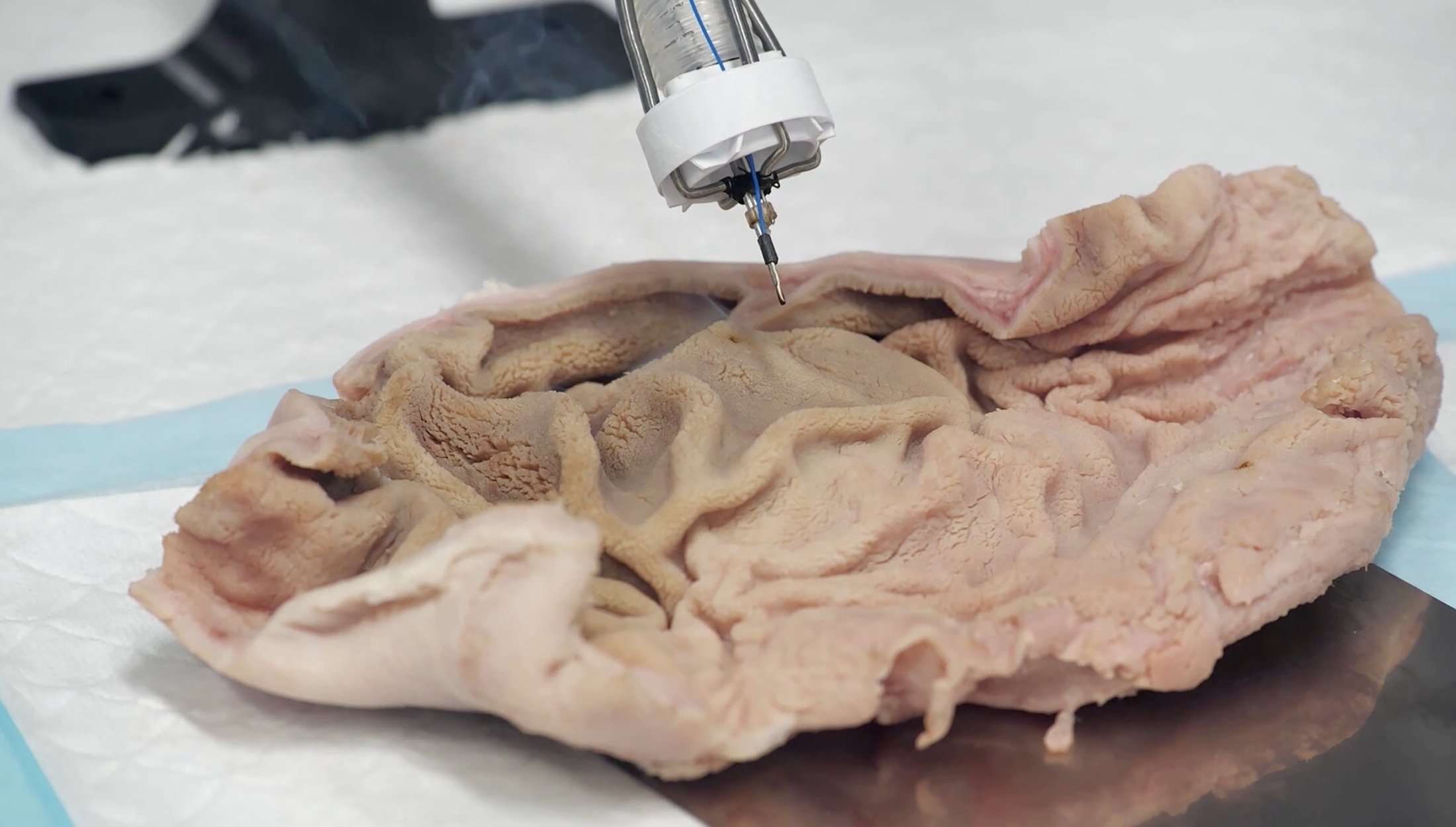
A small flexible robot during a demonstrative operation at the Medical Robotics lab of University of New South Wales, in Sydney, Australia, March 17, 2023. (Reuters Photo)
by Reuters Apr 03, 2023 11:46 am

A team of biomedical engineers has developed a small flexible robot that can be used to 3D print biomaterials directly inside the human body which scientists hope will change the future landscape of medical procedures.

3D bioprinting is a process where natural tissue-like structures are printed using living cells and other natural tissues known as "bio-ink," to repair organ or tissue damage or ruptured blood vessels.

Using living cells in the printing process allows these man-made structures to fuse naturally with the human body and continue to grow.

Currently, biomaterials must be created outside of the body before relying on typically invasive surgery to insert the materials inside the body, which can lead to high blood loss, infections, and other complications.

Team leader Thanh Nho Do said this new device, named F3DB, will eliminate those complications and risks by printing directly inside the body.
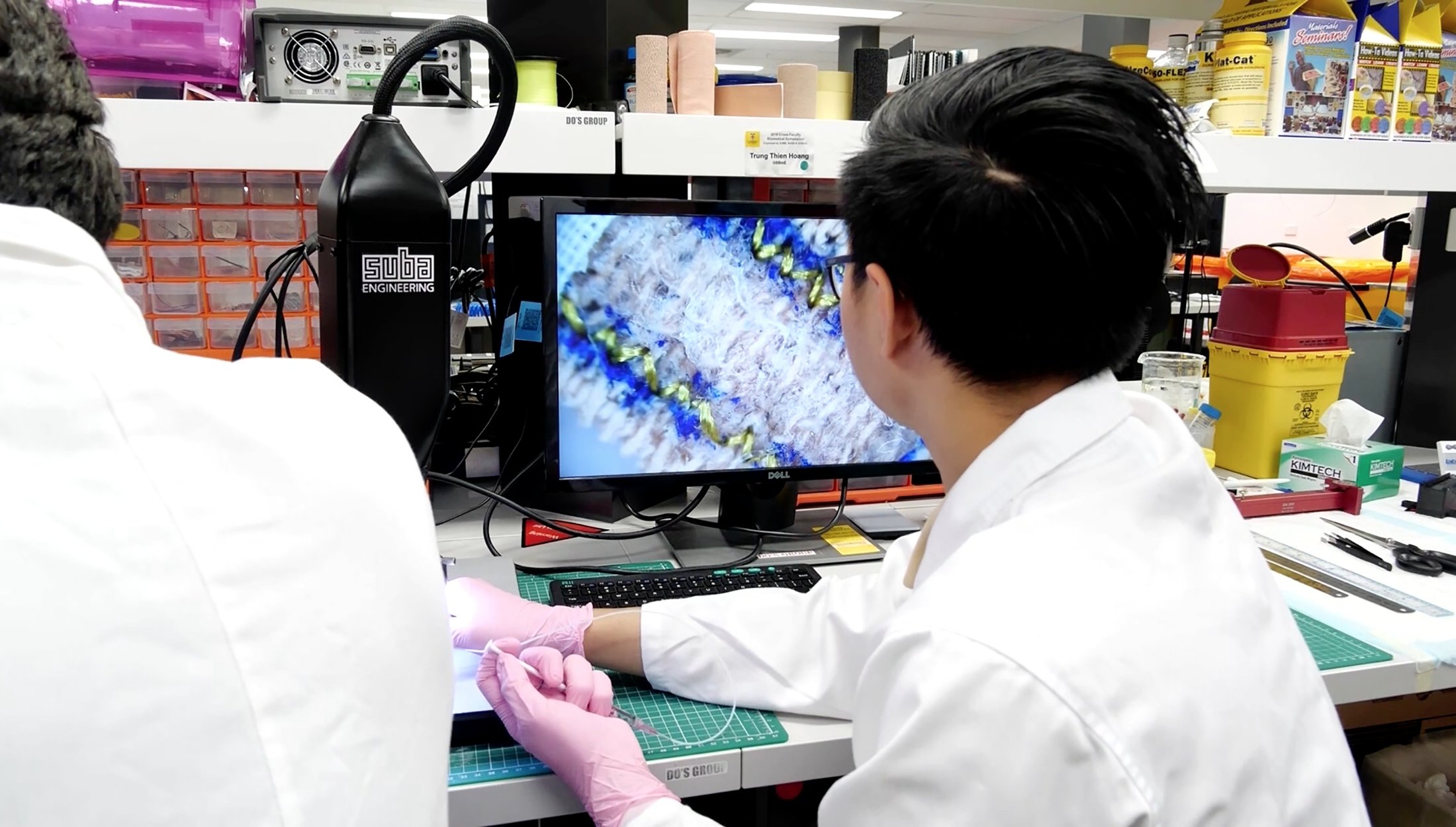
Students work on a small flexible robot at the Medical Robotics lab of University of New South Wales, in Sydney, Australia, March 17, 2023. (Reuters Photo)
A small flexible robot during a demonstrative operation at the Medical Robotics lab of University of New South Wales, in Sydney, Australia, March 17, 2023. (Reuters Photo)

"Currently, no commercially available technology can perform direct 3D printing inside the human body," Do told Reuters.

F3DB features a three-axis printing head that can bend and twist using hydraulics on the tip of a soft robotic arm. The printing nozzle can print pre-programmed shapes or can be operated manually if more complex or undetermined printing is required.

The smallest prototype has a diameter of approximately 11 to 13 millimeters, similar to a commercial endoscope, but it could be scaled even smaller in the future.

"Soft robots (are) very good for working with the human body," Do, the director of the University of New South Wales Medical Robotics Lab, said.

"They can offer high flexibility and adaptability. This means they can fit any area inside the human body."

Do believes that the device is on track for commercialization in the next five to seven years, pending further clinical trials.


  • shortlink copied
  • Last Update: Apr 03, 2023 2:46 pm
    KEYWORDS
    medicine technology 3d printing biomedical research engineering
    The Daily Sabah Newsletter
    Keep up to date with what’s happening in Turkey, it’s region and the world.
    You can unsubscribe at any time. By signing up you are agreeing to our Terms of Use and Privacy Policy. This site is protected by reCAPTCHA and the Google Privacy Policy and Terms of Service apply.
    Beauty of colorful wings: Parrots at Antalya Zoo
    PHOTOGALLERY
    • POLITICS
    • Diplomacy
    • Legislation
    • War On Terror
    • EU Affairs
    • News Analysis
    • TÜRKİYE
    • Istanbul
    • Education
    • Investigations
    • Minorities
    • Diaspora
    • World
    • Mid-East
    • Europe
    • Americas
    • Asia Pacific
    • Africa
    • Syrian Crisis
    • İslamophobia
    • Business
    • Automotive
    • Economy
    • Energy
    • Finance
    • Tourism
    • Tech
    • Defense
    • Transportation
    • News Analysis
    • Lifestyle
    • Health
    • Environment
    • Travel
    • Food
    • Fashion
    • Science
    • Religion
    • History
    • Feature
    • Expat Corner
    • Arts
    • Cinema
    • Music
    • Events
    • Portrait
    • Performing Arts
    • Reviews
    • Sports
    • Football
    • Basketball
    • Motorsports
    • Tennis
    • Opinion
    • Columns
    • Op-Ed
    • Reader's Corner
    • Editorial
    • Photo gallery
    • DS TV
    • Jobs
    • privacy
    • about us
    • contact us
    • RSS
    © Turkuvaz Haberleşme ve Yayıncılık 2021