Daily Sabah logo

Politics
Diplomacy Legislation War On Terror EU Affairs Elections News Analysis
TÜRKİYE
Istanbul Education Investigations Minorities Expat Corner Diaspora
World
Mid-East Europe Americas Asia Pacific Africa Syrian Crisis Islamophobia
Business
Automotive Economy Energy Finance Tourism Tech Defense Transportation News Analysis
Lifestyle
Health Environment Travel Food Fashion Science Religion History Feature Expat Corner
Arts
Cinema Music Events Portrait Reviews Performing Arts
Sports
Football Basketball Motorsports Tennis
Opinion
Columns Op-Ed Reader's Corner Editorial
PHOTO GALLERY
JOBS ABOUT US RSS PRIVACY CONTACT US
© Turkuvaz Haberleşme ve Yayıncılık 2025

Daily Sabah - Latest & Breaking News from Turkey | Istanbul

  • Politics
    • Diplomacy
    • Legislation
    • War On Terror
    • EU Affairs
    • Elections
    • News Analysis
  • TÜRKİYE
    • Istanbul
    • Education
    • Investigations
    • Minorities
    • Expat Corner
    • Diaspora
  • World
    • Mid-East
    • Europe
    • Americas
    • Asia Pacific
    • Africa
    • Syrian Crisis
    • Islamophobia
  • Business
    • Automotive
    • Economy
    • Energy
    • Finance
    • Tourism
    • Tech
    • Defense
    • Transportation
    • News Analysis
  • Lifestyle
    • Health
    • Environment
    • Travel
    • Food
    • Fashion
    • Science
    • Religion
    • History
    • Feature
    • Expat Corner
  • Arts
    • Cinema
    • Music
    • Events
    • Portrait
    • Reviews
    • Performing Arts
  • Sports
    • Football
    • Basketball
    • Motorsports
    • Tennis
  • Gallery
  • Opinion
    • Columns
    • Op-Ed
    • Reader's Corner
    • Editorial
  • TV
  • Life
  • Health
  • Environment
  • Travel
  • Food
  • Fashion
  • Science
  • Religion
  • History
  • Feature
  • Expat Corner

Doomsday countdown? NASA tracking mammoth asteroid that could end human civilization

by DAILY SABAH

ISTANBUL Mar 04, 2020 - 11:46 am GMT+3
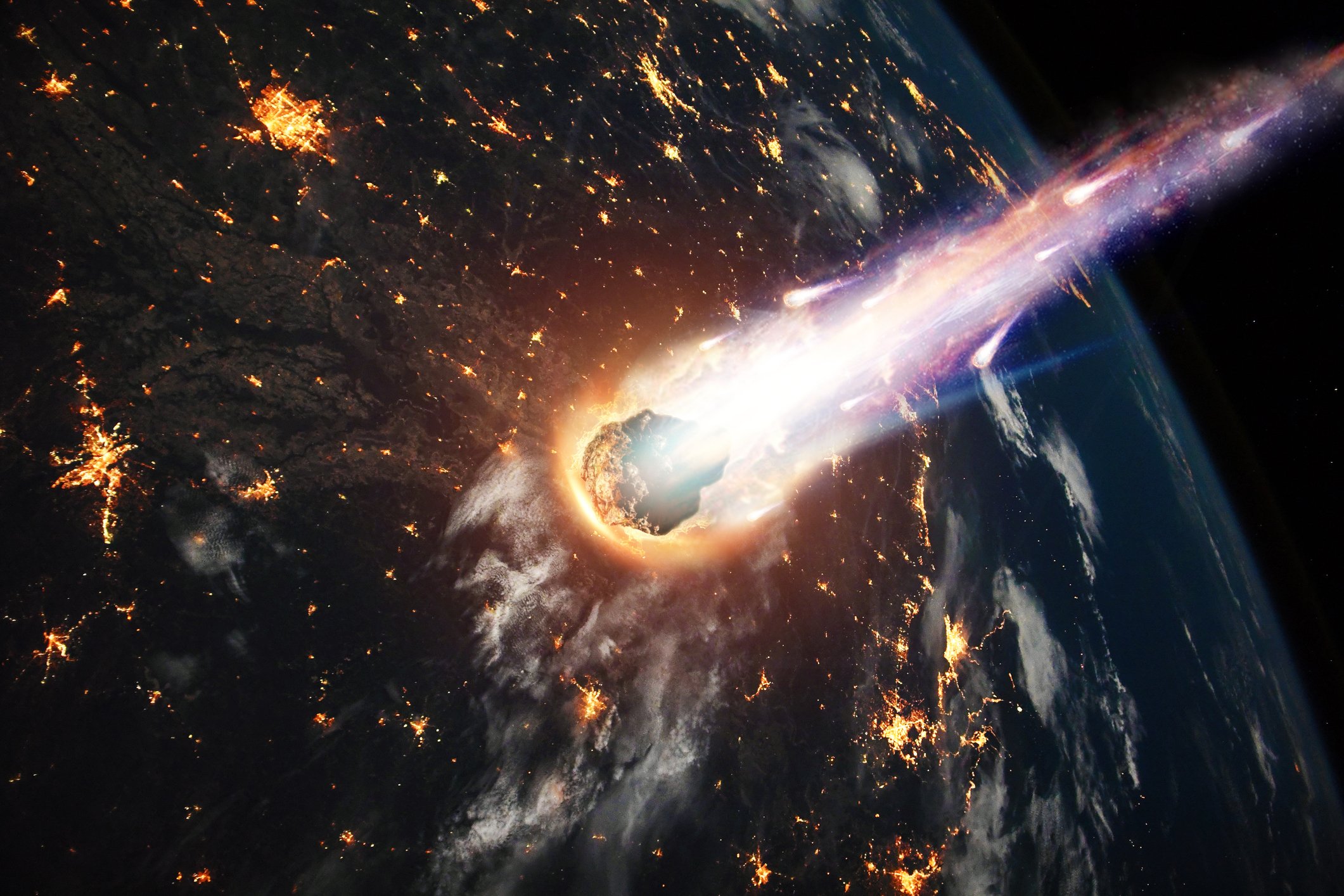
NASA has confirmed that a mammoth asteroid is currently headed toward Earth. (iStock Photo)
by DAILY SABAH Mar 04, 2020 11:46 am

T-minus 56 days until impact... but not quite.

NASA says its automated tracking systems at the Center for Near-Earth Object Studies in the U.S. state of California has detected an asteroid so big that it could wipe out the entire human race.

Officially called 52768 (1998 OR2), the giant space rock is hurtling toward Earth at a speed of 31,320 km/h – or 8.7 km per second. If the asteroid keeps up this pace, it is expected to close in on our planet around April 29.

But before you start running around like a headless chicken out of pure panic, hear this out: Scientists say it will only make a “close approach” and not actually enter Earth’s orbit, as per the Daily Express.

Approximately measuring up to 4.1 kilometers (2.5 miles) across, the rock's size puts it in Planetary Society’s "very dangerous" category, which includes all space objects close to or larger than 1 km in diameter and puts them on a scale that threatens global destruction.

“Small asteroids – few meters – hit frequently and burn up in the atmosphere and do little damage," Bruce Betts from the nonprofit said.

"Chelyabinsk-size asteroids – about 20 m that hit in 2013 – create shock waves that shatter windows and cause injuries. Tunguska-sized – about 40 m that hit Siberia in 1908 – could completely destroy a city or create a tsunami. Larger asteroids that hit on average less often could cause regional destruction," he added.

“Even larger asteroids that hit even less frequently could cause a global catastrophe," he said.

The U.S. National Science and Technology Council had also warned in its preparedness strategy report in 2018 that objects of that size "can trigger earthquakes, tsunamis, and other secondary effects that extend far beyond the immediate impact area."

NASA first spotted 1998 OR2 flying around the sun in 1987, later confirming its orbit and classifying it as a "potentially hazardous" near-Earth object (NEO). For an asteroid or comet to be considered a NEO it must come within 50 million km of Earth's orbit.

However, according to astronomers, there is a one in 50,000 chance that asteroids will hit Earth every 100 years, so there is no need to lose sleep worrying over space rocks.


  • shortlink copied
  • Last Update: Mar 04, 2020 2:46 pm
    KEYWORDS
    space asteroid destruction nasa neo
    The Daily Sabah Newsletter
    Keep up to date with what’s happening in Turkey, it’s region and the world.
    You can unsubscribe at any time. By signing up you are agreeing to our Terms of Use and Privacy Policy. This site is protected by reCAPTCHA and the Google Privacy Policy and Terms of Service apply.
    No Image
    Rare gladiator tombs found in ancient city in southern Türkiye
    PHOTOGALLERY
    • POLITICS
    • Diplomacy
    • Legislation
    • War On Terror
    • EU Affairs
    • News Analysis
    • TÜRKİYE
    • Istanbul
    • Education
    • Investigations
    • Minorities
    • Diaspora
    • World
    • Mid-East
    • Europe
    • Americas
    • Asia Pacific
    • Africa
    • Syrian Crisis
    • İslamophobia
    • Business
    • Automotive
    • Economy
    • Energy
    • Finance
    • Tourism
    • Tech
    • Defense
    • Transportation
    • News Analysis
    • Lifestyle
    • Health
    • Environment
    • Travel
    • Food
    • Fashion
    • Science
    • Religion
    • History
    • Feature
    • Expat Corner
    • Arts
    • Cinema
    • Music
    • Events
    • Portrait
    • Performing Arts
    • Reviews
    • Sports
    • Football
    • Basketball
    • Motorsports
    • Tennis
    • Opinion
    • Columns
    • Op-Ed
    • Reader's Corner
    • Editorial
    • Photo gallery
    • DS TV
    • Jobs
    • privacy
    • about us
    • contact us
    • RSS
    © Turkuvaz Haberleşme ve Yayıncılık 2021