Daily Sabah logo

Politics
Diplomacy Legislation War On Terror EU Affairs Elections News Analysis
TÜRKİYE
Istanbul Education Investigations Minorities Expat Corner Diaspora
World
Mid-East Europe Americas Asia Pacific Africa Syrian Crisis Islamophobia
Business
Automotive Economy Energy Finance Tourism Tech Defense Transportation News Analysis
Lifestyle
Health Environment Travel Food Fashion Science Religion History Feature Expat Corner
Arts
Cinema Music Events Portrait Reviews Performing Arts
Sports
Football Basketball Motorsports Tennis
Opinion
Columns Op-Ed Reader's Corner Editorial
PHOTO GALLERY
JOBS ABOUT US RSS PRIVACY CONTACT US
© Turkuvaz Haberleşme ve Yayıncılık 2025

Daily Sabah - Latest & Breaking News from Turkey | Istanbul

  • Politics
    • Diplomacy
    • Legislation
    • War On Terror
    • EU Affairs
    • Elections
    • News Analysis
  • TÜRKİYE
    • Istanbul
    • Education
    • Investigations
    • Minorities
    • Expat Corner
    • Diaspora
  • World
    • Mid-East
    • Europe
    • Americas
    • Asia Pacific
    • Africa
    • Syrian Crisis
    • Islamophobia
  • Business
    • Automotive
    • Economy
    • Energy
    • Finance
    • Tourism
    • Tech
    • Defense
    • Transportation
    • News Analysis
  • Lifestyle
    • Health
    • Environment
    • Travel
    • Food
    • Fashion
    • Science
    • Religion
    • History
    • Feature
    • Expat Corner
  • Arts
    • Cinema
    • Music
    • Events
    • Portrait
    • Reviews
    • Performing Arts
  • Sports
    • Football
    • Basketball
    • Motorsports
    • Tennis
  • Gallery
  • Opinion
    • Columns
    • Op-Ed
    • Reader's Corner
    • Editorial
  • TV
  • Life
  • Health
  • Environment
  • Travel
  • Food
  • Fashion
  • Science
  • Religion
  • History
  • Feature
  • Expat Corner

Looking for a new pet? Siberian scientists breeding foxes for pets eye human link

by French Press Agency - AFP

NOVOSIBIRSK Oct 19, 2020 - 11:52 am GMT+3
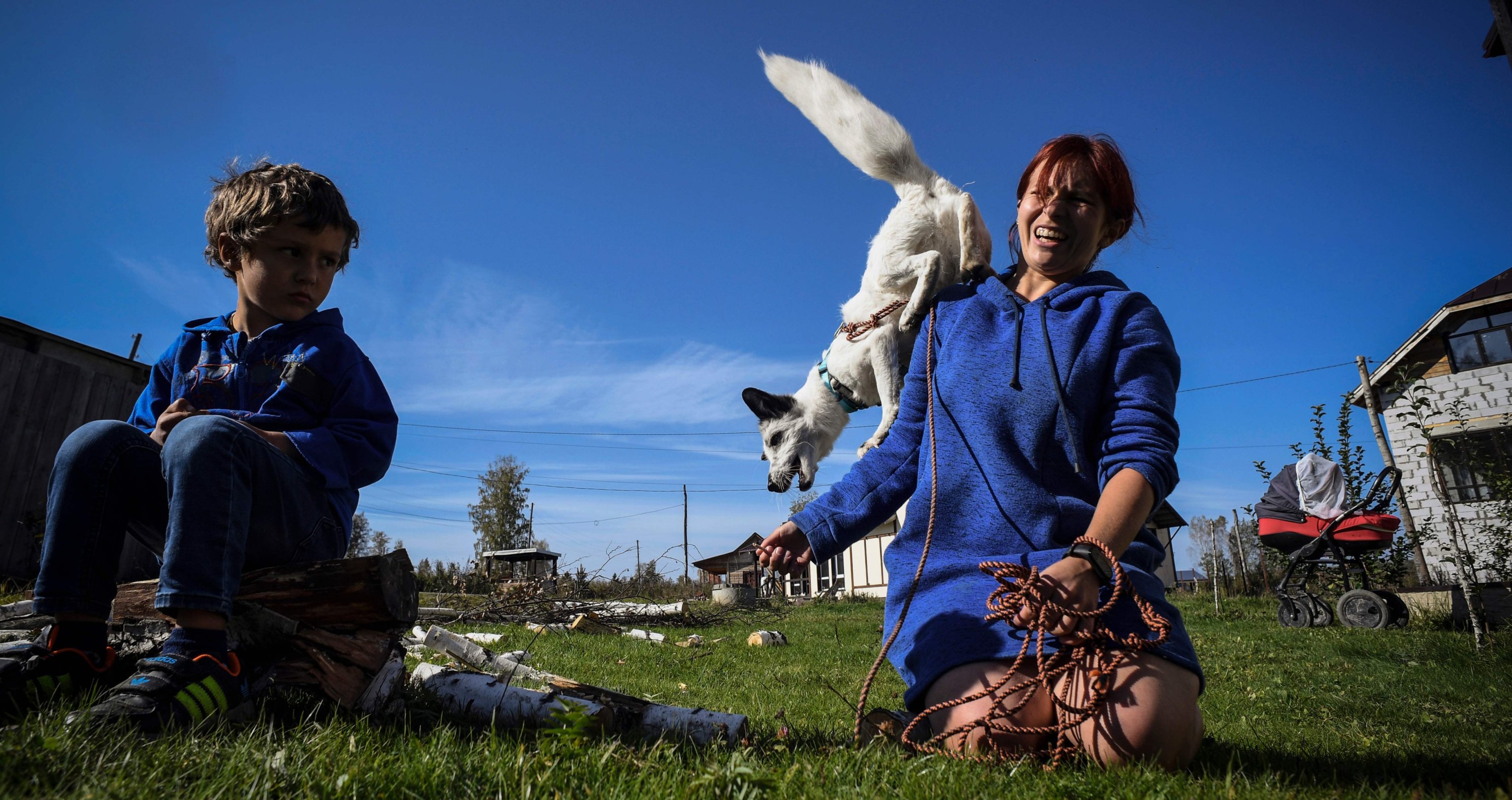
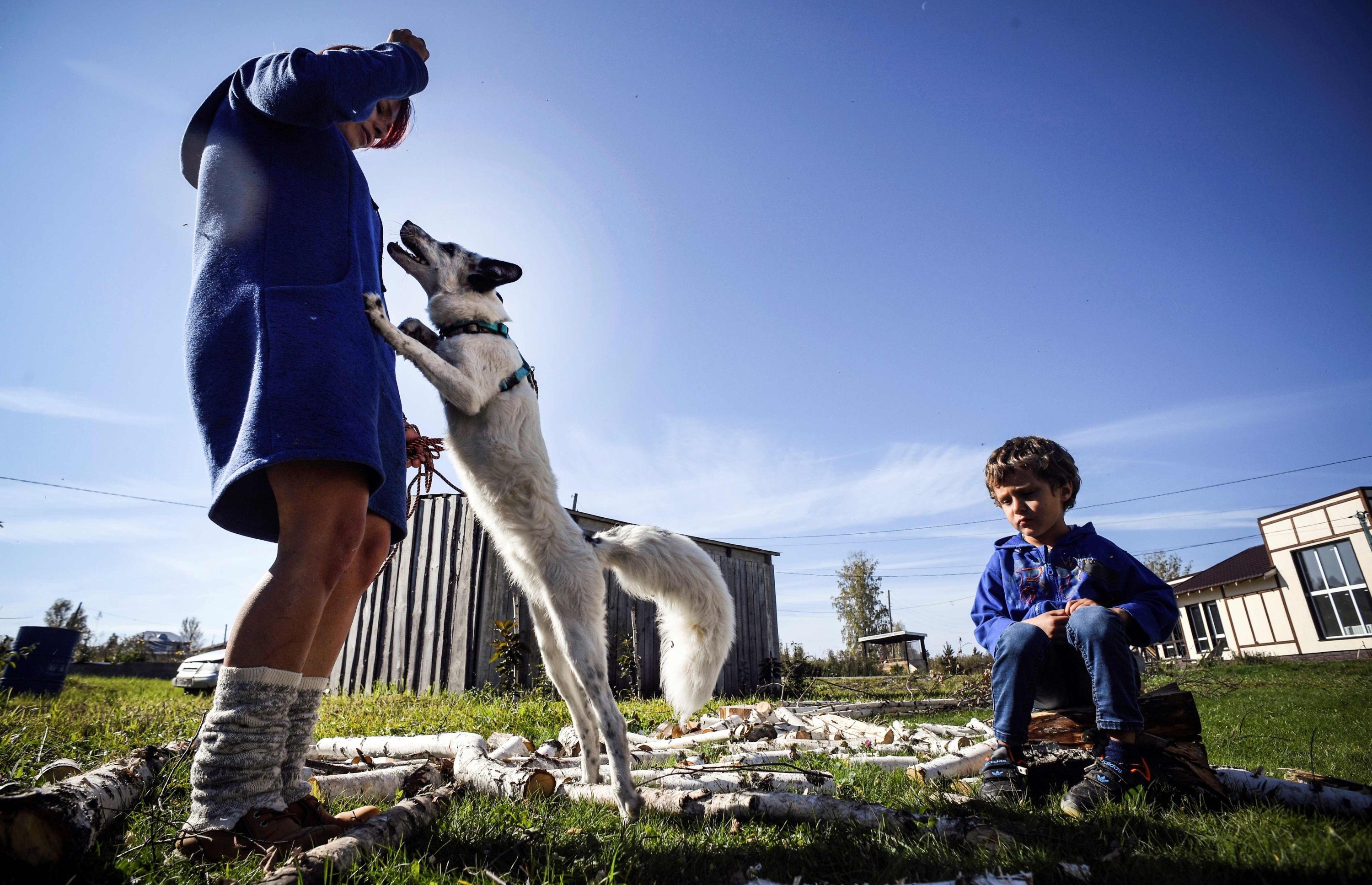
Tatyana Abramova, 33, and her son Timofei, 6, play with their pet fox Plombir at their countryside house outside the Siberian city of Novosibirsk on Sept. 12, 2020. (AFP Photo)
by French Press Agency - AFP Oct 19, 2020 11:52 am

Soaking up the sun in their garden, Sergei Abramov and his wife Tatiana are playing with their furry pet, Plombir, who is wagging his tail and winning treats for obeying his owners' commands.

But Plombir, whose white fur matches the color of the beloved Soviet ice cream he was named after, is not Abramov's canine best friend.

He is actually a fox, bred by Russian scientists as part of a decadeslong experiment in Siberia to study how wild animals are domesticated.

Plombir is happy to be led around by his owners on a leash, but as he pulls toward chickens safe in their cage, it's clear he hasn't lost all his animal instincts.

"Yes, he already tried to eat our chickens and run away," says Abramov, 32, who lives in the suburbs of Russia's third-largest city Novosibirsk.
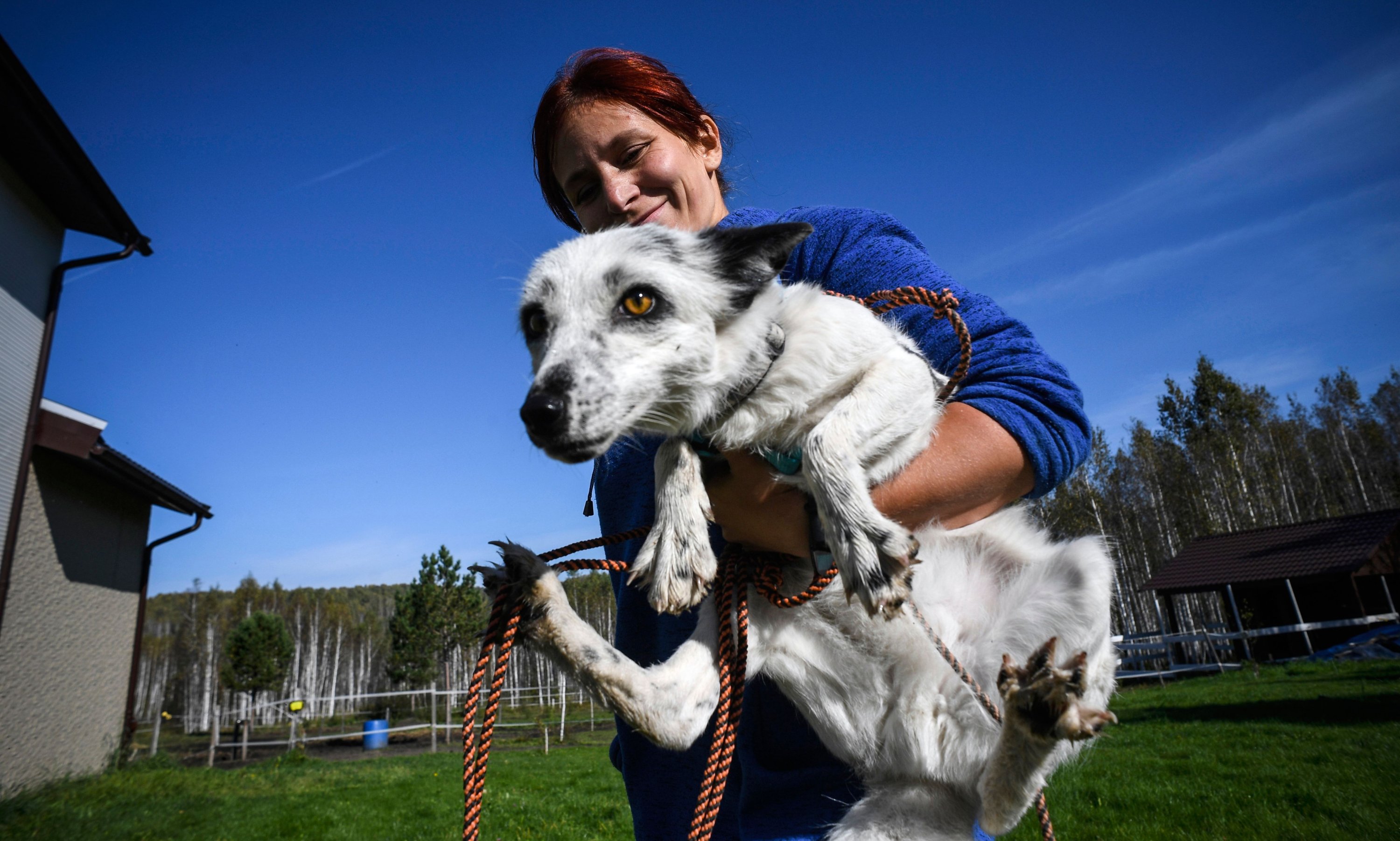
Tatyana Abramova, 33, carries her pet fox Plombir at her countryside house outside the Siberian city of Novosibirsk on Sept. 12, 2020.  (AFP Photo)
Tatyana Abramova, 33, carries her pet fox Plombir at her countryside house outside the Siberian city of Novosibirsk on Sept. 12, 2020. (AFP Photo)

His wife, biologist Tatiana Abramova, 33, admits she always wanted to live with a fox.

She concedes that Plombir is "friendly and kind" but not very obedient.

"He jumps on tables or jumps inside the fridge. He steals things and hides them," she says.

Such an energetic animal is better suited to living outdoors, the couple has decided, and they set aside a spacious nook in their garden as Plombir's home.

Soviet-era experiment

He enjoys being stroked, he can do tricks and is always eager to play – unlikely characteristics for most foxes but not surprising given that he and his ancestors were bred by scientists to be friendly pets.

In 1959, Soviet geneticists Dmitry Belyaev and Ludmila Trut launched the experiment on a farm in the Akademgorodok scientific research center near Novosibirsk.

Their goal was to tame foxes and understand how these ancestors of wolves evolved into the loyal and loving dogs we know now.
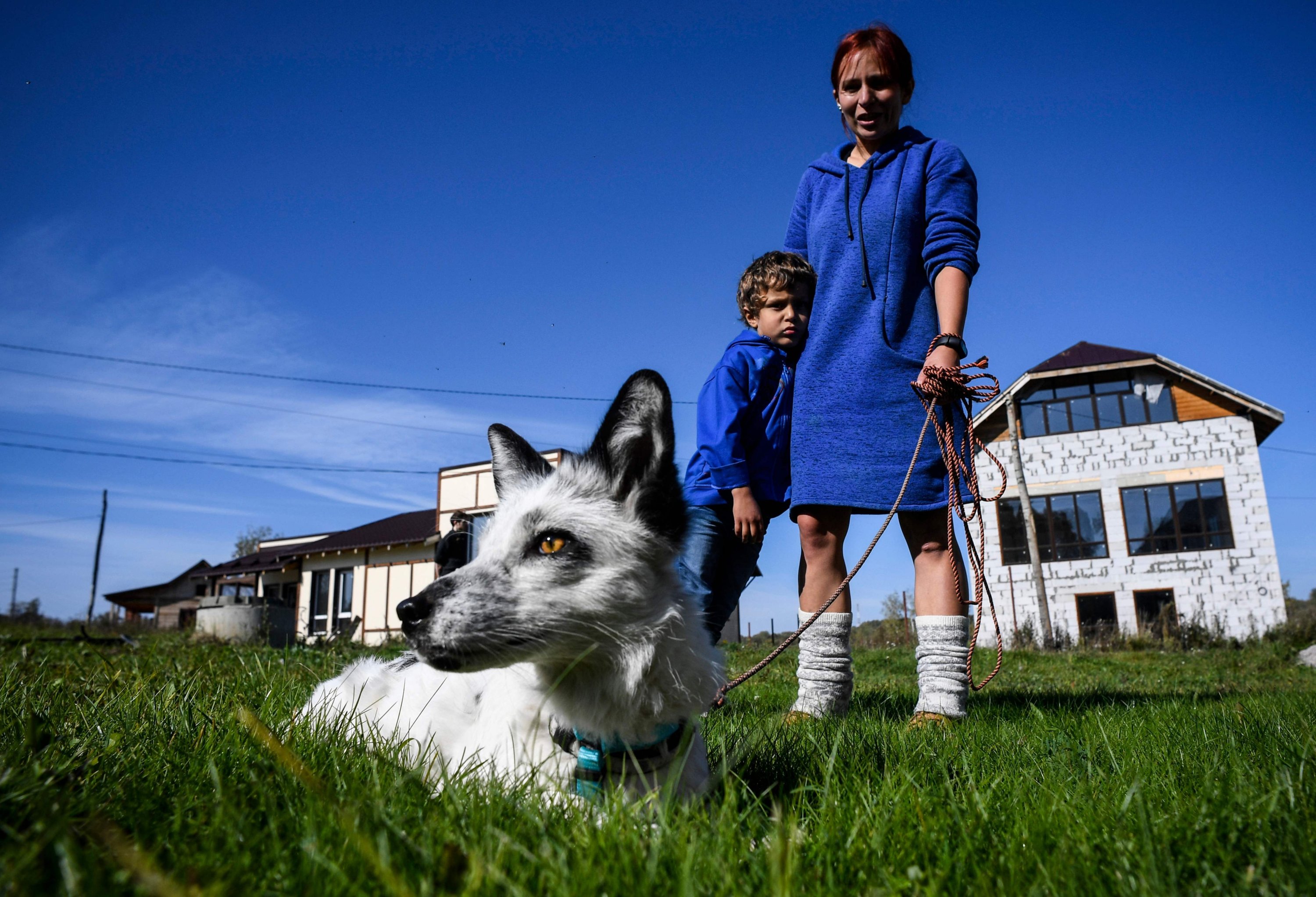
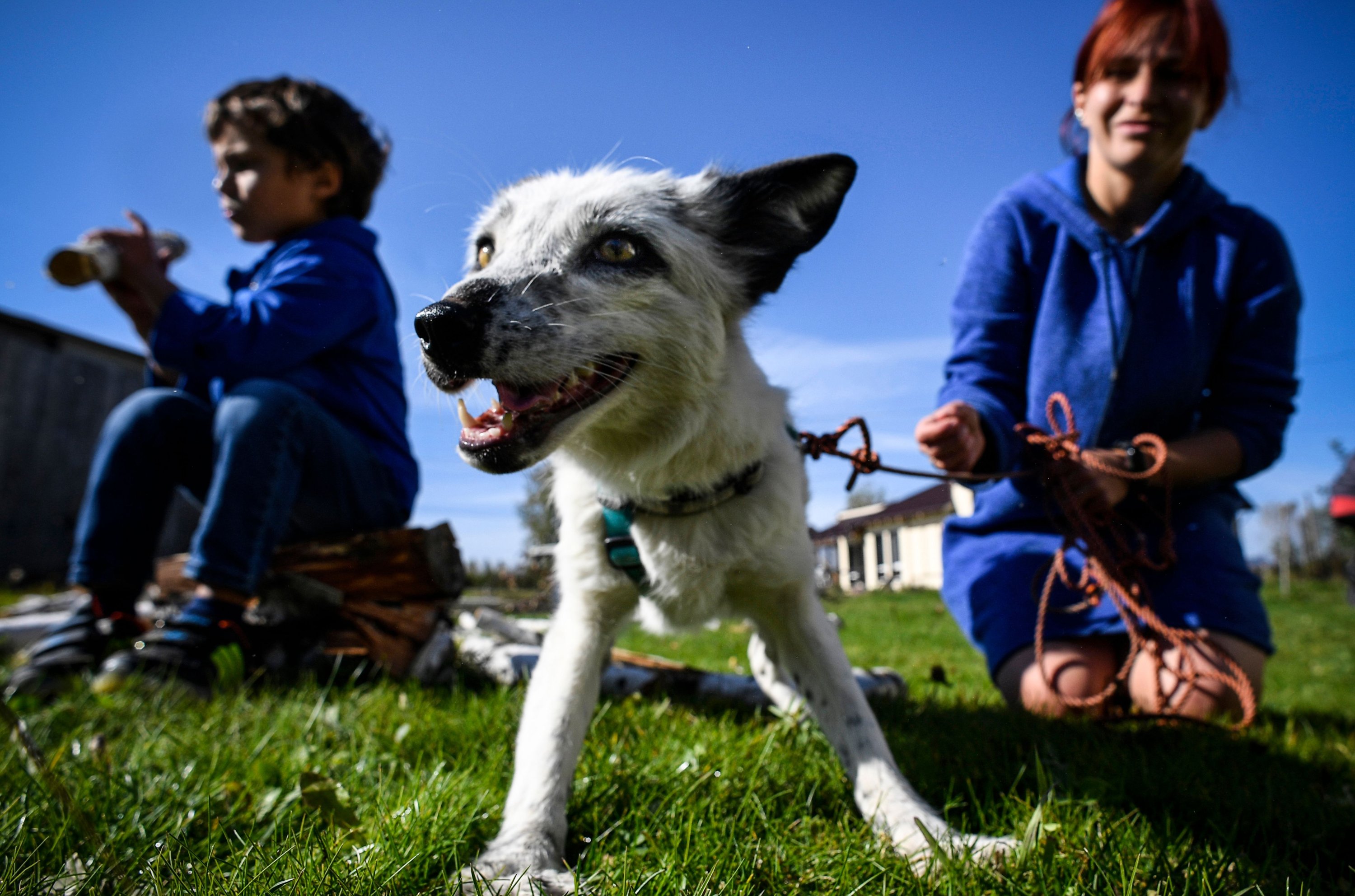
Tatyana Abramova, 33, and her son Timofei, 6, walk with their pet fox Plombir at their countryside house outside Siberian city of Novosibirsk on Sept. 12, 2020.  (AFP Photo)
Tatyana Abramova, 33, and her son Timofei, 6, play with their pet fox Plombir at their countryside house outside the Siberian city of Novosibirsk on Sept. 12, 2020.  (AFP Photo)

For decades, researchers at the farm have selected the most friendly animals for breeding. Others were put down, and a small number were sold as pets.

This artificial selection "changes everything in their body," said Yuri Gerbek, one of around 15 scientists working at the center that is home to almost 1,000 foxes.

In particular, this rigid selection has altered foxes' pigment and shortened their muzzles.

"We are trying to understand which genes change and how they change," Gerbek explained.

He added that the team keeps wild as well as tamed foxes "for comparison." Yet due to a lack of funding, the animals are kept in old and rusting cages.

Discoveries 'yet to be made'

Belyaev died in 1985, and the experiment was nearly shuttered over a lack of funding during the fall of the Soviet Union in 1991 and the economic crisis that followed.

It survived, however, and has even won international attention since the emergence of DNA sequencing techniques that made it possible to study the foxes' genetic code.

"The interest of the scientific community remains very strong," U.S. geneticist Adam Wilkins told Agence France-Presse (AFP).
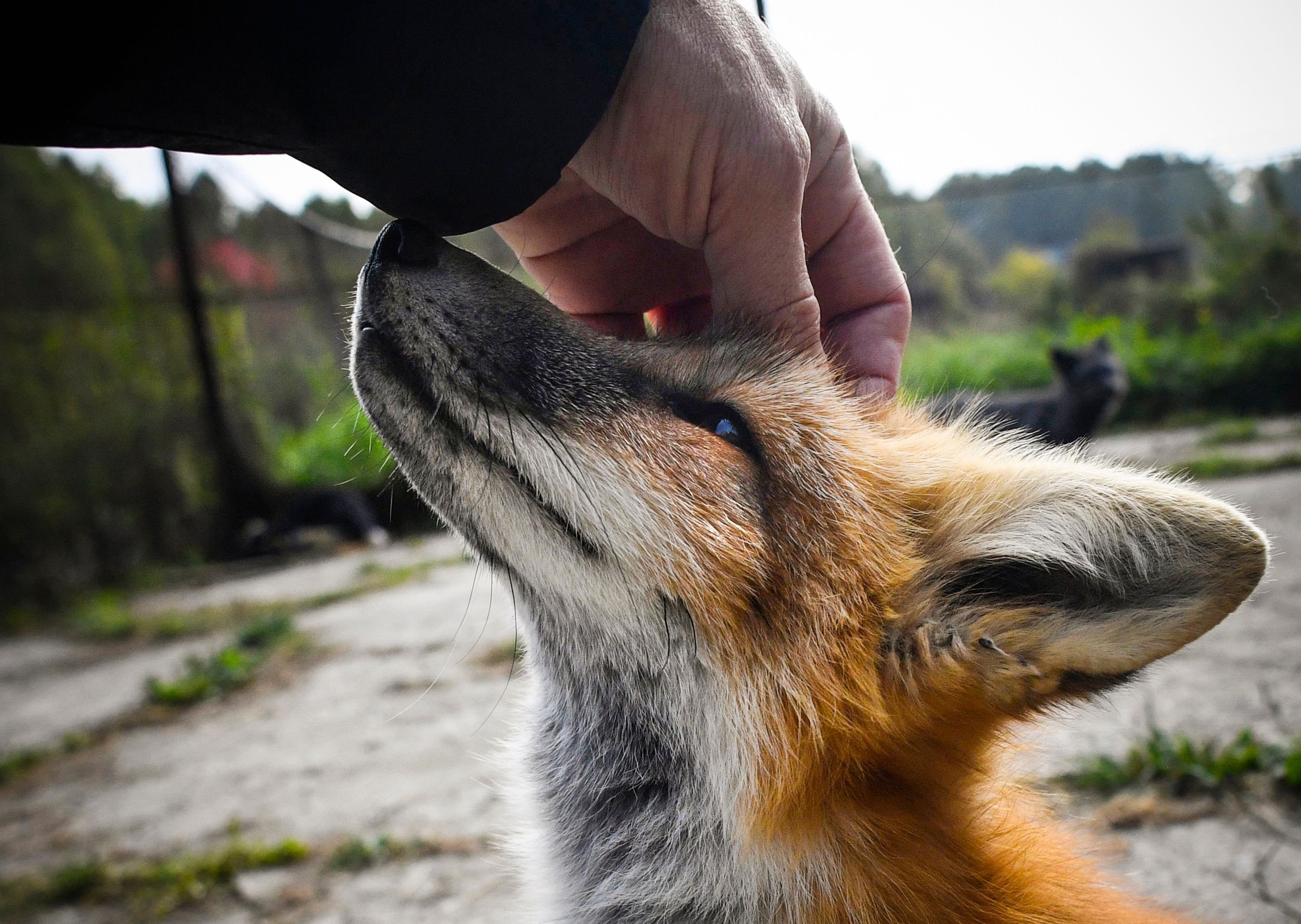
A man strokes a fox cub at the Belyayev fox facility at the Institute of Cytology and Genetics at the Russian Academy of Sciences outside the Siberian city of Novosibirsk on Sept/ 10, 2020. (AFP Photo)
Tatyana Abramova, 33, and her son Timofei, 6, play with their pet fox Plombir at their countryside house outside the Siberian city of Novosibirsk on Sept. 12, 2020. (AFP Photo)

That is particularly true since the team is studying the effects of domestication on foxes' brains and in particular their levels of oxytocin, known as the love hormone.

Studies have shown that oxytocin nurtures protective behavior, empathy and feelings of love, and it could play a key role in rendering foxes better pets.

But the experiment might also offer a window into human evolution – in particular an existing theory that our human ancestors domesticated themselves, Wilkins says.

It is an apt comparison "because many of the changes that domesticated foxes have undergone look like possible related changes in human evolution," says Wilkins.

"Important discoveries are yet to be made," he added.

  • shortlink copied
  • Last Update: Oct 19, 2020 5:03 pm
    KEYWORDS
    animal archives foxes pets russia siberia
    The Daily Sabah Newsletter
    Keep up to date with what’s happening in Turkey, it’s region and the world.
    You can unsubscribe at any time. By signing up you are agreeing to our Terms of Use and Privacy Policy. This site is protected by reCAPTCHA and the Google Privacy Policy and Terms of Service apply.
    No Image
    Gaza threat from unexploded bombs
    PHOTOGALLERY
    • POLITICS
    • Diplomacy
    • Legislation
    • War On Terror
    • EU Affairs
    • News Analysis
    • TÜRKİYE
    • Istanbul
    • Education
    • Investigations
    • Minorities
    • Diaspora
    • World
    • Mid-East
    • Europe
    • Americas
    • Asia Pacific
    • Africa
    • Syrian Crisis
    • İslamophobia
    • Business
    • Automotive
    • Economy
    • Energy
    • Finance
    • Tourism
    • Tech
    • Defense
    • Transportation
    • News Analysis
    • Lifestyle
    • Health
    • Environment
    • Travel
    • Food
    • Fashion
    • Science
    • Religion
    • History
    • Feature
    • Expat Corner
    • Arts
    • Cinema
    • Music
    • Events
    • Portrait
    • Performing Arts
    • Reviews
    • Sports
    • Football
    • Basketball
    • Motorsports
    • Tennis
    • Opinion
    • Columns
    • Op-Ed
    • Reader's Corner
    • Editorial
    • Photo gallery
    • DS TV
    • Jobs
    • privacy
    • about us
    • contact us
    • RSS
    © Turkuvaz Haberleşme ve Yayıncılık 2021