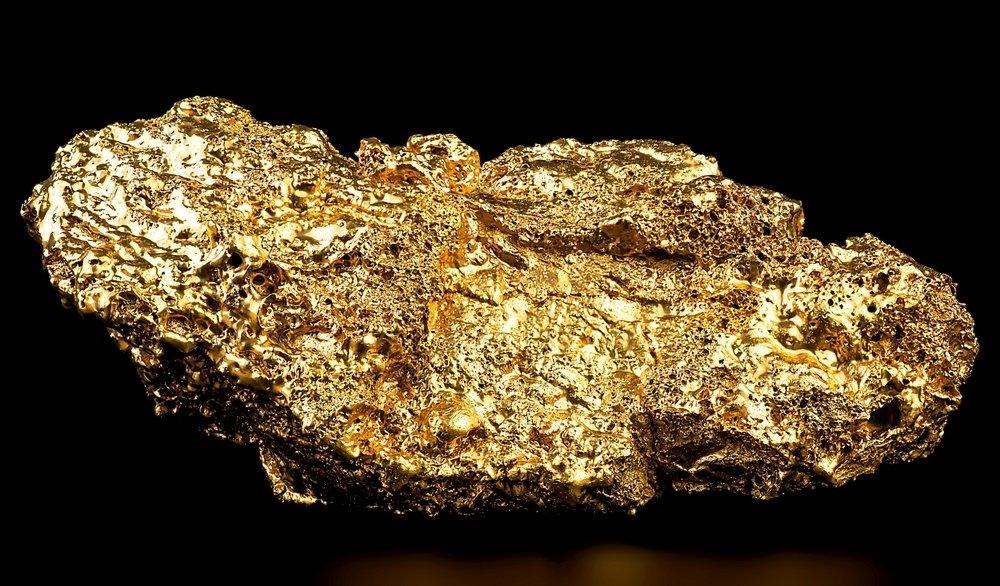
A nuclear fusion startup has conducted computer simulations and concluded that it is theoretically possible to produce gold from mercury through fusion.
Turning base metals into gold has been a dream of alchemists for centuries. Today, modern physicists understand how elements can be transformed into one another and this knowledge has been used for decades in particle accelerators. However, producing gold through such methods is both extremely costly and inefficient.
For example, a CERN experiment in Geneva – home to some of the world’s leading particle accelerator research – managed to produce only 29 picograms of gold after four years of work. At that rate, it would take billions of years to create a single gold bar.
However, a California-based nuclear fusion startup, Marathon Fusion, proposes an entirely different approach to this problem.
The company aims to use the radioactive properties of neutrons generated in fusion reactors to convert one isotope of mercury (mercury-198) into another (mercury-197), which then decays into stable gold.
In this process, the mercury-198 isotope is bombarded with high-energy neutrons, turning it into radioactive mercury-197, which subsequently decays into gold. According to Marathon Fusion, a fusion power plant producing just 1 gigawatt of thermal energy per year could theoretically yield several tons of gold.
However, for this conversion to occur, the neutrons must have an energy greater than 6 million electron volts. Such high-energy neutrons can be generated in plasmas formed from hydrogen isotopes, such as deuterium and tritium, which are commonly used in fusion reactors.
The company claims that its computer simulations prove the feasibility of this process. But since there is currently no commercially operational fusion reactor, real-world testing is not yet possible.
The ultimate goal of nuclear fusion research is to mimic the nuclear processes that power the sun, thereby generating infinite and clean energy. Fusion occurs when two light atomic nuclei combine through nuclear reactions to form a heavier element.
Nuclear fusion releases a tremendous amount of energy by merging hydrogen isotopes at extremely high temperatures. While this process occurs naturally in the sun, recreating it on Earth has proven to be extremely challenging. Currently, fusion reactors are unable to generate more energy than they consume.
Unlike fission – the nuclear process used in today’s commercial reactors – fusion involves joining atomic nuclei instead of splitting them. Fission splits a heavy atomic nucleus into smaller ones, while fusion combines light nuclei into a heavier one.
Although on paper, producing gold from mercury seems plausible, Marathon Fusion's simulations can only be validated appropriately when commercial fusion reactors come online.
Moreover, any gold produced in a fusion reactor would initially be radioactive. This would prevent it from being used directly and require it to be treated as radioactive waste for an extended period.
Given the experimental nature of fusion physics, digital simulations often overlook key physical effects and important details. Still, this may not deter long-term investors from taking interest.