Daily Sabah logo

Politics
Diplomacy Legislation War On Terror EU Affairs Elections News Analysis
TÜRKİYE
Istanbul Education Investigations Minorities Expat Corner Diaspora
World
Mid-East Europe Americas Asia Pacific Africa Syrian Crisis Islamophobia
Business
Automotive Economy Energy Finance Tourism Tech Defense Transportation News Analysis
Lifestyle
Health Environment Travel Food Fashion Science Religion History Feature Expat Corner
Arts
Cinema Music Events Portrait Reviews Performing Arts
Sports
Football Basketball Motorsports Tennis
Opinion
Columns Op-Ed Reader's Corner Editorial
PHOTO GALLERY
JOBS ABOUT US RSS PRIVACY CONTACT US
© Turkuvaz Haberleşme ve Yayıncılık 2025

Daily Sabah - Latest & Breaking News from Turkey | Istanbul

  • Politics
    • Diplomacy
    • Legislation
    • War On Terror
    • EU Affairs
    • Elections
    • News Analysis
  • TÜRKİYE
    • Istanbul
    • Education
    • Investigations
    • Minorities
    • Expat Corner
    • Diaspora
  • World
    • Mid-East
    • Europe
    • Americas
    • Asia Pacific
    • Africa
    • Syrian Crisis
    • Islamophobia
  • Business
    • Automotive
    • Economy
    • Energy
    • Finance
    • Tourism
    • Tech
    • Defense
    • Transportation
    • News Analysis
  • Lifestyle
    • Health
    • Environment
    • Travel
    • Food
    • Fashion
    • Science
    • Religion
    • History
    • Feature
    • Expat Corner
  • Arts
    • Cinema
    • Music
    • Events
    • Portrait
    • Reviews
    • Performing Arts
  • Sports
    • Football
    • Basketball
    • Motorsports
    • Tennis
  • Gallery
  • Opinion
    • Columns
    • Op-Ed
    • Reader's Corner
    • Editorial
  • TV
  • Life
  • Health
  • Environment
  • Travel
  • Food
  • Fashion
  • Science
  • Religion
  • History
  • Feature
  • Expat Corner

Planet Earth's asteroid-smashing defense 'phenomenally successful'

by Reuters

WASHINGTON Mar 03, 2023 - 9:41 am GMT+3
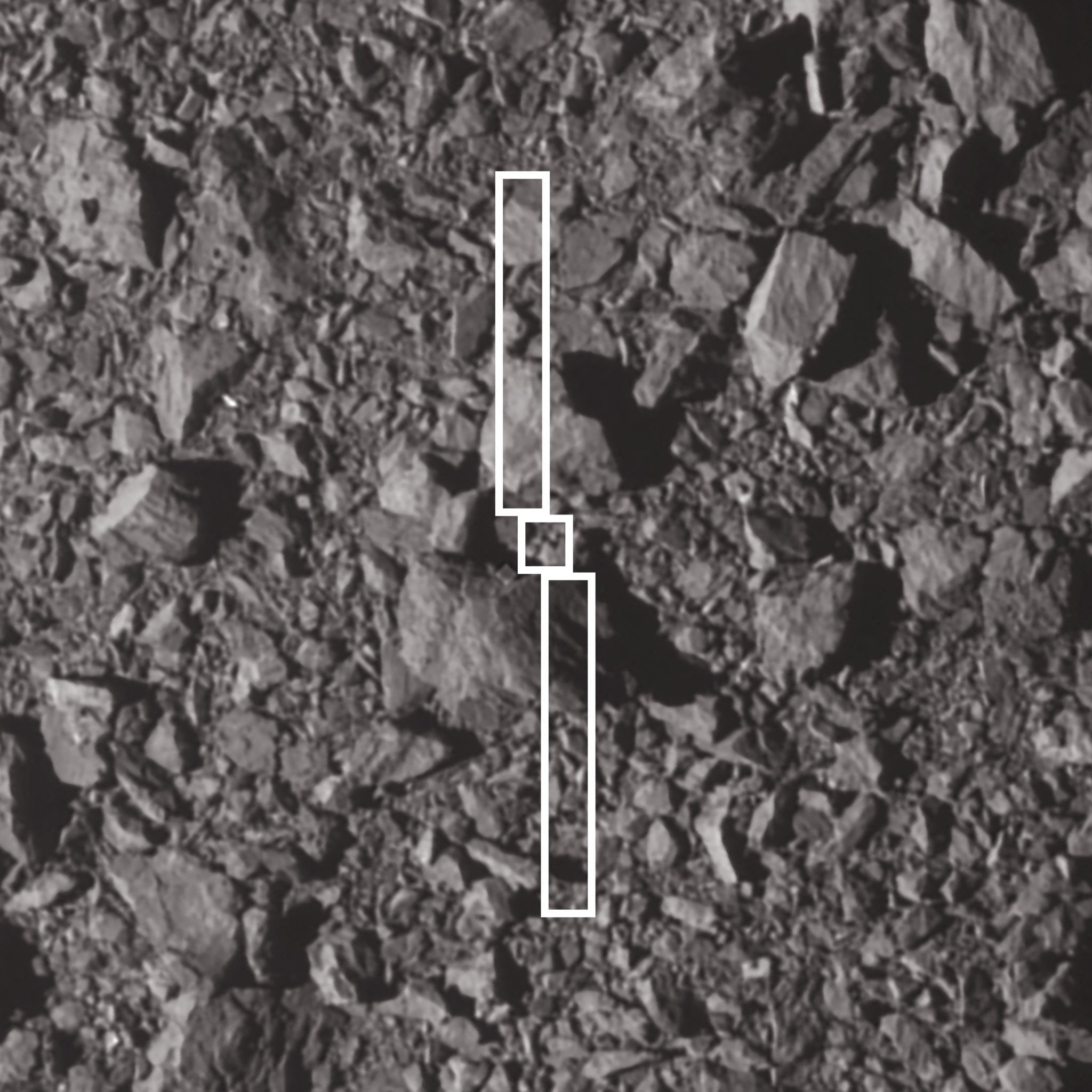
An image depicts NASA's DART spacecraft and its two long solar panels over the spot where it impacted asteroid Dimorphos in September, 2022. (Reuters Photo)
by Reuters Mar 03, 2023 9:41 am

Earth is safe! At least from asteroids causing global extinction level events as an experiment by NASA in which the space agency slammed its DART spacecraft into the asteroid Dimorphos at a spot between two boulders during last September's first test of a planetary defense system has been more of a success than even initially thought and now scientists revealed that the test, sending debris hurtling into space, has changed the rocky oblong-shaped object's path a bit more than previously calculated.

Those were among the findings revealed by scientists on Wednesday in the most detailed account of the U.S. space agency's proof-of-principle mission on using a spacecraft to change a celestial object's trajectory – employing sheer kinetic force to nudge it off course just enough to keep Earth safe.

"The DART test was phenomenally successful. We now know that we have a viable technique for potentially preventing an asteroid impact if one day we had the need to," said planetary scientist Terik Daly of the Johns Hopkins University Applied Physics Laboratory in Maryland, lead author of one of the DART studies published in the journal Nature.

The Double Asteroid Redirection Test (DART) spacecraft collided on Sept. 26 at about 22,530 kilometers per hour (14,000 miles per hour) into Dimorphos, an asteroid about 150 meters (490 feet) in diameter, roughly 11 million kilometers from Earth. Dimorphos is a moonlet of Didymos, which is defined as a near-Earth asteroid and has a shape like a top spinning in space with a diameter of about 780 meters. Neither object imperils Earth.

"We were trying to change the amount of time that it took for Dimorphos to orbit around Didymos by colliding head-on with Dimorphos," said Northern Arizona University planetary scientist Cristina Thomas, lead author of another of the studies published in Nature.

"The momentum of the collision and the momentum of the ejected material both acted to decrease the amount of time it takes Dimorphos to orbit by 33 minutes. This also results in the object orbiting a little bit closer to Didymos," Thomas said.

Prior to the impact, the orbital period was 11 hours and 55 minutes. It now is 11 hours and 22 minutes. NASA's previous estimate, announced in October, was an orbital change of 32 minutes. The benchmark for success had been set as a change of at least 1 minute and 13 seconds.

The scientists gave a blow-by-blow account of how the collision unfolded.

"First, one of the spacecraft's solar panels directly hit a large boulder near the impact site. Next, the second solar panel grazed another large boulder. Finally, the spacecraft bus – the box between the solar panels – hit between these two boulders," Daly said.

"We suspect that these two boulders were destroyed. After impact, ejecta (debris blasted into space) was launched from the surface for a period of time," Daly added, saying satellite and telescope images showed a large amount of such material.

The research also clarified details such as the precise location of the impact and the angle of impact.

"People may think of the DART mission as a fairly straightforward experiment that is similar to playing billiards in space - one solid spacecraft impacts into one solid asteroid," Thomas said. "However, asteroids are far more complex than just a solid rock. In fact, most asteroids are what we think of as rubble piles."

The $330 million DART mission was seven years in development.

"We don't know of any asteroids at this time that pose a threat to Earth, but we want to be ready for such a scenario," Daly said. "It's analogous to testing a car's airbags. You make sure they work during a crash test instead of waiting to get in a real car accident to find out if they work."


  • shortlink copied
  • Last Update: Mar 03, 2023 12:40 pm
    KEYWORDS
    asteroids earth planetary defense nasa science space
    The Daily Sabah Newsletter
    Keep up to date with what’s happening in Turkey, it’s region and the world.
    You can unsubscribe at any time. By signing up you are agreeing to our Terms of Use and Privacy Policy. This site is protected by reCAPTCHA and the Google Privacy Policy and Terms of Service apply.
    Rescuers hunt for survivors after cyclone hits Indonesia
    PHOTOGALLERY
    • POLITICS
    • Diplomacy
    • Legislation
    • War On Terror
    • EU Affairs
    • News Analysis
    • TÜRKİYE
    • Istanbul
    • Education
    • Investigations
    • Minorities
    • Diaspora
    • World
    • Mid-East
    • Europe
    • Americas
    • Asia Pacific
    • Africa
    • Syrian Crisis
    • İslamophobia
    • Business
    • Automotive
    • Economy
    • Energy
    • Finance
    • Tourism
    • Tech
    • Defense
    • Transportation
    • News Analysis
    • Lifestyle
    • Health
    • Environment
    • Travel
    • Food
    • Fashion
    • Science
    • Religion
    • History
    • Feature
    • Expat Corner
    • Arts
    • Cinema
    • Music
    • Events
    • Portrait
    • Performing Arts
    • Reviews
    • Sports
    • Football
    • Basketball
    • Motorsports
    • Tennis
    • Opinion
    • Columns
    • Op-Ed
    • Reader's Corner
    • Editorial
    • Photo gallery
    • DS TV
    • Jobs
    • privacy
    • about us
    • contact us
    • RSS
    © Turkuvaz Haberleşme ve Yayıncılık 2021