Daily Sabah logo

Politics
Diplomacy Legislation War On Terror EU Affairs Elections News Analysis
TÜRKİYE
Istanbul Education Investigations Minorities Expat Corner Diaspora
World
Mid-East Europe Americas Asia Pacific Africa Syrian Crisis Islamophobia
Business
Automotive Economy Energy Finance Tourism Tech Defense Transportation News Analysis
Lifestyle
Health Environment Travel Food Fashion Science Religion History Feature Expat Corner
Arts
Cinema Music Events Portrait Reviews Performing Arts
Sports
Football Basketball Motorsports Tennis
Opinion
Columns Op-Ed Reader's Corner Editorial
PHOTO GALLERY
JOBS ABOUT US RSS PRIVACY CONTACT US
© Turkuvaz Haberleşme ve Yayıncılık 2025

Daily Sabah - Latest & Breaking News from Turkey | Istanbul

  • Politics
    • Diplomacy
    • Legislation
    • War On Terror
    • EU Affairs
    • Elections
    • News Analysis
  • TÜRKİYE
    • Istanbul
    • Education
    • Investigations
    • Minorities
    • Expat Corner
    • Diaspora
  • World
    • Mid-East
    • Europe
    • Americas
    • Asia Pacific
    • Africa
    • Syrian Crisis
    • Islamophobia
  • Business
    • Automotive
    • Economy
    • Energy
    • Finance
    • Tourism
    • Tech
    • Defense
    • Transportation
    • News Analysis
  • Lifestyle
    • Health
    • Environment
    • Travel
    • Food
    • Fashion
    • Science
    • Religion
    • History
    • Feature
    • Expat Corner
  • Arts
    • Cinema
    • Music
    • Events
    • Portrait
    • Reviews
    • Performing Arts
  • Sports
    • Football
    • Basketball
    • Motorsports
    • Tennis
  • Gallery
  • Opinion
    • Columns
    • Op-Ed
    • Reader's Corner
    • Editorial
  • TV
  • Life
  • Health
  • Environment
  • Travel
  • Food
  • Fashion
  • Science
  • Religion
  • History
  • Feature
  • Expat Corner

Scientists find 1st binary star near Milky Way's supermassive black hole

by anadolu agency

ISTANBUL Dec 18, 2024 - 6:24 pm GMT+3
Edited By Nurbanu Tanrıkulu Kızıl
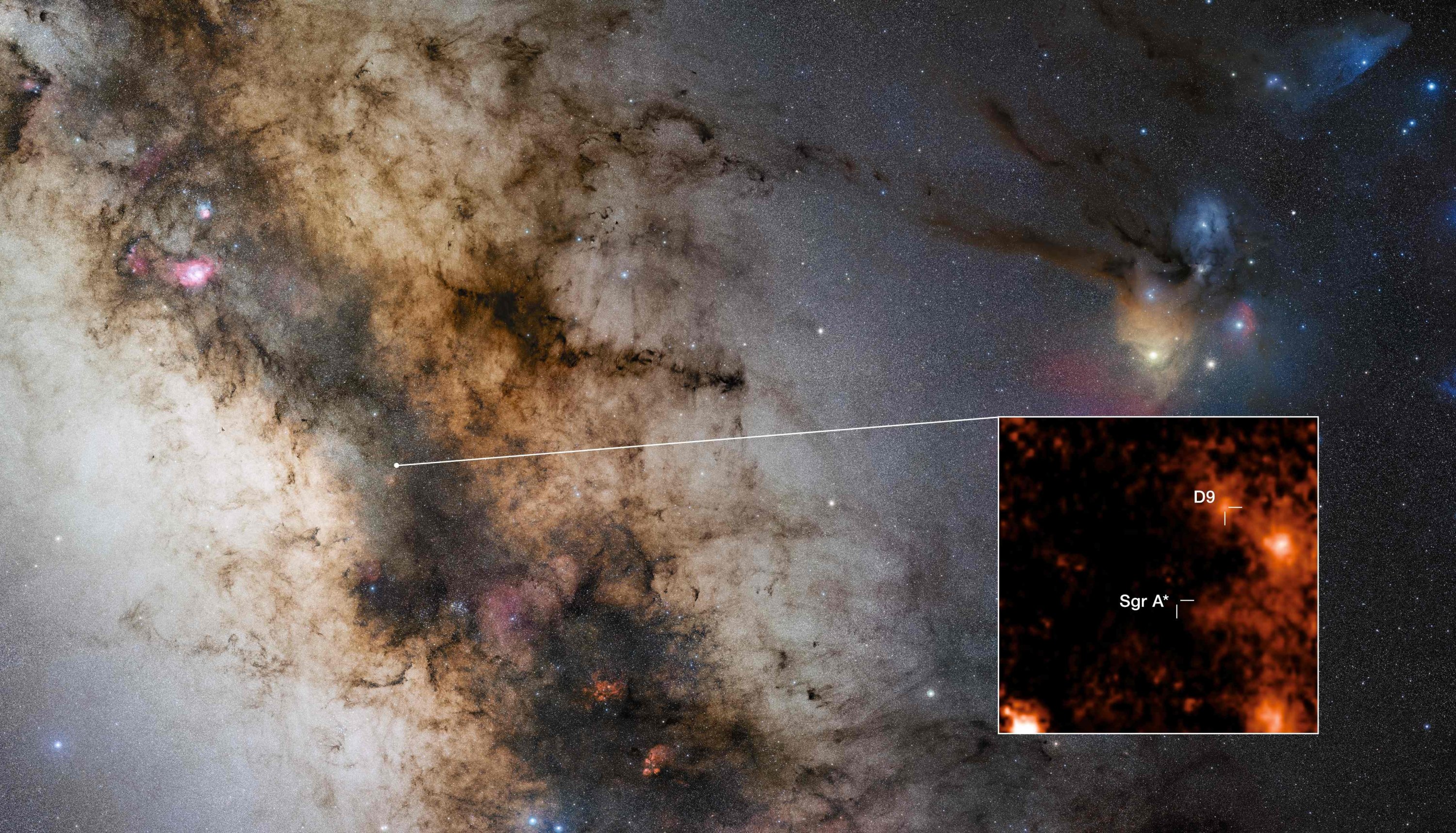
This handout image released on December 17, 2024 by the European Southern Observatory shows the location of the newly discovered binary star D9, which is orbiting Sagittarius A*, the supermassive black hole at the centre of our galaxy. (Photo by Handout / EUROPEAN SOUTHERN OBSERVATORY via AFP)
by anadolu agency Dec 18, 2024 6:24 pm
Edited By Nurbanu Tanrıkulu Kızıl

An international team of researchers has discovered the first binary star system located near Sagittarius A, the supermassive black hole at the heart of the Milky Way, a new study reveals.

Published in Nature Communications on Tuesday, this groundbreaking study marks the first time a binary star has been detected in such an extreme environment, challenging long-held assumptions about black holes’ destructive nature.

"Black holes are not as destructive as we thought," said Florian Peibker, lead author from the University of Cologne.

The discovery was made using data from the European Southern Observatory’s Very Large Telescope.

Despite the intense gravitational forces near Sagittarius A, the stars have remained stable, a finding that defies previous theories about star formation in such harsh conditions.

Binary stars, two stars bound by gravity, are common in the universe but were believed to be unable to survive near a black hole due to its extreme gravitational forces. However, D9, estimated to be 2.7 million years old, has shown that stars can form and exist in such environments.

Planet formation potential

The discovery of D9 raises intriguing questions about the potential for planets to form near supermassive black holes. Young stars, like those in the binary system, are often surrounded by debris such as gas and dust - key ingredients for planet formation.

"The D9 system shows clear signs of gas and dust around the stars, suggesting it could be a very young stellar system formed near the black hole," noted co-author Michal Zajacek.

"If that sort of material is close enough to the star that it doesn’t feel the really strong gravitational pull from the black hole, then your planets will form more or less oblivious to the fact that it’s near a black hole," Professor Geraint Lewis of the Sydney Institute for Astronomy also said.

Researchers predicted that the immense gravity of Sagittarius A will likely merge the two stars into one within a million years - a brief moment on cosmic timescales.

"It seems plausible that the detection of planets in the galactic center is just a matter of time," Peibker added.

Complementing earlier discoveries

This discovery complements earlier findings of "G objects," mysterious entities near Sagittarius A that exhibit characteristics of both stars and gas. Scientists now speculate that these objects might be merging binary systems similar to D9.

"It’s just another tiny piece of the enormous puzzle of our universe - how it works, its past, present, and future," said astrophysicist Clare Kenyon of the University of Melbourne.

This breakthrough finding not only offers a deeper understanding of how stars and potentially planets can survive in one of the most extreme environments in the universe but also opens new avenues for exploring planetary systems in the most unexpected corners of the cosmos.


  • shortlink copied
  • Last Update: Dec 18, 2024 9:24 pm
    KEYWORDS
    milky way science university of cologne
    The Daily Sabah Newsletter
    Keep up to date with what’s happening in Turkey, it’s region and the world.
    You can unsubscribe at any time. By signing up you are agreeing to our Terms of Use and Privacy Policy. This site is protected by reCAPTCHA and the Google Privacy Policy and Terms of Service apply.
    No Image
    Climate change: Eerie ice caves appear, dooming Austria's glaciers
    PHOTOGALLERY
    • POLITICS
    • Diplomacy
    • Legislation
    • War On Terror
    • EU Affairs
    • News Analysis
    • TÜRKİYE
    • Istanbul
    • Education
    • Investigations
    • Minorities
    • Diaspora
    • World
    • Mid-East
    • Europe
    • Americas
    • Asia Pacific
    • Africa
    • Syrian Crisis
    • İslamophobia
    • Business
    • Automotive
    • Economy
    • Energy
    • Finance
    • Tourism
    • Tech
    • Defense
    • Transportation
    • News Analysis
    • Lifestyle
    • Health
    • Environment
    • Travel
    • Food
    • Fashion
    • Science
    • Religion
    • History
    • Feature
    • Expat Corner
    • Arts
    • Cinema
    • Music
    • Events
    • Portrait
    • Performing Arts
    • Reviews
    • Sports
    • Football
    • Basketball
    • Motorsports
    • Tennis
    • Opinion
    • Columns
    • Op-Ed
    • Reader's Corner
    • Editorial
    • Photo gallery
    • DS TV
    • Jobs
    • privacy
    • about us
    • contact us
    • RSS
    © Turkuvaz Haberleşme ve Yayıncılık 2021