Daily Sabah logo

Politics
Diplomacy Legislation War On Terror EU Affairs Elections News Analysis
TÜRKİYE
Istanbul Education Investigations Minorities Expat Corner Diaspora
World
Mid-East Europe Americas Asia Pacific Africa Syrian Crisis Islamophobia
Business
Automotive Economy Energy Finance Tourism Tech Defense Transportation News Analysis
Lifestyle
Health Environment Travel Food Fashion Science Religion History Feature Expat Corner
Arts
Cinema Music Events Portrait Reviews Performing Arts
Sports
Football Basketball Motorsports Tennis
Opinion
Columns Op-Ed Reader's Corner Editorial
PHOTO GALLERY
JOBS ABOUT US RSS PRIVACY CONTACT US
© Turkuvaz Haberleşme ve Yayıncılık 2025

Daily Sabah - Latest & Breaking News from Turkey | Istanbul

  • Politics
    • Diplomacy
    • Legislation
    • War On Terror
    • EU Affairs
    • Elections
    • News Analysis
  • TÜRKİYE
    • Istanbul
    • Education
    • Investigations
    • Minorities
    • Expat Corner
    • Diaspora
  • World
    • Mid-East
    • Europe
    • Americas
    • Asia Pacific
    • Africa
    • Syrian Crisis
    • Islamophobia
  • Business
    • Automotive
    • Economy
    • Energy
    • Finance
    • Tourism
    • Tech
    • Defense
    • Transportation
    • News Analysis
  • Lifestyle
    • Health
    • Environment
    • Travel
    • Food
    • Fashion
    • Science
    • Religion
    • History
    • Feature
    • Expat Corner
  • Arts
    • Cinema
    • Music
    • Events
    • Portrait
    • Reviews
    • Performing Arts
  • Sports
    • Football
    • Basketball
    • Motorsports
    • Tennis
  • Gallery
  • Opinion
    • Columns
    • Op-Ed
    • Reader's Corner
    • Editorial
  • TV
  • Life
  • Health
  • Environment
  • Travel
  • Food
  • Fashion
  • Science
  • Religion
  • History
  • Feature
  • Expat Corner

'Space travel makes astronauts vulnerable to infections': Study

by Reuters

WASHINGTON Jun 22, 2023 - 11:44 am GMT+3
Edited By Buse Keskin
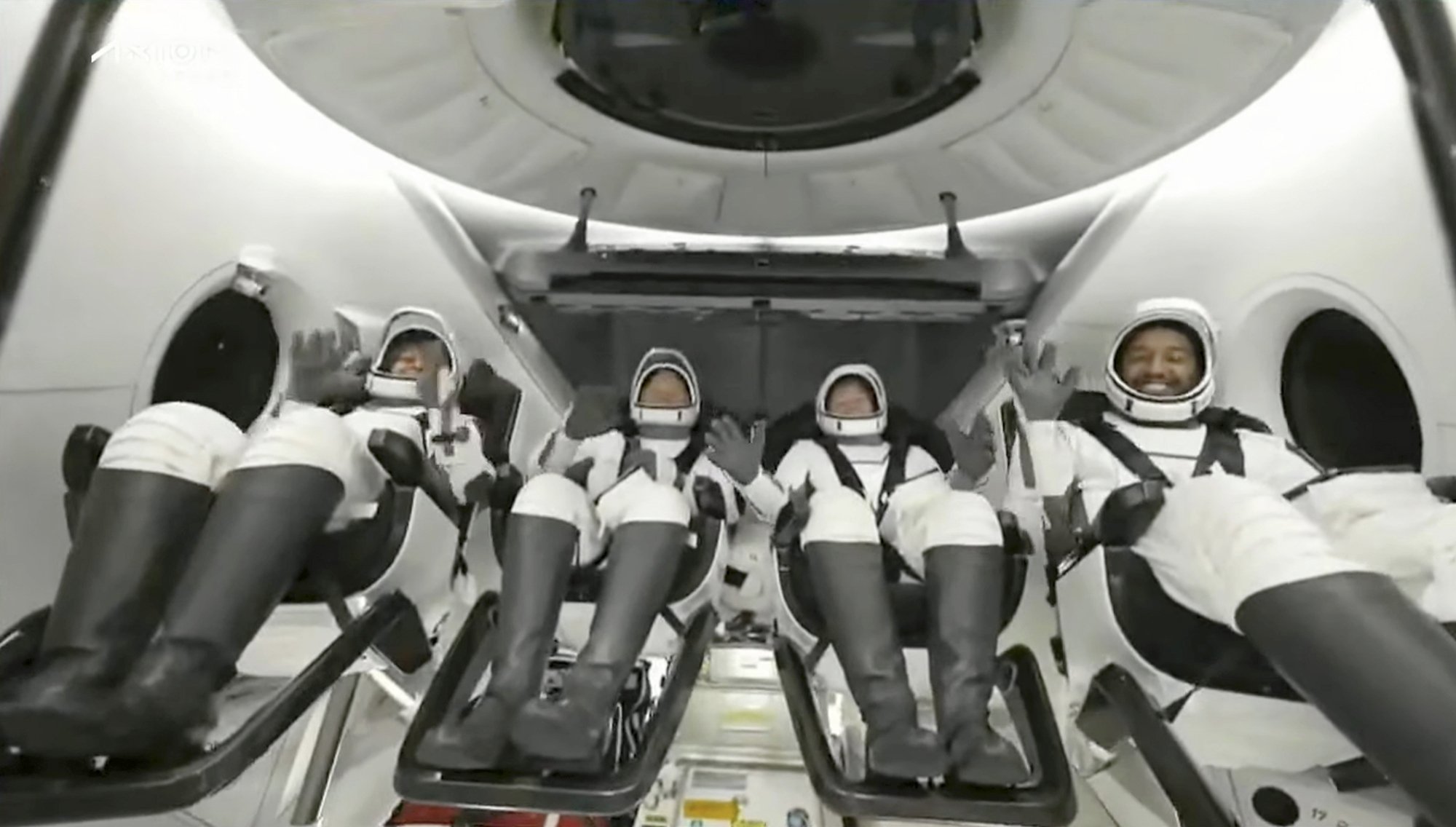
In this image taken from video broadcast by SpaceX, crew members wave after the SpaceX Dragon capsule splashed down into the Gulf of Mexico, just off the Florida Panhandle, May 30, 2023. (AP Photo)
by Reuters Jun 22, 2023 11:44 am
Edited By Buse Keskin

Increasing evidence is shedding light on the various impacts of traveling in the microgravity environment of space on the human body. Recent research indicates that these effects extend to the genetic level, specifically in white blood cells that play a vital role in the immune system. The findings suggest that space travel can dampen the activity of genes within these cells.

A study involving 14 astronauts who spent four-and-half to six-and-half months aboard the International Space Station found that gene expression in these cells, also called leukocytes, quickly decreased when they reached space and then returned to normal not long after returning to Earth, researchers said on Thursday.

The findings offer insight into why astronauts are more susceptible to infections during flights, showing how the body's system for fighting off pathogens is weakened in space.

"A weaker immunity increases the risk of infectious diseases limiting astronauts' ability to perform their very demanding work in space. If an infection or an immune-related condition was to evolve to a severe state requiring medical care, astronauts while in space would have limited access to care and medication," said molecular biologist Odette Laneuville of the University of Ottawa in Canada, lead author of the research published in the journal Frontiers in Immunology.

Leukocytes are produced in the bone marrow and travel through the bloodstream and tissues. Once they detect bodily invaders like a virus or bacterium, they produce antibody proteins to attack the pathogen. Specific genes govern the release of such proteins.

The researchers examined leukocytes isolated in blood drawn from astronauts – 11 men and three women – from the Canadian Space Agency and U.S. space agency NASA, once before the flight, four times aboard the space station, and five times after returning to Earth.

Gene expression in 247 genes in leukocytes was at about one-third of the normal levels while in space, the study found. This occurred within the first few days in space but then remained at a stable level. The genes typically returned to normal behavior within about a month of an astronaut's return to Earth.

"White blood cells are very sensitive to the environment of space. They trade their specialized immune functions to take care of cell maintenance or housekeeping roles. Before this paper, we knew of immune dysfunction but not of the mechanisms," said study co-author Guy Trudel, an Ottawa Hospital rehabilitation medicine specialist.

Discovering altered gene behavior in leukocytes is "a significant step toward understanding human immune dysregulation in space," Trudel added.
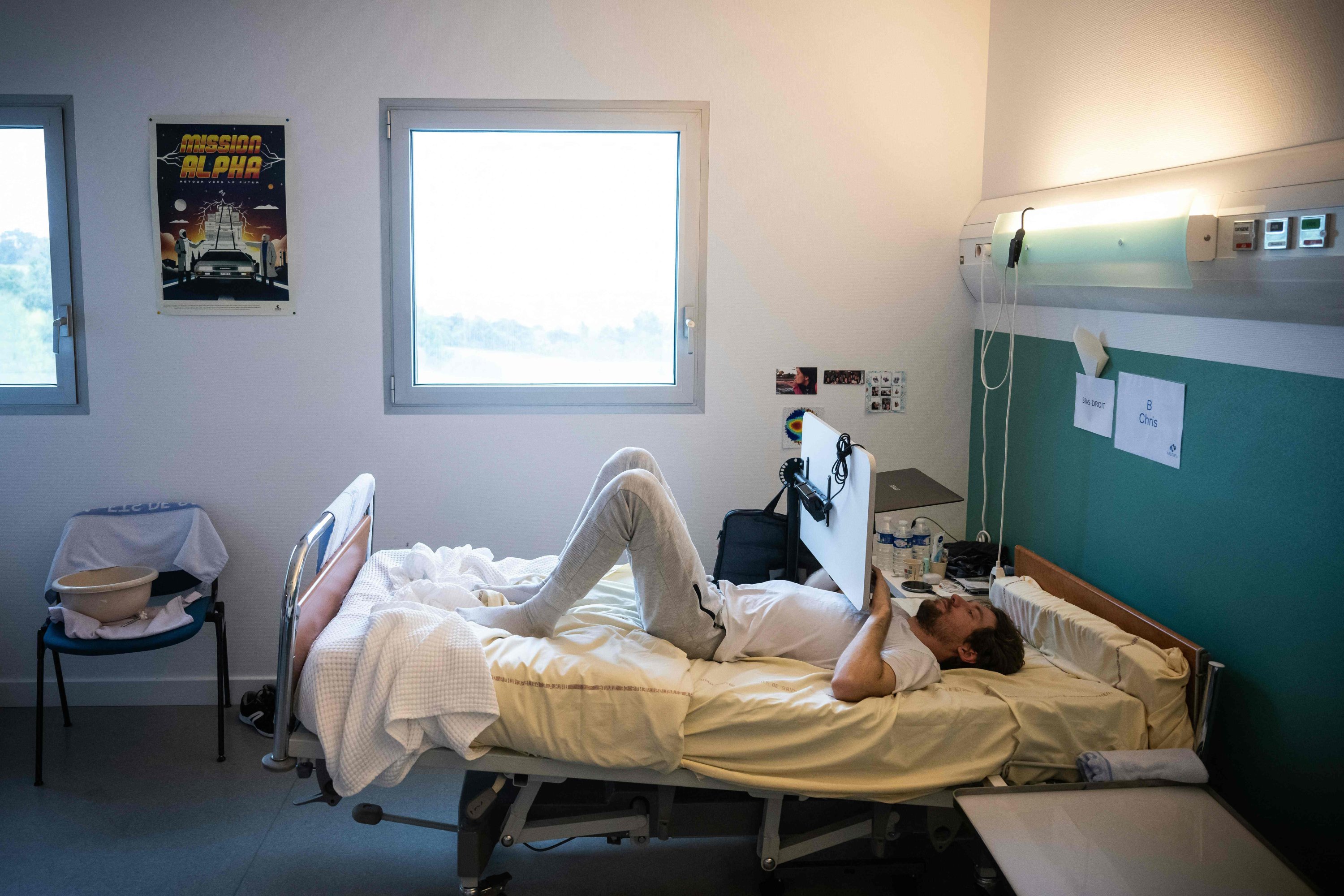
A volunteer lays in bed at the
A volunteer lays in bed at the "MEDES," the French space clinic during a clinical study simulating the consequences of weightlessness on astronauts in space, Toulouse, France, on May 23, 2023. (AFP Photo)

This altered behavior, the researchers said, may result from a phenomenon called "fluid shift" in which blood in the absence of Earth's gravitational pull is redistributed from the lower to the upper part of the body. It is unlikely that greater solar radiation exposure in space was the culprit, they added.

"New and specific countermeasures will be needed," Trudel said.

Scientists previously documented astronauts experiencing immune dysfunction in space. This has included the reactivation of latent viruses such as: Epstein-Barr, responsible for infectious mononucleosis; varicella-zoster, responsible for shingles; and herpes simplex 1, responsible for cold sores.

It also has been shown that astronauts in space shed more viral particles in their biological fluids – saliva and urine – increasing the risk of spreading pathogens to other astronauts whose own immune systems may be weakened.

The study, funded by the Canadian Space Agency, follows NASA-funded research published on June 8 that detailed brain changes in astronauts – expansion of spaces in the brain containing fluid that cushions it to protect against sudden impact and remove waste products.

Other documented effects of space travel include bone and muscle atrophy, cardiovascular changes, issues with the balance system in the inner ear and a syndrome involving the eyes. Cancer risk from greater radiation exposure is another concern.

  • shortlink copied
  • Last Update: Jun 22, 2023 2:44 pm
    KEYWORDS
    astronauts space travel
    The Daily Sabah Newsletter
    Keep up to date with what’s happening in Turkey, it’s region and the world.
    You can unsubscribe at any time. By signing up you are agreeing to our Terms of Use and Privacy Policy. This site is protected by reCAPTCHA and the Google Privacy Policy and Terms of Service apply.
    No Image
    Paris Fashion Week 2021 dazzles visitors with glamor
    PHOTOGALLERY
    • POLITICS
    • Diplomacy
    • Legislation
    • War On Terror
    • EU Affairs
    • News Analysis
    • TÜRKİYE
    • Istanbul
    • Education
    • Investigations
    • Minorities
    • Diaspora
    • World
    • Mid-East
    • Europe
    • Americas
    • Asia Pacific
    • Africa
    • Syrian Crisis
    • İslamophobia
    • Business
    • Automotive
    • Economy
    • Energy
    • Finance
    • Tourism
    • Tech
    • Defense
    • Transportation
    • News Analysis
    • Lifestyle
    • Health
    • Environment
    • Travel
    • Food
    • Fashion
    • Science
    • Religion
    • History
    • Feature
    • Expat Corner
    • Arts
    • Cinema
    • Music
    • Events
    • Portrait
    • Performing Arts
    • Reviews
    • Sports
    • Football
    • Basketball
    • Motorsports
    • Tennis
    • Opinion
    • Columns
    • Op-Ed
    • Reader's Corner
    • Editorial
    • Photo gallery
    • DS TV
    • Jobs
    • privacy
    • about us
    • contact us
    • RSS
    © Turkuvaz Haberleşme ve Yayıncılık 2021