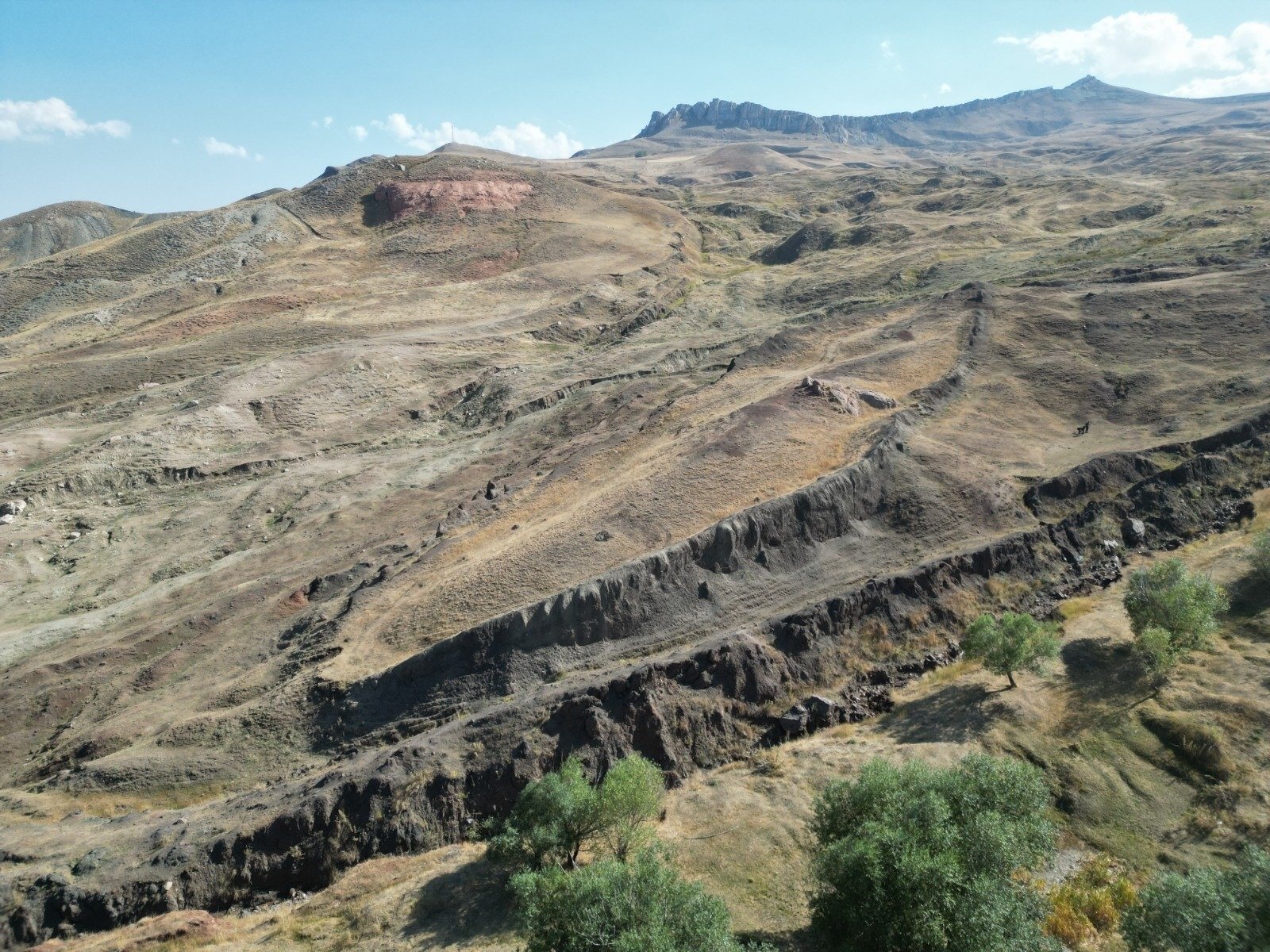
Soil samples collected from a boat-shaped geological formation long associated with Noah's Ark in eastern Türkiye's Ağrı province contain three times more organic matter than the surrounding area, researchers involved in the project said.
The findings come as investigations continue at the Durupınar formation in Doğubayazıt district, where researchers this year carried out ground-penetrating radar surveys and core drilling to examine underground anomalies.
Andrew Jones, deputy head of the Noah's Ark Research Project at Sivas Cumhuriyet University, said radar scans revealed right-angle formations, possible tunnels, layered structures and underground voids, some of which researchers believe could be human-made.
"Some of the possible voids are located 3 to 4 meters below the surface, while others extend to depths of around 13 meters," Jones said.
To examine the anomalies more closely, the team conducted its first core drilling campaign at the site, reaching a depth of 18 meters at one location and drilling between 5 and 8 meters at several others.
More than 300 samples were collected during the fieldwork and sent to laboratories at Ankara University for analysis, Jones said.
He also highlighted results from a 2024 soil study, which found that the boat-shaped area contained significantly higher levels of organic material than the surrounding hillside.
"The studies showed that there is three times more organic matter inside the boat-shaped area than immediately outside it," Jones said. "The soil within the formation is different from the soil on the mountainside. This was a very interesting result from research conducted at Atatürk University."
The newly collected samples will be examined for indicators such as decayed wood, animal remains and traces of human activity, which researchers say could help shed more light on the site's characteristics.
Jones said the project has attracted growing international attention, with documentary crews from several countries visiting the site this year to record the fieldwork.
Laboratory analyses are expected to continue throughout the winter, with researchers aiming to publish a comprehensive report in early summer next year after evaluating the findings.