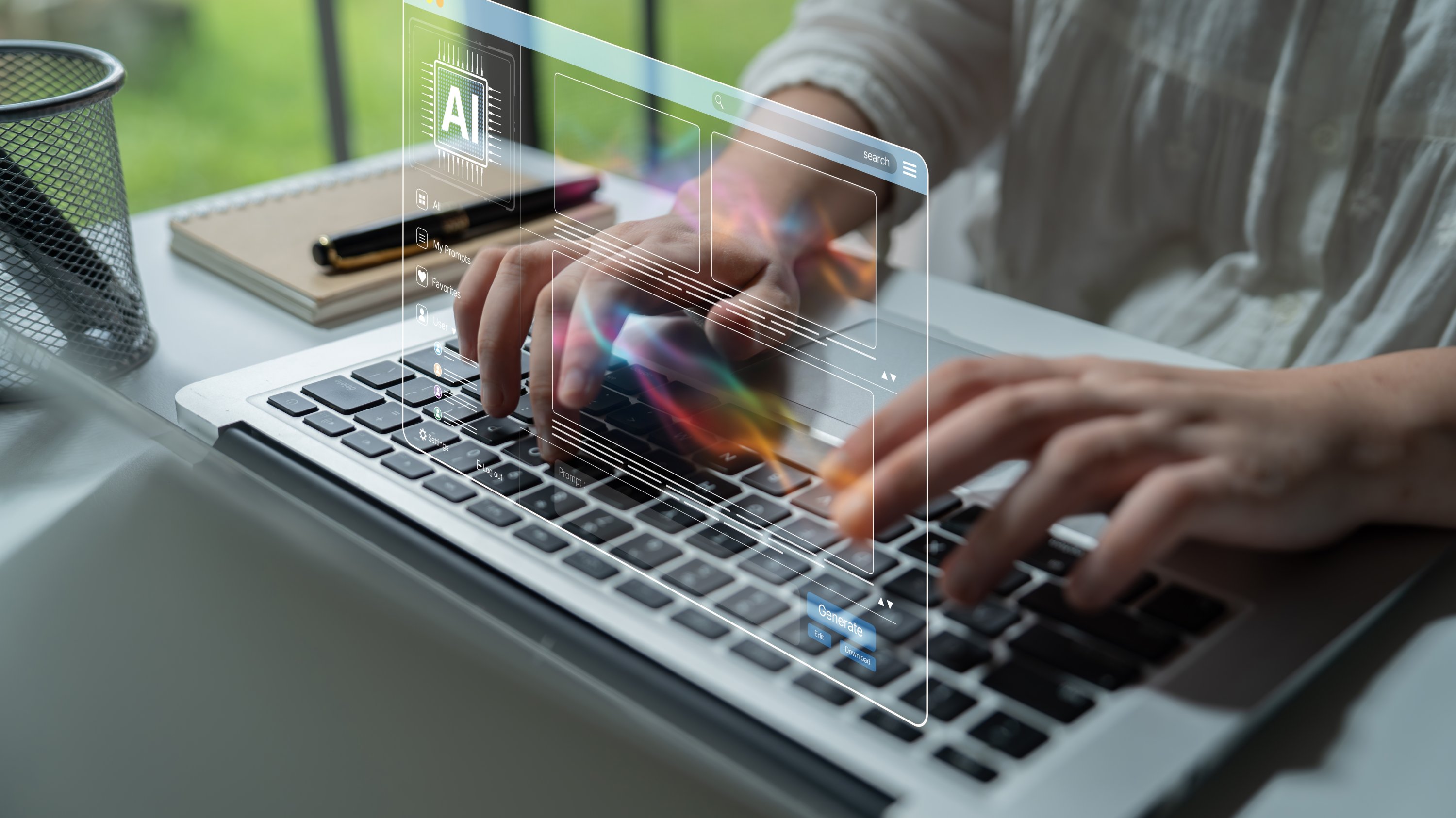
The question, “Will artificial intelligence replace graphic designers?” has emerged as one of the most searched creative career questions of 2025. As we approach the end of the year, I am able to write this article based on my experiences during this period, the information I have received, and my active experimentation with new AI tools and software. When one is a design faculty candidate, a young designer, an employee at a graphic design agency, or any business owner who must use visual content, this question clearly moves beyond an abstract debate. In fact, it directly shapes what I teach as an educator, whom I choose to employ and how I plan for the next few years.
I have experienced firsthand how AI-based design tools such as Adobe Firefly, Canva Magic Studio, Midjourney and Uizard can transform short text prompts into polished visuals, layouts and mockups. Nearly every month, new tools emerge. It must be acknowledged that it is easy to develop the feeling that a single update could render human designers irrelevant overnight. However, in my view, the reality is not quite like this. While I accept that artificial intelligence is powerful, fast and at times surprisingly successful, I believe it works most efficiently not as an independent creative director, but as an assistant. Within the scope of this study, I clearly present what AI can and cannot do, which design tasks are at risk, which new roles are emerging, and how one can remain valuable in this new era.
Today, I define artificial intelligence in graphic design as a type of software that can generate visuals based on text, examples or simple inputs, or modify existing visuals. Instead of drawing every shape by hand or selecting every color individually, I describe what I want and allow these tools to generate various options for me. I observe that modern AI tools largely rely on three core principles: text prompts such as “a cinematic poster of a sci-fi city in blue and gold,” templates and presets created for layouts, typefaces and color schemes, and a style-learning process based on models imitating patterns found in large visual datasets.
I observe that Adobe Firefly works as an integrated feature within software such as Photoshop and Illustrator, enabling me to generate visuals, expand backgrounds, or reshape graphics without leaving the main applications. Canva Magic Studio, on the other hand, offers similar functions for social media visuals, presentations and short videos. I have experienced that Midjourney operates through the Discord platform and produces high-impact visuals particularly useful for concept development and mood boards. Uizard, meanwhile, can generate UI and UX mockups from hand-drawn wireframes or text summaries.
It should be noted that most of these tools adopt the fundamental method used in modern AI image generation guidelines. They convert visuals into numerical data, learn patterns from this data, and then generate new images according to my request. To use these tools effectively, I do not need advanced mathematical knowledge; however, I emphasize that it is important to understand that they reorganize existing patterns rather than think like humans.
At present, I believe artificial intelligence stands out in producing fast, clear and “good enough” visuals. Frequently encountered areas of production include social media visuals and stories, basic logo ideas and variations, posters, flyers, thumbnails, website hero images and banners, as well as color palettes and basic typography pairings. I observe that platforms such as Canva and Designs.ai can transform a business name and a few basic inputs into a complete mini brand kit. This process can yield logo options, typeface combinations, color suggestions and ready-to-use templates for social media posts and presentations.
For non-designer users, this situation understandably feels almost magical. A small business owner, for example, a bakery operator, can create a month’s worth of Instagram content in an hour. A YouTuber can test 10 different thumbnail designs in a single session. In this context, it is possible to say that a perception has emerged suggesting that working with a designer for every update is no longer necessary.
From the perspective of professional designers, however, I consider this less a matter of replacement and more a matter of speed. I observe that AI can generate numerous design variations within minutes, automatically resize designs for different platforms, suggest brand-consistent color or typeface changes and perform tasks such as background removal in seconds. Many tasks that once occupied an entire afternoon for a designer can now be completed by a single person in half an hour with AI support. In this sense, I believe artificial intelligence is an extremely helpful tool for designers, that there is no harm in using it, and that the human brain has a structure that constantly pushes the limits of generating new ideas. As someone who is at peace with this technology, I would even predict that experimentation and trial processes with AI will continue to offer a space for development and enjoyment for humans for some time.
Following the Industrial Revolution, particularly in the late 19th and early 20th centuries, mass production enabled goods to be produced quickly and cheaply; however, this led to the marginalization of aesthetic values, craftsmanship and manual labor. As a reaction to this process, the Arts and Crafts Movement emerged, revaluing handmade production, advocating the use of natural materials, the integration of function and aesthetics and the creative role of the craftsman in the production process. Led by William Morris, this approach criticized the soullessness of machine production and emphasized that art should be part of everyday life. By laying the groundwork for modern design movements such as Bauhaus, it profoundly influenced 20th-century design philosophy.
The continued use of the Bauhaus approach in design education today, the practice of sketching with pencil and paper and the grounding of the design process in hand drawing clearly demonstrate the ongoing relevance of this philosophy. Although technological progress represents a powerful and inevitable momentum, from a design and art perspective, the indispensability of manual labor and handmade production remains evident. In the creation of artworks, the human touch and the element of effort will always be decisive; in a future of increasing digitalization, it is inevitable that these qualities will become even more valuable.