The Mecca pact between Türkiye, Pakistan and Saudi Arabia attracted worldwide attention. Was it an agreement against Israel? Against Iran? Or simply a move by these countries to support their own defense pacts? Dozens of interpretations were offered.
The reality is that the neoliberal order that emerged in the post-Cold War era failed to establish a new, stable world order. As the world transitions toward multipolarity, nation-states all over the world are facing growing security risks. At this stage, Pakistan, Saudi Arabia and Türkiye are shaping a new security paradigm and reinforcing it through strategic alliances.
Due to its imperial background, Türkiye does not have a single-front agenda. Instead, news and issues surface every day across dozens of fronts at once.
Last week, the most significant development in Türkiye's favor was the Libyan House of Representatives voting unanimously to ratify the maritime Exclusive Economic Zone agreement signed with Türkiye back in 2019 – and annulling its own 2020 decision, which had earlier rejected the deal. The European Union, above all, overstepped its authority, reacting in a way that was neither necessary nor warranted.
Europe's states – or rather its leaders – apparently still feel as powerful as they did two centuries ago, at the dawn of the colonial age. How else do you explain their refusal to recognize a decision taken by two sovereign states, or their denying it as a “so-called agreement”? For Europe, this is an overdose, an overreach, a crossing of the line – and in time someone will hold up a mirror to them, and they too will come to see it.
Once the Mecca pact was in place, questions began about which other states might join it. Would Egypt become part of it? Would Syria? Would large nations like Indonesia sign on? And while those questions were still being asked, an unexpected framework agreement emerged, and far faster than anyone anticipated.
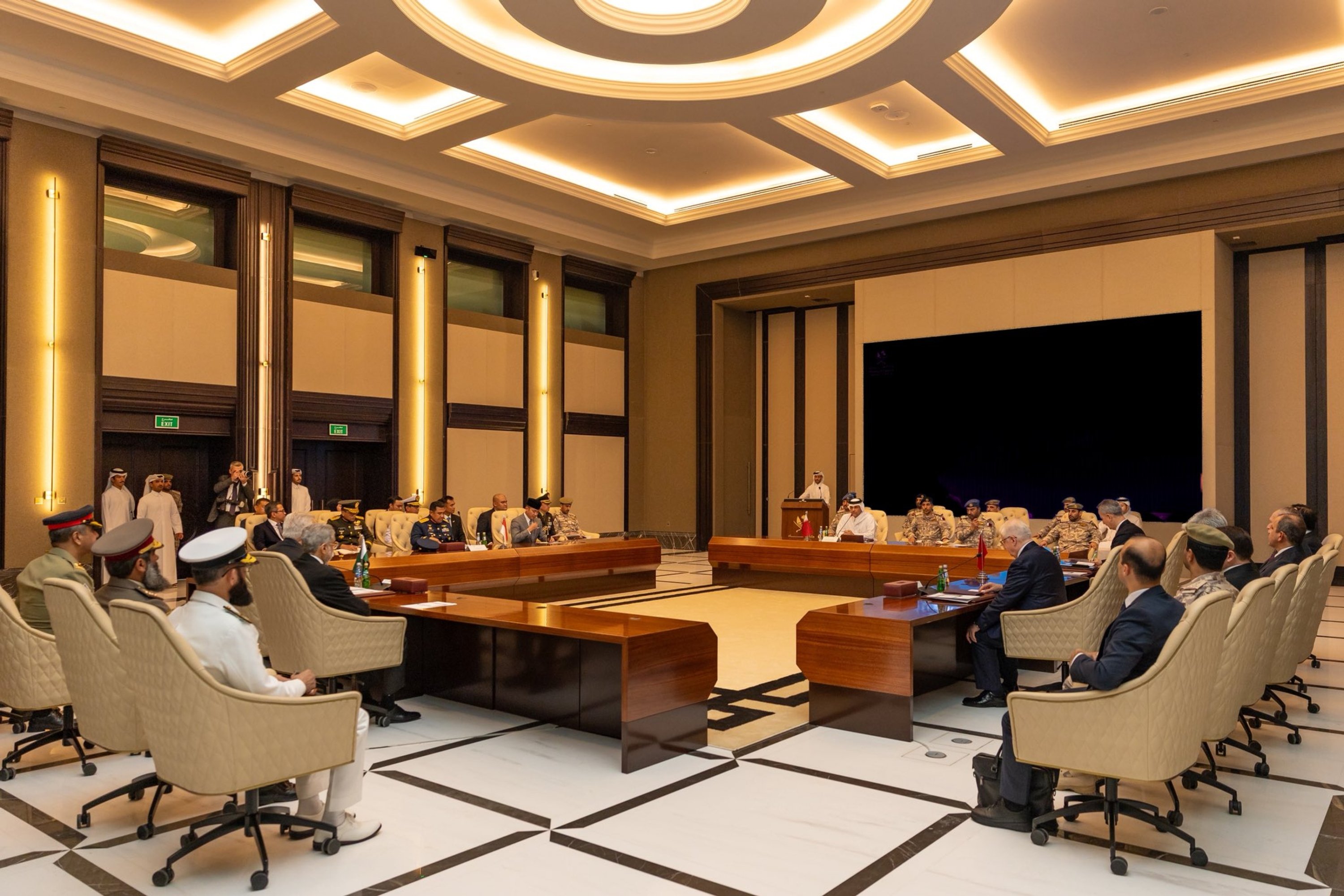
A new agreement was signed between Türkiye, Pakistan, Qatar, and Indonesia – at its core, a defense-industry cooperation agreement, but also a security pact and a new model of cooperation between states covering a range of areas from the economy to defense. It is different from the Mecca agreement. But indicates clearly that, in this transition to a multipolar world, Türkiye continues to develop different alliances in different arenas as a center of power.
If we examine the members of this new alliance one by one, Pakistan – as was much discussed during the Mecca pact – is a nuclear power with a strong army. It is the army that embodies Pakistan's cohesion, its order and its strength as a unitary state under a single roof.
Indonesia, for its part, is one of Asia's farthest-flung nations and among the most populous in the Islamic world, with a population approaching 400 million. In its own search for new security guarantees, Indonesia has become part of this new system.
Qatar, as everyone knows, has in recent years become a hub of finance and investment – sophisticated in both its governance and its investments, and one of the most generous donor nations in the world. And when Qatar found itself threatened by its Gulf neighbors, it was Türkiye that stood by its side. Such are the ironies of fate: Saudi Arabia and the other Gulf states, who only yesterday seemed at odds and in open quarrel, have today become common allies and common friends of both Türkiye and Qatar.
What this really shows is that a state does not need to gather all its alliances under a single roof. Türkiye can work with Egypt, Libya, Somalia and others in Africa, with Pakistan and Indonesia in the Far East, and with Qatar in the Gulf – and these group of alliances can, in fact, reinforce one another.
Qatar is not normally part of the Mecca pact, yet it can be counted as Türkiye's ally across every region where Türkiye is strategically present. In earlier years, Saudi Arabia and Qatar were rivals in Syria – in finance, in investment – whereas today Syria has become one of the countries that Türkiye, Qatar and Saudi Arabia are all working together to rebuild.
Likewise, 10 years ago Egypt and Türkiye stood against one another in Libya. However, today the two move almost as allies on Libya's territorial integrity – and the situation in Sudan is no different.
As Türkiye seeks new partnerships – in the Caucasus, the Balkans, Africa, the Middle East and the Far East – and as these efforts continue along its eastern front, the Canadian prime minister is standing today alongside our president. And here is an even more striking turn: while Türkiye builds its group of allies in Africa, the Middle East and the Far East, Canada is searching for alternative friendships and alliances beyond the U.S. In the period ahead, such searches by Western states will only grow – and Türkiye will become a central power managing a group of alliances around the world.
Every country has its own troubles – issues it faces, matters it is forced to confront. But with its geopolitical position, its historical mission, the strength it has built in its defense industry, and its powerful army, Türkiye has now evolved into a position to build and to manage, a group of alliances.