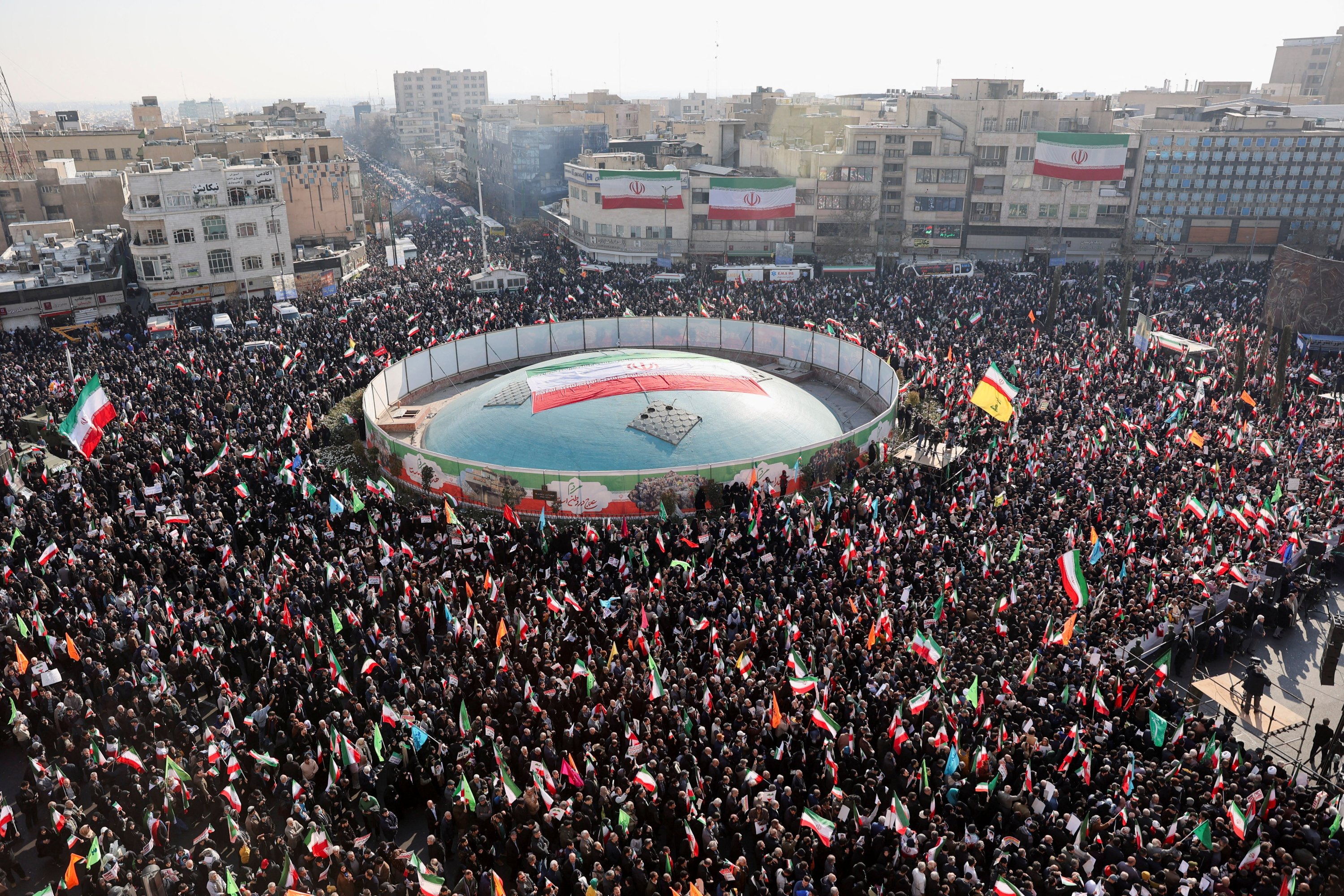
Iran and Türkiye are two major neighboring countries bound together not only by geography, but by history and politics as well – a shared destiny of sorts. Any deep instability or prolonged weakness in one inevitably produces consequences for the other. For this reason, Iran’s current condition must be closely monitored not only for the sake of the Iranian people but also for Türkiye and the wider region.
Today, a dominant global presumption prevails: American democracy is framed as inherently “good,” while states that do not serve or align with U.S. interests are labeled “bad.” This reductive worldview makes it particularly difficult for countries in the Islamic world to develop political paths rooted in their own historical and social realities.
Following the collapse of the Ottoman Empire, three distinct political orientations emerged in the Islamic world. The first was adopted by the Gulf states. Acknowledging their limited capacity to resist the West, they opted for outright compliance in exchange for security guarantees. The second approach, exemplified by Iran, sought to build an inward-looking system by distancing itself from – if not outright confronting – the global order. The third path was Türkiye’s: working with the West without surrendering to it, preserving national identity, independence, and strategic reason through a policy of balance. In recent years, Türkiye has gradually adopted this approach to achieve greater strategic autonomy.
Since the Khomeini Revolution, Iran has remained one of the most debated countries in the world and has yet to fully integrate into the Western-centered global system. The Iran-Iraq War, which began shortly after the revolution and lasted nearly a decade, exhausted both countries’ human and economic resources. During this period, Gulf states provided Iraq with military support amounting to a trillion dollars. The heavily armed Iraq that emerged after the war became a regional threat and was subsequently pushed, under U.S. encouragement, into invading Kuwait, only to be dismantled through U.S.-led Gulf wars and occupations. In the end, Iran was kept preoccupied with war for years, Iraq was removed from the regional equation, and a security framework favorable to Israel was established.
Iran emerged from this era burdened by severe sanctions. Until Donald Trump’s first term in the U.S., these sanctions primarily affected the Iranian public, while the regime’s misguided regional choices increased the damage. During the Obama administration, nuclear negotiations sought to partially reintegrate Iran into the system. Tehran, however, misread this opening and converted it into an expansionist “imperial” ambition across Iraq, Syria, Lebanon and Yemen – probably the most serious strategic mistake of post-revolutionary Iran.
After the U.S. invasion of Iraq, Iran undermined the country’s prospects of becoming a functioning state. In Syria, it exhausted its own social energy and resources to keep the Assad regime afloat. Security structures built around militias such as the Hashd al-Shaabi deepened chaos rather than producing stability. While struggling with sanctions at home, Iran pursued an unsustainable expansion abroad. Sanctions that intensified after the Trump presidency, along with a series of regional setbacks, ultimately signaled the collapse of Iran’s “chaos-powered regional power” model.
The internal dispute unfolding in Iran today is impossible to ignore. In earlier phases, reformist movements – represented by students, intellectuals, and several segments of society – put forward unmistakable demands: free elections, respect for the rule of law and a political order shaped by the Iranian people themselves. Over time, however, an exclusionary governing style consolidated under spiritual leader Ali Khamenei, marginalized these reformist voices, and entrenched polarization. What has emerged bears a striking resemblance to Türkiye’s early division between the Republican People’s Party (CHP) and the Justice and Development Party (AK Party). Under these conditions, any change Iran experiences is far more likely to come through an internal reordering of power than through a sudden or total regime fracture.
In conclusion, Iran possesses a rooted civilizational legacy, a strong cultural foundation, and a well-educated human capacity. If its leadership abandons the practice of demonizing its own people and elites, and replaces sectarian expansionist fantasies with a policy that prioritizes domestic development and regional peace, Iran may yet rise from the ashes. Otherwise, a nation cannot hope to survive by fighting for its existence on one front while chasing imperial illusions on another – such a course promises no future, neither for Iran nor for the region.