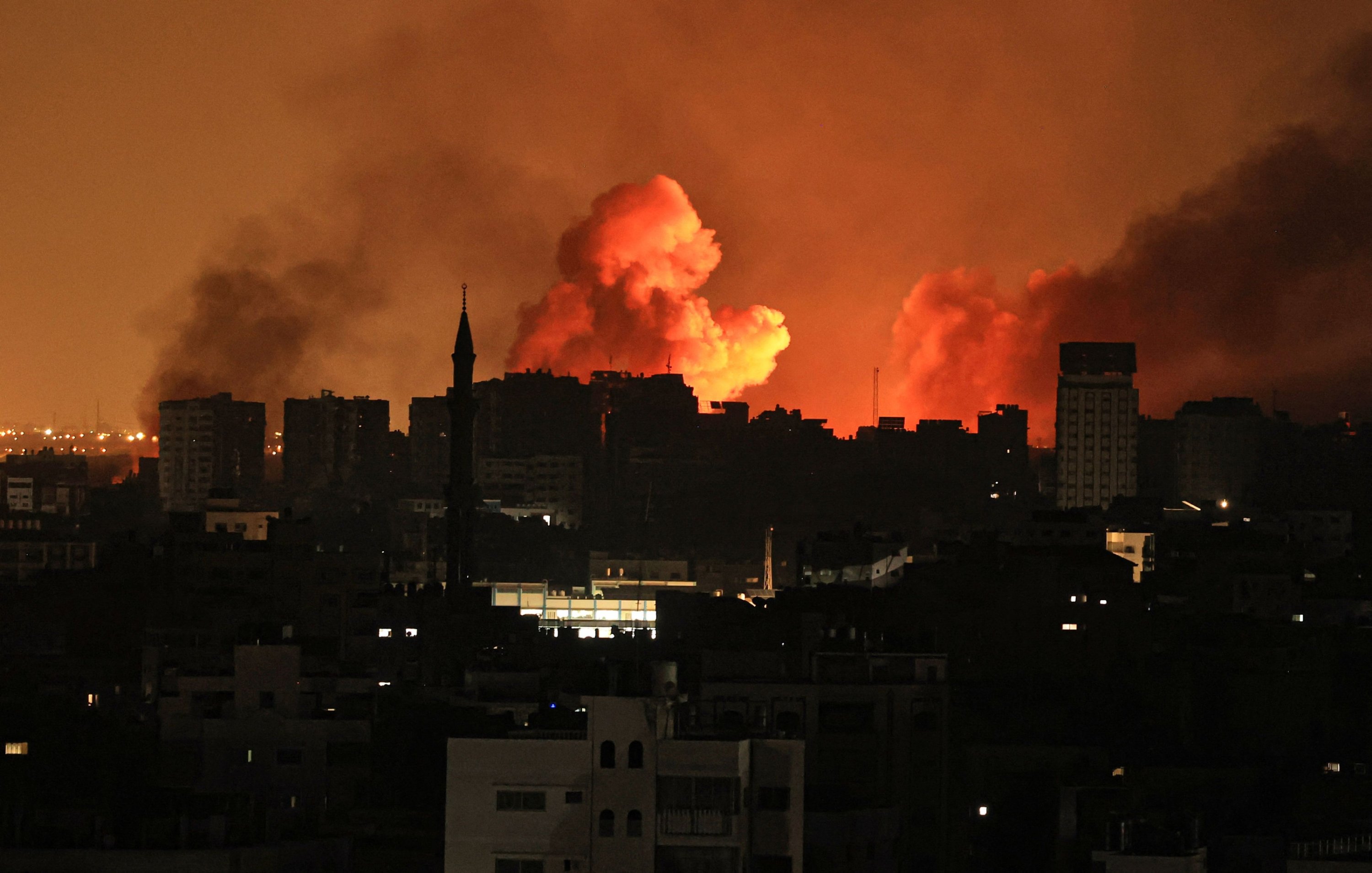
Hamas’ surprising attack on Israel on Oct. 7, followed by Israel’s ongoing and disproportionate military operation in Gaza, has the potential to become a pivotal moment in Middle Eastern history. Predicting the extent of Israel’s incursion into Gaza remains uncertain, and Hamas faces immense challenges in maintaining its resistance.
Moreover, Israel is grappling with the repercussions of this sudden assault. The emerging landscape appears likely to push Israel toward a new security doctrine and a more radical stance on the Palestinian issue compared to the past. Inevitably, the involvement of Hezbollah in Lebanon and Syria in this conflict appears imminent, causing concern in the United States. The unbridled support of the U.S. for Israel further exacerbates the situation and necessitates a reassessment of the ongoing regional dynamics. Consequently, it is becoming increasingly difficult for the "New Middle East," which was once framed in terms of regional normalization, to take shape.
The outbreak of the Arab Spring brought discussions of a New Middle East to the forefront, as it empowered democratic forces and dismantled entrenched authoritarian regimes. While some termed this transformation as the “normalization of history,” others coined it the “New Middle East.” However, the phase marked by democratization and normalization was fleeting. The deepening of the Syrian civil war, the military coup in Egypt, the setbacks faced by Libyan revolutionaries, the enduring conflict in Yemen, and the rise of groups like Daesh diverted the course of the New Middle East away from democratic aspirations. As a result, democracy and stability became opposing forces, sidelining the root causes of regional issues and masking new challenges stemming from the Arab Spring.
Remarkably, the defeat of Daesh was misinterpreted by both international and regional actors. Its defeat in Syria and Iraq, seen as the darkest consequence of the Arab Spring, was assumed sufficient to construct a new regional order. In reality, no actual problems were resolved. Arab states normalized relations with the Assad regime in Syria without addressing the ongoing Syrian crisis. Gulf normalization occurred without resolving the Yemeni conflict, and most significantly, Arab-Israeli normalization commenced without addressing the Palestinian issue. Thus, the New Middle East dialogue was reignited through normalization initiatives, failing to bridge the gap between persistent problems and the normalization process. The core issue was that normalization did not reach the grassroots and neglected the genuine problems.
The contemporary New Middle East, currently under discussion, diverges significantly from the vision during the Arab Spring. The initial debate revolved around democracy and changing the status quo, whereas the current focus is on stability and preserving the existing order. In the former, non-state actors moved from the periphery to the center of discussions. In the latter, central actors reasserted their positions, emphasizing regional stability. In the former, the economy played a secondary role, while in the latter, the economy took center stage. This shift marginalized traditional fault lines and emphasized geo-economic dynamics as the key to establishing a new regional order. Consequently, after 2020, three distinct political paths emerged: Arab-Israeli normalization (the Abraham Accords), Türkiye’s normalization with regional countries (UAE, Israel, Saudi Arabia, Egypt), and Arab-Iranian normalization, all contributing to the transition from a chaotic regional atmosphere to a more decisive era of normalization processes.
Hamas’ unexpected assault on Israel and Israel’s ongoing military operations have the potential to derail this progress, potentially marking the end of the so-called new era in the Middle East. The future of this situation largely hinges on Israel’s upcoming actions, the fate of Hamas, and the scope of the conflict’s expansion.
Israel’s current military approach indicates a comprehensive ground operation against Gaza, aiming for the complete destruction of Hamas. This strategy seeks to confine Gaza’s civilians to specific areas while Israel takes control of demilitarized zones, thereby weakening Hamas’s influence permanently. It may also involve transferring control of Gaza to Abbas’s authority. The pro-war camp in Israel rhetorically equates Hamas with Daesh, mirroring the military strategies employed in counter-Daesh operations in Iraq and Syria, potentially leading to a dehumanizing approach toward Gaza similar to operations in Raqqa and Mosul. At present, international support offers Israel a significant advantage.
However, Israel’s ground operation faces numerous challenges. It’s important to remember the examples from the Ukrainian and Syrian wars, which demonstrate how non-state armed groups have improved their capabilities in asymmetric conflicts, presenting challenges for regular army units. Given Hamas’s growing strength, its experience in urban warfare, the high population density in Gaza, widespread popular support for Hamas, the urban landscape, and underground tunnels in Gaza, it is doubtful that Israel’s ground operation will entirely eliminate Hamas. Additionally, the mobilization of Hezbollah along the Lebanese and Syrian borders could compel Israel to shift its forces northward, possibly expanding the conflict on multiple fronts. If U.S. support for Israel escalates to the point of intervention by third parties, it could lead to a regional crisis. The growing relevance of Iran in the Biden administration’s policies further adds to the complexity.
The goals behind Hamas’ Oct. 7 operation remain somewhat unclear. The stated objectives appear to be ending Israeli raids on Gaza, halting attacks on the Al-Aqsa Mosque, and securing the release of Palestinians from Israeli prisons. However, if this operation, referred to as the “Al-Aqsa Flood,” is driven by strategic rather than tactical considerations, it implies that the situation extends beyond the immediate Palestinian issue. If this is the case, it could disrupt the normalization processes in the Middle East. One immediate consequence could be the suspension of Israel-Saudi Arabia normalization, despite efforts by the Biden administration to foster their rapprochement. The normalization efforts between Israel and the UAE, Bahrain, and Morocco might also be adversely affected, and the already strained normalization between Türkiye and Israel could face further challenges. If Türkiye succeeds in negotiating the release of hostages and de-escalates the conflict, the situation could improve. Conversely, if these efforts fail and Israel’s occupation of Gaza intensifies, Ankara and Tel Aviv may need to reconsider their ongoing diplomatic process.
Ultimately, the events of Oct. 7 may temporarily close the door to the New Middle East, and its reopening may depend on the path Israel chooses regarding the Palestinian issue and the overall geopolitical landscape.