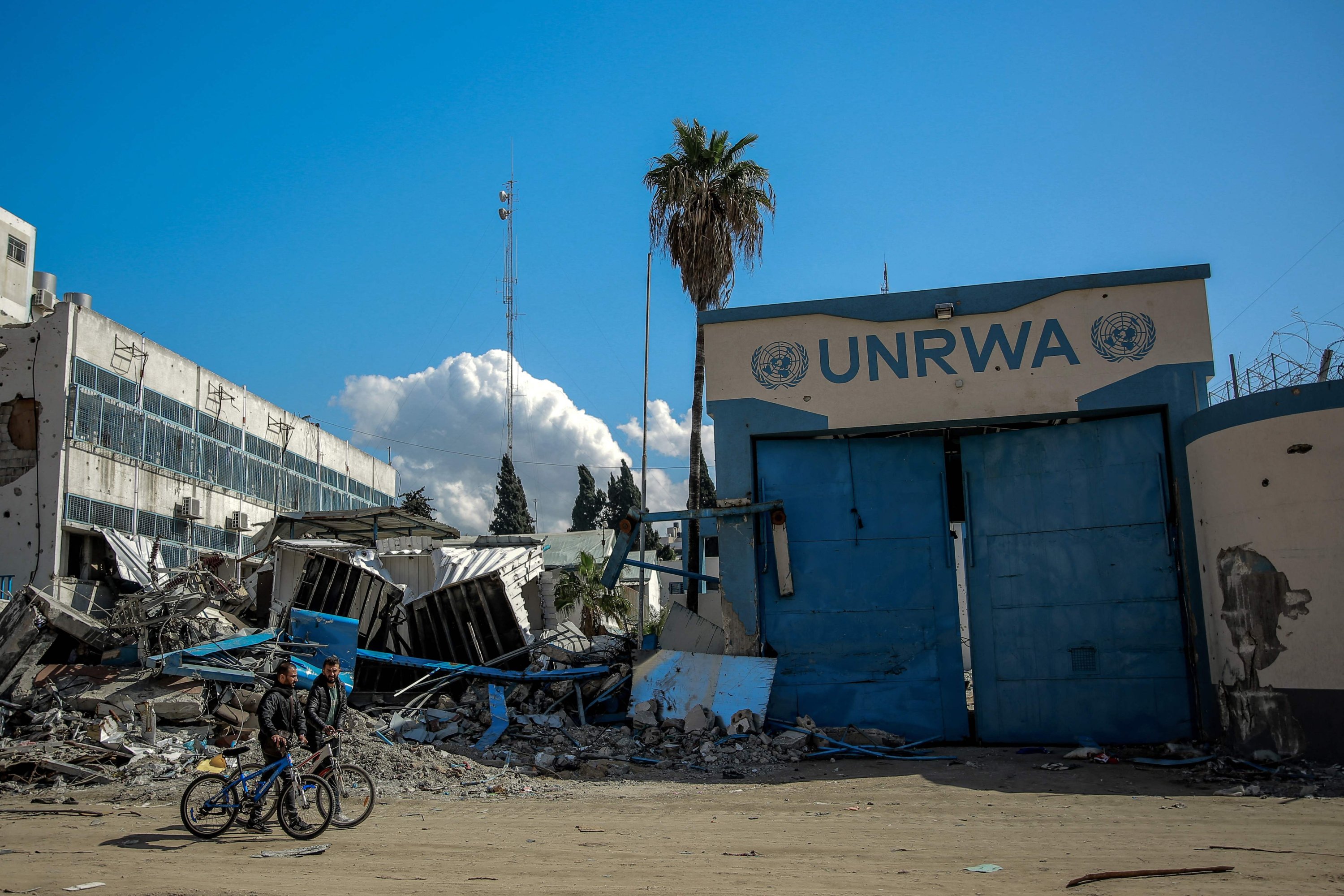
With the full and unconditional support of the United States and Western European countries, the Israeli government has been attacking Middle Eastern countries and committing genocide against Palestinians living in the Gaza Strip. The first step of Israel’s expansionist policies in the Middle East has been the increased occupation of Palestinian lands. After the total destruction of the Gaza Strip, Israeli forces now target the West Bank. Neither international organizations such as the United Nations, nor any global or regional states have been able to stop the Israeli atrocities. Israel continues to violate all related norms and rules of international law and most Western countries such as Germany have been justifying Israel’s crimes and attacks against innocent Palestinians.
In the second stage, Israel began to hit regional countries, including Yemen, Lebanon, Syria and Iran. Israel continues to violate the national sovereignty of most Middle Eastern countries through its direct attacks or the use of their air spaces. The same pro-Israeli coalition of the Western countries continues their support of Israeli Prime Minister Benjamin Netanyahu's government against all other countries. For instance, the U.S. government declared that Israel has the right to hit Iran. However, it stated that the U.S. will not remain indifferent if Iran retaliates. In other words, for the U.S. administration, it is alright for Israel to target any country in the region. Still, it is not acceptable for any regional country to defend itself against Israeli aggression.
One of the main reasons for the unconditional support of the U.S. to Israel in the Middle East is global rivalry. When the U.S. decided to decrease its military power in the region, the two challenging global powers, namely China and Russia, increased their economic, political and military presence in the Middle East. It was the U.S. and other Western countries that directly or indirectly paved the way for the Russian increased presence in the region, especially in Syria. Thus, they attempted to separate Russia from China as part of the isolation policy against Beijing.
However, when Russia invaded Ukrainian territories, Western countries decided to take measures against Russia. The U.S. pursued a harsh anti-Russian policy and exaggerated the Russian threat against Central and Eastern European states in order to consolidate its transatlantic alliance since most Western European states were eager to cooperate with China within the context of the Belt and Road Initiative. In the end, Western European countries became more dependent on the U.S. in their foreign policies. Although Western European countries have taken a moderate stance toward Russia, they have had to follow the U.S. in imposing sanctions against Russia.
Eventually, Russia reduced its presence in the Middle East and North Africa. Moscow has withdrawn many of its military troops from the MENA region and sent them to the Ukrainian front. In addition, by allowing, if not encouraging, Israel to target Iran and Syria, the U.S. has been trying to weaken pro-Russian powers in the region. There were some claims that Iran has been sending unmanned aerial vehicles to Russia. By intensifying the regional tension and by spreading the war across the region, the U.S. will prevent Iran’s support to Russia.
The U.S. does not want China to be involved in Middle Eastern affairs either. Until very recently, China has been insistently declaring its policy of non-intervention and non-involvement in the affairs of its economic partners. However, recently China has attempted to be involved in Middle Eastern affairs through a mediation mechanism. China mediated between Iran and Saudi Arabia, two arch-regional rivals. China succeeded in de-escalating tensions between the two states.
Similarly, China has been involved in the Palestinian question. China hosted 14 different Palestinian factions, including Hamas, last July. Under Chinese supervision, these factions discussed the possibility of forming a unity government in Palestine. For this reason, they signed the Beijing Dialogue, the most inclusive reconciliation talks aimed at forming a unity government. While the U.S. led the Israeli government to destroy the political power of the Palestinians, China tried to consolidate the Palestinian front. In other words, the U.S. and China adopted opposite positions on the Palestinian-Israeli question.
By supporting Israeli atrocities and attacks against regional countries, the U.S. aims to weaken the main economic partners of China and to deprive China of its important partners in the Middle East. On the one hand, the U.S. has been trying to weaken Iran, the most important Chinese partner in the region. It is important to remember that Iran is a full member of the Shanghai Cooperation Organization and BRICS, the two effective China-led global platforms.
On the other hand, by destabilizing the Middle Eastern region, the U.S. does not allow regional rich countries such as Saudi Arabia to invest in developmental projects, most of which are carried on with China, which is still the largest buyer of Saudi oil. With the increase of political instability and military tension in the region, all regional countries have to invest in military technologies, most of which are provided by the U.S. and other Western countries.
In conclusion, with its unconditional support to Israel, the U.S. aims to hit as many birds as it can. The U.S. aims for the Middle Eastern balance of power, with a politically absent Arab world, a weakened Iran and an isolated Türkiye. Thus, the U.S. and Israel will be able to freely design the Middle East.
The U.S. also wants to eliminate, or at least significantly reduce, the influence of other global powers, namely China and Russia, in the region. Within this context, the Middle East region and the lives of innocent Palestinians are instrumentalized by the U.S. in its global rivalry with China and Russia. In the end, the innocent Palestinians (and the Ukrainians) pay the ultimate price for this global rivalry. As an African proverb says, “When the elephants fight, the grass gets trampled.”