Iran increasingly faces numerous national and regional challenges. Despite the regime's consolidation, Iranian governments continue to act from a minority perspective.
The country is surrounded by Arab and Turkic states and feels contained by enemies, thus isolated and vulnerable. Therefore, it has been analyzing its relations with regional actors from a zero-sum perspective. Since it has been following a regional policy characterized by conflict, Iran perceives any development that contributes to the stability of the region as a threat.
Iran has been facing serious political, economic and social problems in domestic politics. On the one hand, Tehran experiences deep economic problems, mainly due to the negative impacts of the long-time sanctions imposed by the United States, declining exports, negative trade balances, rising inflation rates, poverty, unemployment, drought and migration.
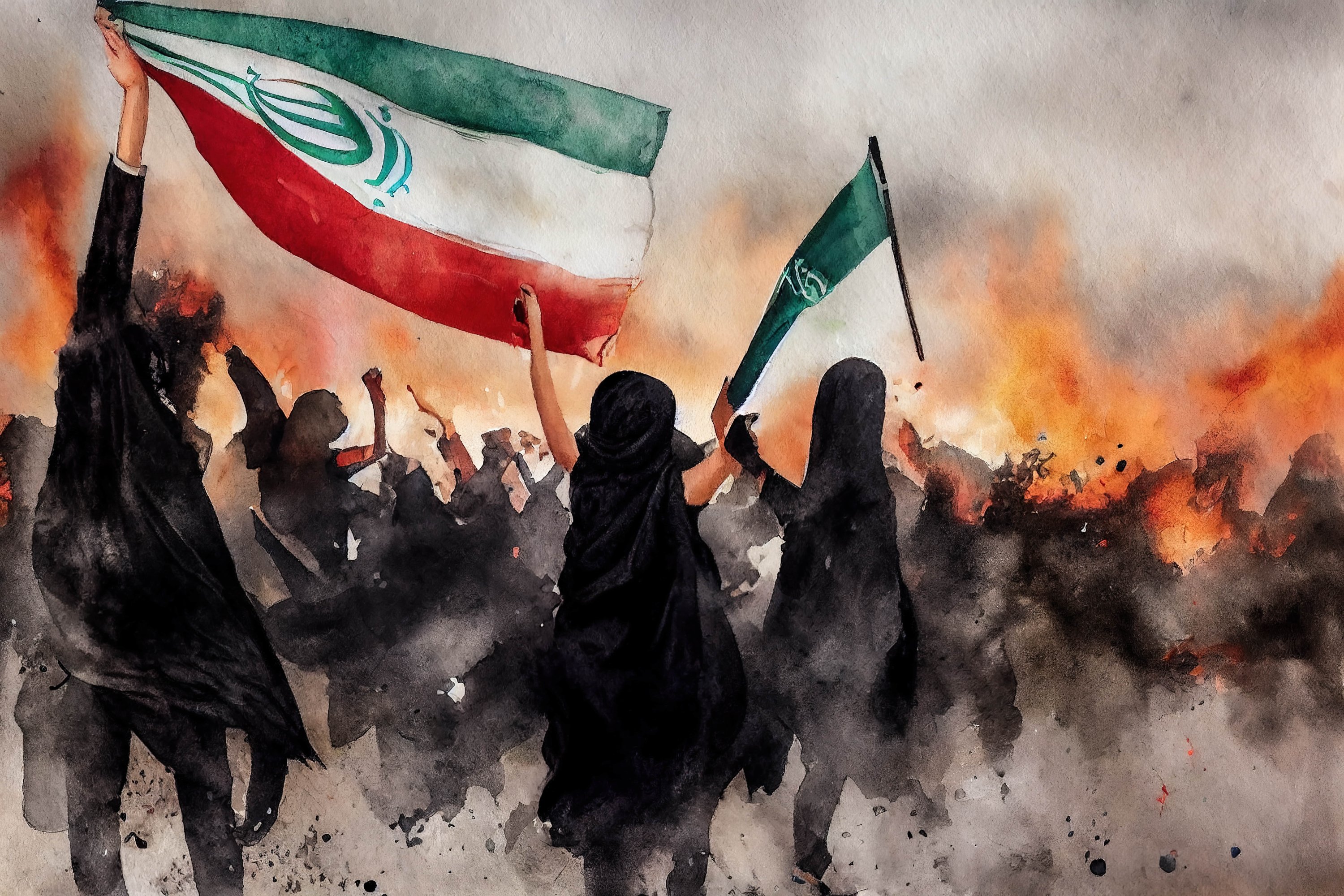
On the other hand, Iran has been increasingly challenged by different segments of its society. Minorities such as Turks, Kurds, Arabs and Balochs have been growing more uneasy with the regime. The most recent wave of popular protests, sparked by the death of a young Iranian woman, Mahsa Amini, who was detained by the morality police for not covering her hair, has been targeting the very policies and personalities of the Iranian Revolution. Different segments of Iranian society openly criticize the regime. Nowadays, it has become very difficult to legitimize the long-time policies of the regime due to the rising uneasiness of the people.
Furthermore, the Iranian regime has directly or indirectly been otherizing and alienating different segments of society for its conflict-based foreign policy. Iran has been following a zero-sum relationship with almost all regional actors, thus alienating regional peoples and their domestic extensions. First of all, Iran has alienated the Sunni Muslims by supporting the Bashar Assad regime in Syria, which has killed hundreds of thousands of innocent people during the Syrian crisis. Iranian policy toward the Arab uprisings and the Syrian and Yemeni crises, in particular, has seriously damaged the so-called pan-Islamic political discourse. Iran’s intervention into Iraqi politics and the violent actions of pro-Iranian militia groups especially reinforced its sectarian perspective. Iran uses hundreds of proxy militia groups formed by Shiite people against the Sunnis of Iraq. It eventually even alienated the Iraqi Shiite Muslims such as the movement of powerful cleric Muqtada al-Sadr.
Secondly, Tehran has been alienating not only the people of Azerbaijan but also the Azerbaijani people living in Iran by targeting Azerbaijan and supporting Armenia in the South Caucasus. This is clearly counterproductive for Iran, since the more it has allied itself with Armenia and positioned itself against Azerbaijan, the more it fuels Azerbaijani nationalism. In other words, supporting a Christian state and targeting a Shiite Muslim state indicates that Iran has been following a foreign policy based on pure realpolitik. Iranian officials have clearly expressed that if the Armenian-Azerbaijani border changes, they will intervene. Iran has overtly threatened Azerbaijan, which has just liberated its territories from Armenian occupation. The Iranian policy towards Azerbaijan clearly contradicts its sectarian regional policy.
Third, Iran has been otherizing the Kurds, who make up more than 10% of the country's population. By continuously targeting the Kurdistan Regional Government (KRG) in Iraq, Iran has been trying to weaken the Kurdish political actors who cooperate with other regional states such as Türkiye. Ironically, the Islamic Republic of Iran has been cooperating with the leftist and secular Kurdish factions, including the PKK and its Syrian offshoot the PYD, while alienating conservative groups such as the Kurdistan Democratic Party (KDP). Furthermore, the Kurds of Iran, most of whom are Sunni Muslims, have been otherized and suppressed by the regime.
It seems that all these conflictual policies and otherization efforts will further isolate Iran in the region. Instead of following a zero-sum relationship with other regional states and peoples, Iran should try to accommodate itself to the region. Without good relations with its neighbors, it is impossible for Iran to stabilize its domestic politics and overcome international isolation. Although its interventions in the domestic affairs of regional countries such as Iraq, Syria, Lebanon and Yemen appear successful, Iran cannot maintain its control over these states. It cannot ensure the loyalty of Turkic or Arab Shiite Muslims while threatening Turkic and Arab countries.
Considering the relative decline in the impact of global powers and the relative increase in the effectiveness of regional powers in the international system, if it does not change its conflictual regional policy, Iran will face bigger challenges vis-a-vis a more united Turkic and/or Arab world.