Libya is quietly, step by step, moving toward becoming a peaceful and unified state. After years of civil war and political division following the overthrow of Moammar Gadhafi, the country has now entered a prolonged period of relative peace. More importantly, the two sides want to coexist rather than fight for control of the country.
Following the initial period of conflict, Libya developed a dual political and military structure. On one side was Fayez al-Sarraj, head of the Government of National Accord (GNA), which was recognized as legitimate by the U.N. On the other was Gen. Khalifa Haftar, who appeared as the dominant military figure in eastern Libya through the Libyan National Army.
This dual structure has remained in place ever since. Libya's government was based in Tripoli, while its parliament remained in Benghazi. After al-Sarraj stepped down, political leadership changed, but the basic structure remained: Aguila Saleh continued to lead the political side as Speaker of the House of Representatives, while Haftar retained control of the military.
During the Syrian civil war, an interesting contrast appeared when Libya and Syria were compared. The Libyan people did not want to fight one another for power. This was, in fact, a very important and valuable development.
At one point, interestingly, a broad coalition had formed behind Haftar. A number of countries – including Greece, Egypt, Israel and, rather remarkably, Russia, the U.S. and the United Arab Emirates (UAE) – took Haftar's side.
Türkiye, meanwhile, stood alone in supporting the legitimate government, which gradually strengthened its position. During the limited period of conflict, the legitimate government expanded the territory under its control. At least a degree of balance was consequently established in Libya.
While Russia stood firmly behind Haftar, I was surprised that the U.S. didn't have a decisive policy on Libya. If the U.S. had adopted a position closer to Türkiye's from the beginning, Libya might have achieved a unified state structure by now.
Today, however, the positions of Egypt and Türkiye – once sharply opposite – have become almost parallel on Libya. Even more interestingly, the U.S. has also moved closer to Türkiye's position on the country.
This shows that keeping non-conflict for some time allowed Libya to move gradually toward recovery, investment and addressing the humanitarian needs of its people.
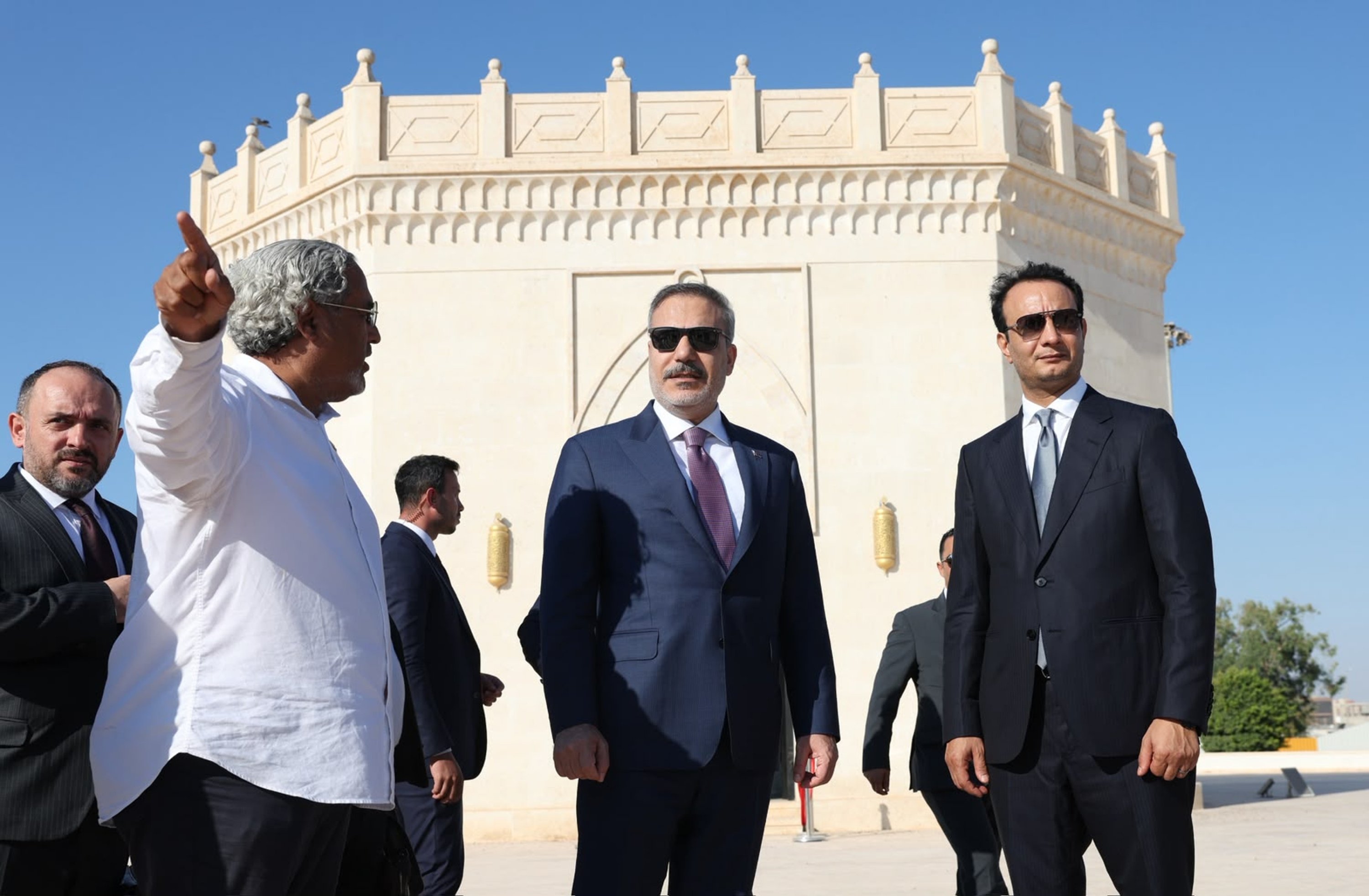
Türkiye's recent diplomacy helped further change the environment. Last week, Foreign Minister Hakan Fidan held talks both with representatives of the internationally recognized government and with Haftar and his team. His meetings with both sides reflected a growing sense that Libya's unity and territorial integrity may be achievable in the longer term.
Speaking about his meetings, Fidan said: “All of these are key actors in Benghazi, and they strongly support Libya's integration and unification. Türkiye's ability to maintain relations with both the east and the west on an equal footing, and its position as a country that genuinely and sincerely seeks Libya's unity and territorial integrity, are greatly appreciated here. The fact that such a policy is being pursued by a major leader like our President and by a strong country like Türkiye further enhances the value and importance of this policy.”
Several factors are important in shaping Libya's future: the Libyan people's willpower not to fight one another for a long period now, and the fact that people are beginning to see the benefits of stability.
This development also fits into a broader pattern in Türkiye's foreign policy. In all the regions with which Türkiye maintains dialogue and historical ties, its principal objective has been to establish and preserve stability.
Syria has already started forming a unified state structure. Today, there are also important developments and initiatives concerning Iraq. Iraq, too, is gradually working to consolidate its own strength and unity.
Earlier this month, President Recep Tayyip Erdoğan, Italian Prime Minister Giorgia Meloni and Libyan Government of National Unity Prime Minister Abdul Hamid Mohammed Dbeibah met at the Dolmabahçe Presidential Working Office in Istanbul for the Türkiye-Italy-Libya Cooperation Summit. Regional issues, including irregular migration, were discussed, but the broader objective was regional cooperation.
This trilateral initiative is significant. Türkiye has substantial historical ties and influence in Libya, while Italy also has a longstanding role and influence there. Their cooperation therefore offers another example of how regional actors can contribute to stability rather than competition.
Türkiye has developed significant foreign-policy experience and institutional capacity in its efforts to establish peace in countries with which it has historical ties and throughout their surrounding regions. Its approach increasingly focuses on the idea that the stability of neighboring countries is as important as Türkiye's own security and prosperity.
Libya now has an opportunity to turn its prolonged period of peace into something more permanent: a political settlement that can ultimately restore national unity and allow its people to concentrate on rebuilding their country.
The Libyan people have the opportunity to build their future through unity rather than division. Türkiye has secured its own stability and is now pursuing an extraordinary effort to promote stability across the region. Its approach is not limited to protecting its own interests; it also seeks to take into account the interests of its partners and allies.
If this opportunity is taken, Libya may quietly achieve what years of conflict failed to reach: the gradual restoration of a single, stable and functioning state.