The cycle of instability in the post-Ottoman Middle East has continued for more than a century. Extra-regional powers have exploited this cycle in their struggle for dominance. In every period, new dynamics were added to those producing instability.
Roughly over the past two decades, the Middle East has simultaneously faced state collapse, proxy wars waged through non-state actors, mass migrations, Israel’s uninterrupted massacres and sectarian and ethnicity-based security crises. All of these developments have deepened the region’s security vacuum.
The ongoing great-power competition over the region has rendered states fragile and expanded the intra-regional spiral of distrust. Rather than pursuing collective security arrangements that could reduce the security dilemma, leaders have acted on the assumption that their own security would be ensured through the weakening of their rivals. For the region, this mindset has effectively turned into a form of learned helplessness.
In the U.S. policy of ensuring Israel’s security, the security dilemma among regional states has been used effectively. Competition among Islamic countries along Shiite-Sunni lines was intensified through the perception of an Iranian threat. Iran, in turn, transformed this situation into a struggle for influence.
The nature of relations developed by regional countries with major powers differentiated their foreign policy priorities. Decision-making mechanisms were shaped according to the influence of extra-regional powers. Common decision-making processes within regional alliances could not be established.
In recent years, perspectives capable of breaking this briefly outlined cycle have begun to take hold. Normalization efforts have accelerated and shared security concerns and collective security searches have started to emerge.
The consequences of the genocide Israel is committing against Palestinians are pushing countries toward new regulatory arrangements regarding regional security. While the U.S. had until recently shaped the Middle East under the pretext of ensuring Israel’s security, it is now imposing a new order, particularly on Gulf countries, by offering protection from Israel. In return for security guarantees, it demands payment. The Gulf capital is transferred to the U.S.
The Middle East is in a transition period. States and societies are aware of the importance of maintaining stable structures and enhancing state capacity. Even if controlled, reform efforts exist. Societies are tired of conflict and demand security. Non-state armed structures have lost ground in the Middle East. Daesh, the PKK and their affiliates are in a process of liquidation. Iran’s proxy forces have receded.
With the exception of Israeli aggression, the period of hot conflict is subsiding.
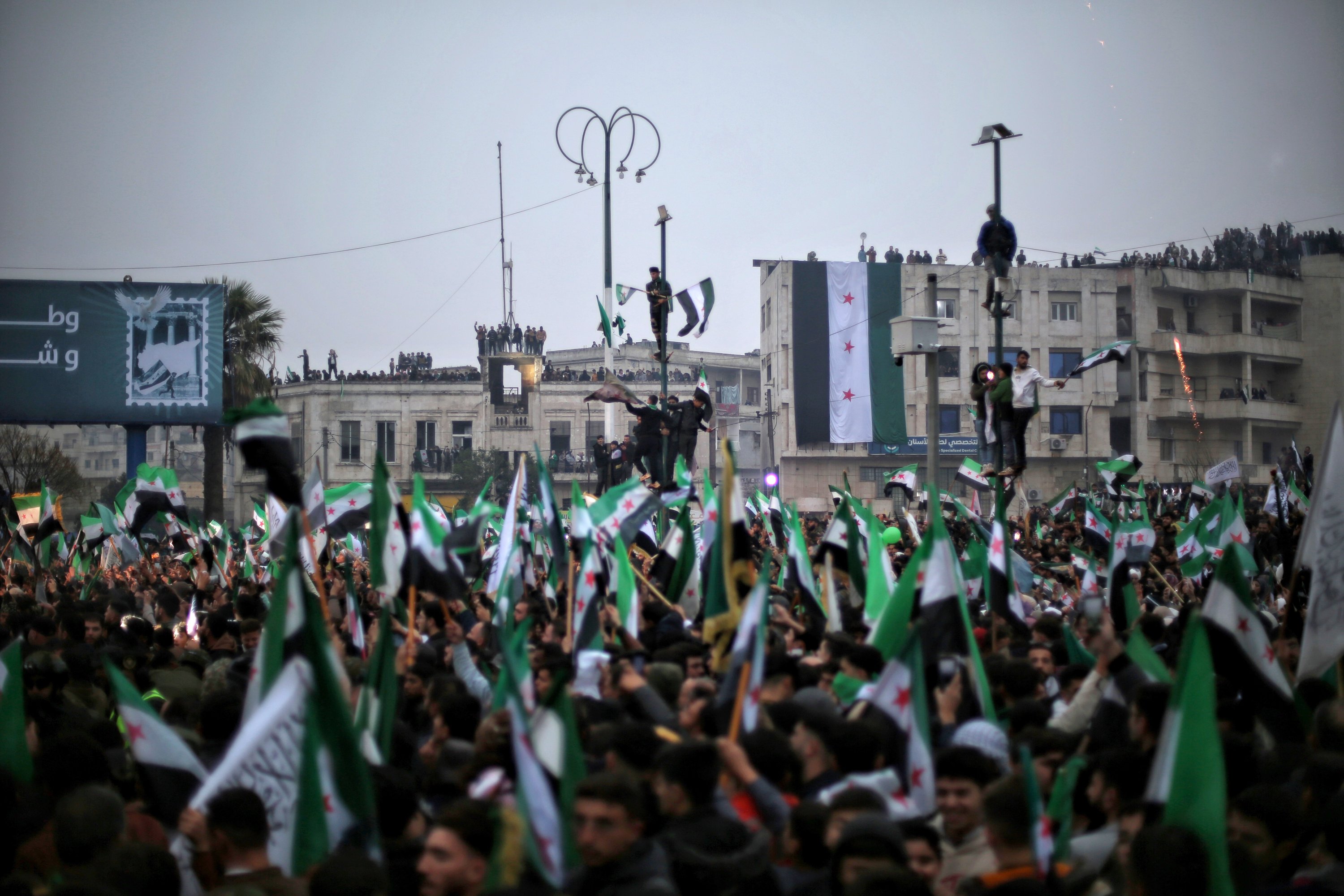
In this transition period, the importance of a successful Syria is substantial. One year has passed since the overthrow of Bashar Assad. The new administration has gained significant international legitimacy. Some U.S. sanctions have been lifted, while others have been postponed. There is a major effort to ensure state unity. President Ahmed al-Sharaa is attempting to govern his country without plunging it back into instability.
Returns to the country have accelerated. Since Assad’s overthrow, the U.N. has reported that approximately 1.2 million refugees, along with 1.9 million internally displaced persons, have returned to their homes. This constitutes a noteworthy indicator in terms of confidence in the future.
The picture visible this year shows that Syria has not yet achieved stability. However, it has also not been dragged back into chaos. At present, it stands somewhere in between. Fragility persists. The political architecture has not yet been established. The country faces challenges in state-building, meeting societal expectations, forming a security architecture and pursuing a balancing policy within regional competition.
If an inclusive political order can be established in Syria, this would strengthen not only domestic stability but also the security architecture of the entire region. The regional impact of a stable Syria would be greater than expected.
In shaping the future of post-Assad Syria, Türkiye has primarily pursued a policy aimed at preventing Syria from sliding back into chaos. It contributed to the new administration’s acquisition of international legitimacy. Türkiye did not compromise on its security-centered perspective regarding the liquidation or transformation of the YPG, an offshoot of the PKK in Syria. It has provided extensive diplomatic, economic and logistical support in all areas, particularly in facilitating returns to Syria and rebuilding the state.
The continuation of Israeli aggression constitutes the greatest obstacle to stability, both in the Middle East generally and in Syria specifically. The Israel problem triggers regional fragility and weakens integration efforts within Syria. In the context of great-power competition, the U.S.’ gradual withdrawal, Russia’s renewed return to the region, and the consequences of China’s economic-penetration strategy will, to varying degrees, again affect every existing problem in the region. This is the overall picture in the transition period.