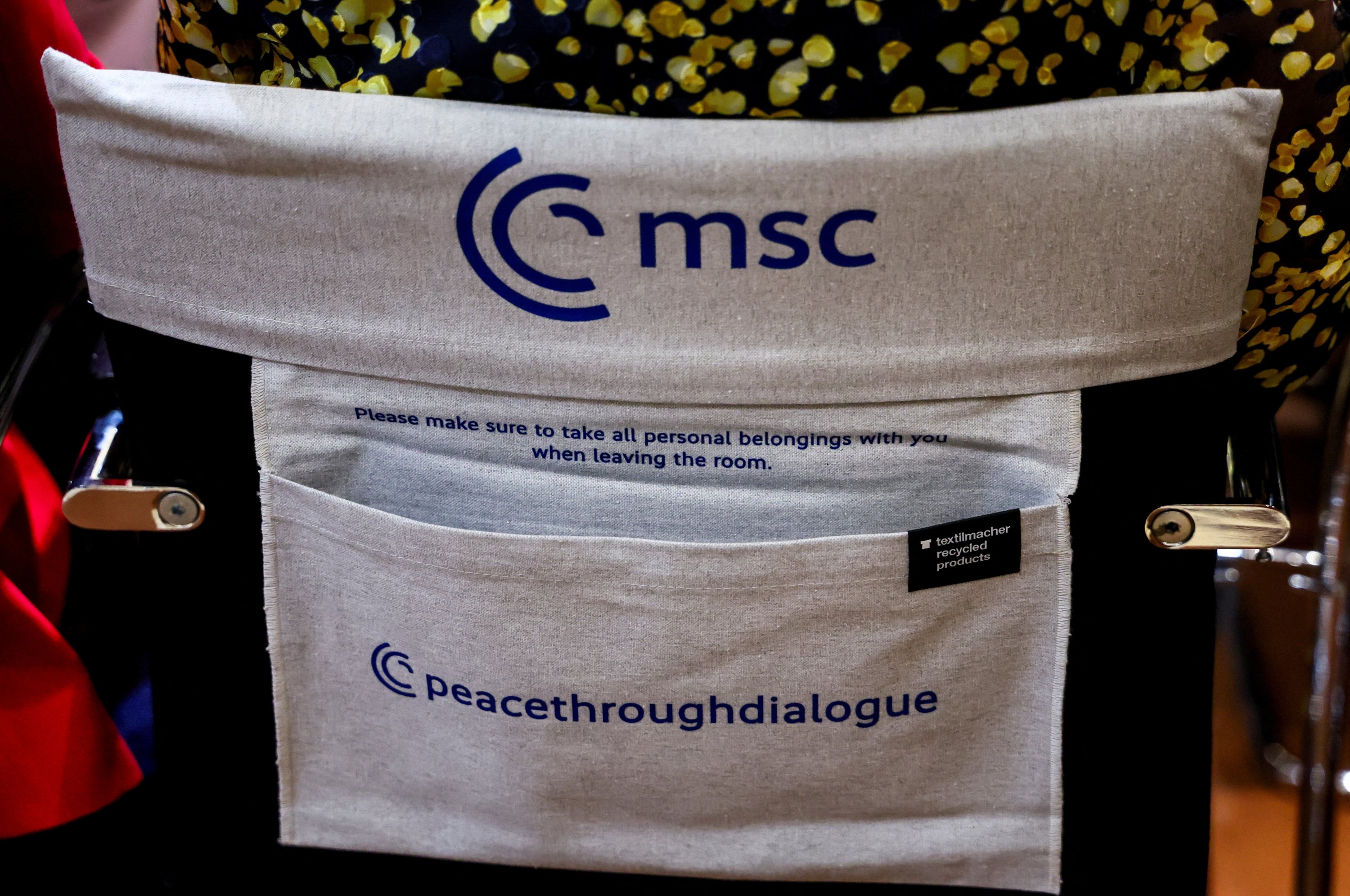
The 61st Munich Security Conference revealed that the global system has been evolving toward multipolarity. Today, we live in a transitory period. In other words, the world is in undeclared chaos. The United Nations system has collapsed, especially after the crime of genocide committed by Israel in partnership with the Western global powers. There is no norm, rule and principle that Israel and its accomplices have not violated since Oct. 7, 2023. The U.N. and other global institutions were otherized and even demonized by the Western countries due to their call on the Israeli government to end its atrocities in Gaza and the international community to take necessary measures against Israel.
The Munich Security Report 2025 analyzes the current process of multi-polarization in the world. The report argues that the view that the world is multilateral is debatable and claims that the world system is transforming toward multipolarity. On the one hand, more and more rising powers can now influence key global issues. On the other hand, the increasing polarization has been preventing the development of common approaches to global crises. It has been challenging to reach a consensus over most international issues.
Nowadays, the world is divided along different lines, namely, the distribution of power and ideological polarization. Even the Western alliance is now divided between the U.S. and Europe. After the rise of ultra-nationalism and far-rightist political parties, liberal values were largely sidelined by the Western governments. Political or economic liberalism is not the main tenet of Western countries anymore.
It seems that the current multi-polarization process will not end with more inclusive global governance but with a renewed global power rivalry. The current process increases the risk of global disorder and undermines multilateral cooperation. Similarly, U.S. officials perceive multipolarity as a strategic threat to American national interests since it attempts to impose constraints on U.S. policies. The reelection of President Donald Trump and the explanations of his Cabinet members show that liberal institutionalism is not the grand strategy of the U.S. anymore. The Trump administration rejects the U.S.-created international order and global values overall.
The U.S. faces a dilemma. On the one hand, it does not want to continue to be the main security provider for the European continent. On the other hand, the U.S. will be alienated from its close allies and partners due to the unilateral and interventionist policies of the Trump administration. The trans-Atlantic alliance will soon face the biggest challenge in its history. For instance, JD Vance severely criticized the European countries, blaming them for not being democratic enough. He warned Europe by saying that the greatest threat facing the continent is from within, not from Russia and China.
The future of the alliance largely depends on the European reaction to unilateral and interventionist policies. If the European global powers decide to increase their strategic autonomy, they will have to differ from the U.S. Europe and the European Union are at a crossroads: whether to become an independent political and military pole in the world system or to remain dependent on the U.S. security umbrella. The problem is Europe is also internally divided, and it has to employ new mechanisms in the near future. For instance, it may improve closer relations with Türkiye and other regional and global actors.
China and Russia, as well as countries in the Global South, such as India, will continue to question the functioning of the international system. Considering the irresponsible policies of Western global countries, the states of the Global South will demand the reformation of the world system.
Most U.S. officials used to praise unipolarity after the collapse of the Soviet Union. However, now Americans have turned their backs on it. For example, U.S. Secretary of State Marco Rubio reluctantly recognized that the world is multipolar. He considers Russia and China to be two rival poles that are capable of challenging U.S. dominance. However, he does not believe the EU to be an independent pole. He claims that the world will return to multipolarity as a result of geopolitical considerations. In other words, the U.S. officials indirectly declare that their government will not provide global strategic goods such as international peace and security. According to this political perspective, the U.S. is not responsible for resolving all global problems.
It seems that the U.S. may withdraw from certain continents of sub-continents and intensify its efforts in the Western Hemisphere. Considering its demands from Canada, Denmark and Panama, the U.S. government will try to consolidate its dominance in the West, that is it will return to the colonial Monroe Doctrine.
On the other hand, the perspectives of other global powers about multipolarity are different from the American perspective. Therefore, the current process will further intensify the rivalry between the international powers. For instance, most non-Western countries ask for equality between nation-states.