The 2026 Ankara summit may prove to be one of the most consequential meetings in NATO’s post-Cold War history. Rather than concluding the alliance’s adaptation to Russia’s invasion of Ukraine, Ankara inaugurated a broader debate about how NATO should compete, produce, innovate and deter in an era of prolonged strategic competition. The summit therefore deserves attention not because of the number of initiatives it announced but because it fundamentally changed the logic of NATO’s transformation.
The summit convened under extraordinary geopolitical conditions. NATO leaders met while Russia’s war against Ukraine continued to reshape European security, conflict in the Middle East generated new strategic uncertainty and transatlantic disagreements over burden sharing persisted. These simultaneous pressures forced the alliance to confront a strategic reality that had become increasingly difficult to ignore. NATO no longer faces a single military challenge or a single theater of operation. It must deter Russia, respond to instability across its southern neighborhood, strengthen resilience against hybrid threats, accelerate technological innovation and rebuild the industrial foundations of collective defense at the same time.
The most important outcome of the summit, therefore, lies in the shift from political commitment to operational capability. For more than a decade, NATO’s internal debate revolved around defense spending. Successive summits concentrated on how much allies should allocate to defense, while Washington repeatedly urged European governments to assume a greater share of the burden. Ankara fundamentally changed that discussion. NATO leaders openly recognized that higher defense spending alone cannot generate deterrence. Financial commitments only matter when governments translate them into ammunition, integrated air and missile defense, intelligence and surveillance capabilities, long-range strike systems, resilient logistics, secure digital infrastructure and sustainable production lines.
This transformation reflects the lessons NATO has drawn from both the Ukraine war and recent crises in the Middle East. The alliance now accepts that modern wars reward countries capable of sustaining production over long periods rather than those that simply possess advanced military platforms. Ukraine demonstrated that stockpiles disappear far more quickly than planners once assumed and that industrial endurance determines military success as much as battlefield performance. At the same time, the widespread use of drones, precision weapons, electronic warfare and intelligence networks has expanded the definition of military power itself.
These lessons explain why Ankara shifted NATO’s strategic agenda. Rather than treating the defense industry as a supporting sector, the alliance has started to integrate production capacity into the heart of collective defense. This institutional shift represents one of the defining characteristics of NATO 3.0. NATO increasingly recognizes that it cannot preserve credible deterrence without a competitive defense industrial ecosystem capable of producing ammunition, missiles, drones, air-defense interceptors and critical technologies at the speed required by prolonged strategic competition.
The Defense Industry Forum held alongside the summit demonstrated how deeply this transformation has penetrated NATO’s strategic thinking. The announcement of more than $50 billion in multinational procurement initiatives reflected far more than another round of defense contracts. It demonstrated NATO’s determination to organize industrial demand collectively, expand production capacity and improve interoperability through joint procurement. Even more significant were the launch of NATO Front Door, NATO Engine and the Strategy for Industry-NATO Cooperation (SYNC). These initiatives indicate that NATO no longer limits itself to military planning.
The same logic underpins the alliance’s growing emphasis on autonomous systems. The Drone Edge initiative, supported by a $40 billion investment over the next five years, represents much more than another technological project. NATO has begun incorporating drones into doctrine, force planning, logistics, air-defense architecture and military education. The decision to expand drone operator training across the alliance confirms that NATO has institutionalized lessons drawn from both Ukraine and the recent confrontation involving Iran. Likewise, new investments in integrated air and missile defense, long-range precision strike capabilities, loitering munitions and standardized 155 mm ammunition reveal an alliance preparing for sustained high-intensity warfare rather than limited expeditionary operations.
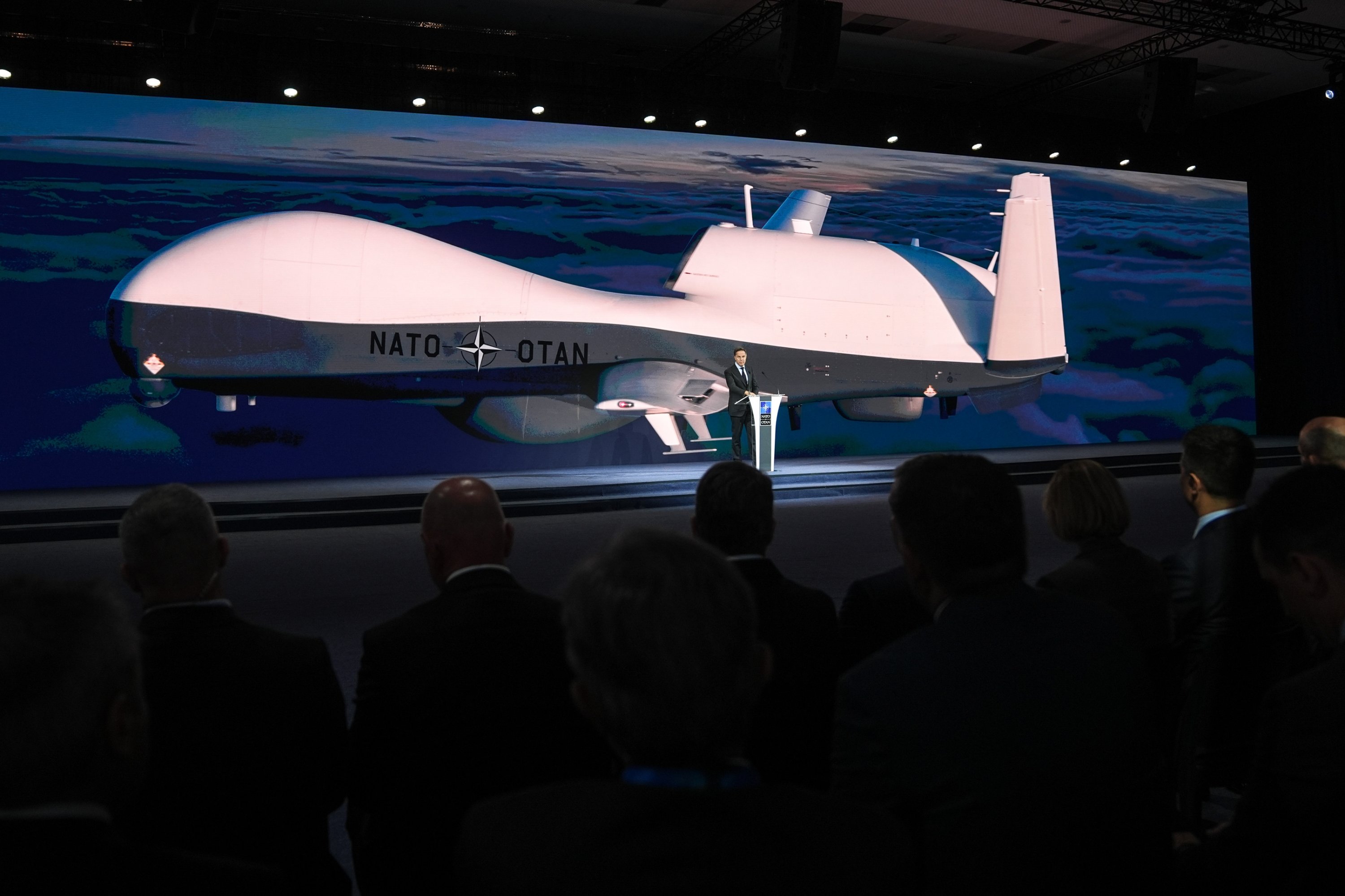
The summit also highlighted another equally important transformation. NATO increasingly views information, mobility and logistics as strategic capabilities rather than supporting functions. Joint procurement of GlobalEye airborne surveillance platforms, MQ-4C Triton systems, expanded MRTT tanker fleets, A400M cooperation, space-based surveillance initiatives and fuel infrastructure modernization all point toward the same conclusion. Therefore, NATO has entered an era in which military power extends far beyond the battlefield itself.

The transformation that emerged in Ankara extends well beyond military modernization. For nearly a decade, burden sharing dominated transatlantic debates. Washington repeatedly criticized European allies for relying on American military power while underinvesting in their own defense. The Ankara summit did not end that discussion; it fundamentally reframed it. The central question no longer concerns who spends more. It concerns who produces more. Future influence within NATO will increasingly depend on the ability to manufacture military capability, expand industrial capacity, integrate new technologies, and sustain long-term operations.
The summit also clarified how this transition will unfold. European allies accepted that they must assume a greater share of the conventional defense burden, while the United States signaled that it would continue to provide strategic leadership, advanced technologies and critical enablers. Ankara summit pointed toward a hybrid transatlantic model that combines American technological superiority with expanding European production capacity. This approach acknowledges Europe’s growing responsibilities without weakening the transatlantic bond. NATO’s future therefore depends not on strategic decoupling but on a more balanced distribution of capabilities across the alliance.
Ukraine remains central to this transformation. The commitment to provide 70 billion euros in military assistance, equipment and training in 2026, together with the intention to maintain at least the same level of support in 2027, demonstrates that NATO no longer treats assistance to Kyiv as an emergency response. The alliance increasingly views Ukraine as part of a broader European security architecture that requires predictable financing, sustainable industrial production and long-term military planning. This evolution reinforces another defining feature of NATO 3.0: the transition from crisis management to long-term strategic competition.
The summit also broadened NATO’s strategic horizon beyond the eastern flank. Although Russia remains the alliance’s principal military challenge, Ankara acknowledged that developments in the Middle East increasingly shape Euro-Atlantic security. The declaration’s references to Iran’s nuclear program and freedom of navigation in the Strait of Hormuz reflected this broader understanding of NATO’s strategic environment. These statements do not transform NATO into a military actor against Iran, nor do they expand the alliance’s formal mission into the Middle East. They do, however, recognize an increasingly obvious reality: crises in the Gulf, the Eastern Mediterranean and the wider Middle East directly influence transatlantic security through energy markets, maritime trade, missile proliferation and regional instability.
This evolving strategic environment also changes the qualities NATO values most in its members. During the Cold War, geography largely determined strategic relevance. After the Cold War, expeditionary operations and crisis management expanded the alliance’s operational profile. NATO 3.0 introduces a different logic. It rewards what can best be described as strategic capability: the ability to combine military readiness, industrial production, technological innovation, diplomatic reach and operational flexibility into a coherent national contribution to collective defense.
Türkiye occupies a particularly strong position within this emerging framework. Türkiye has built one of the alliance’s most dynamic defense industrial ecosystems, expanded its indigenous technological base and demonstrated its ability to integrate operational experience with industrial innovation. These capabilities closely match NATO’s evolving priorities.
The Ankara summit reinforced this reality in several ways. Türkiye’s investments in long-range precision strike capabilities, including the land-based Atmaca cruise missile, directly complement NATO’s emphasis on deep-strike capacity and standardized long-range fires. Its expanding drone ecosystem aligns with the alliance’s growing investment in autonomous systems and counterdrone capabilities. Türkiye’s role in the A400M program, its growing space and satellite initiatives and its expanding air-defense production demonstrate that it already contributes to many of the capability areas NATO identified as strategic priorities.
The same logic applies to defense industrial cooperation. NATO Front Door, NATO Engine and SYNC seek to connect governments, industries and innovation ecosystems more effectively across the alliance. Türkiye enters this new environment as an established producer rather than a peripheral participant. Its defense companies increasingly possess the technological maturity, production capacity and export experience necessary to contribute to NATO’s expanding industrial architecture. As the alliance moves toward multinational procurement, joint production and integrated supply chains, Türkiye’s comparative advantages become increasingly valuable.
The strategic significance of the Ankara summit therefore extends well beyond its immediate decisions. It established a new framework for evaluating military power, industrial resilience and technological competitiveness inside the alliance. More importantly, it changed the criteria by which NATO measures strategic contribution. Military expenditure remains important, but it no longer provides the principal indicator of influence.
The alliance now confronts prolonged strategic competition, rapidly evolving military technologies and interconnected regional crises that demand more than traditional deterrence. It requires allies capable of translating strategic ambition into operational capability. The Ankara summit demonstrated that NATO has begun organizing itself around this new reality.
That transformation also explains why Türkiye occupies a more central position within the alliance than conventional geopolitical narratives suggest. Türkiye’s relevance no longer derives primarily from the territory it occupies but from the strategic capability it generates. It produces advanced military technologies, strengthens NATO’s industrial base, contributes to the alliance’s emerging operational concepts and connects multiple strategic regions that increasingly influence Euro-Atlantic security.