Is our faith an essential part of our make-up? Is it what sustains us throughout wars and social change? Are our lives shaped and sustained by religious conviction? That is what American writer William F. Buckley Jr. used to think, and he had titled his last book, which was going to be the story of his faith and his reflection toward the end of his life: “Nearer My God.”
The closer we get to that final point, the more we begin noticing an affinity and nearness to Him, the Almighty. We start balancing our books; we try to revise how we live our lives. Those who seldom expressed their beliefs publicly started allowing their faith to become the focus of public attention.
The probable reason we feel nearer to God when we see the face of death is that death is not only too close to our face and the multitude of other fellow humans. Yet, all the holy books, prophets and messengers of God, for millennia of years, taught us how to live a happy life: accept the divine commandments as accurate and live your life using your intellect as the wisdom and reason as those commandments suggested. King (and for Muslims, a prophet) David taught us a song about our wanderings in this world, in Psalm 119:151: “But you are near, O Lord, and all your commandments are true.”
The longest chapter of the Old Testament, Psalm 119, has pearls of wisdom for all the faithful. According to many Jewish rabbis, Christian priests, and Muslim scholars, if you have the intellectual capacity to verify your faith’s laws, statutes or precepts on the face of the earth as you are commanded, you will live a happy life.
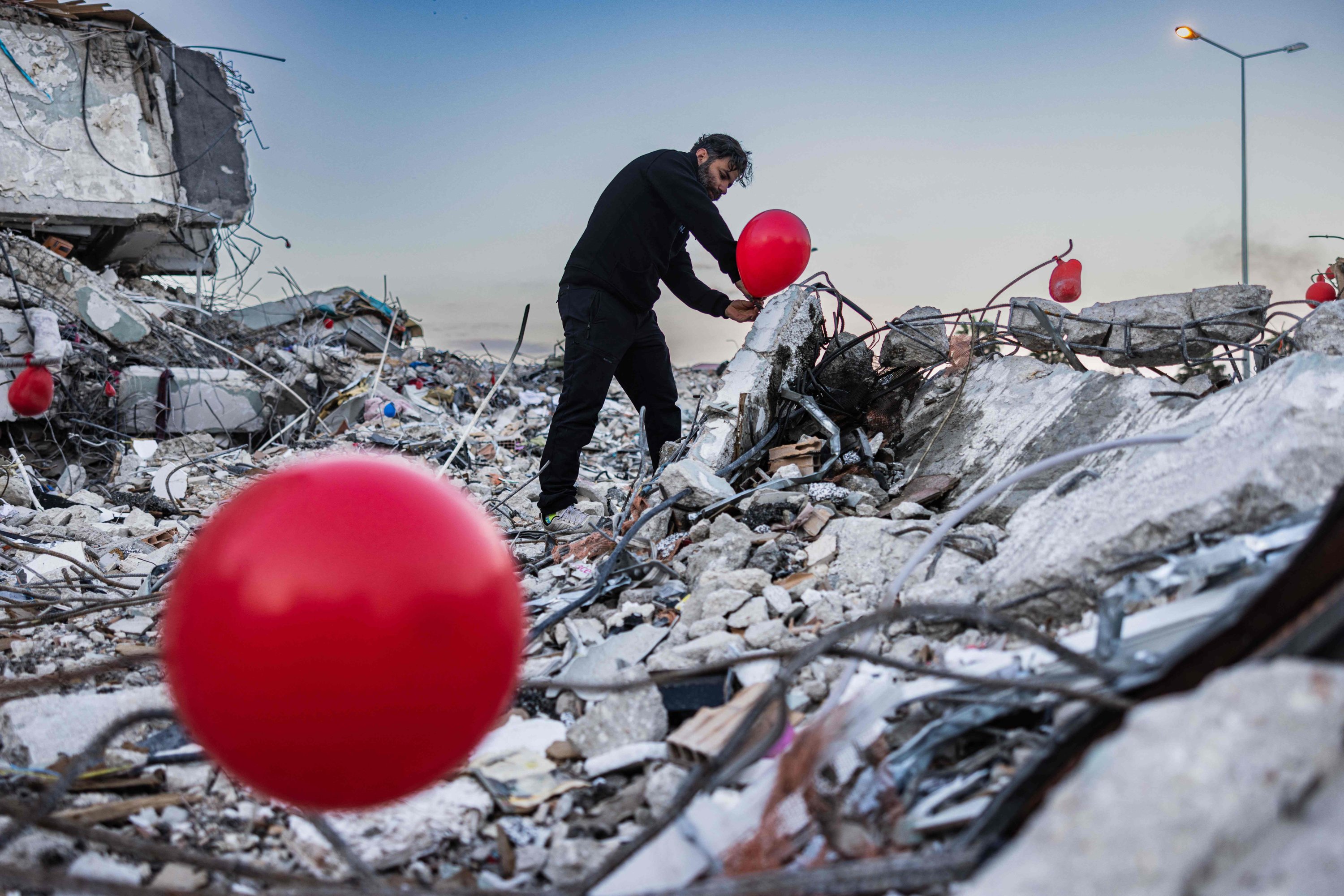
That is, your buildings will not be demolished whenever the earth convulses.
However, for some reason, we sing King (and for us, the Muslims, the prophet) David’s psalms; but do we learn from them? I am not sure. Not only the Old Testament but also the newest of them all, the Holy Quran, tells that if you possess intelligence and insight, you can verify the fundamentals and foundations of the commandments you keep repeating when you are singing your hymns or reciting your holly texts in the material world you live in. The commandment tells you to use your intellect: You must use a specific gauge iron and a particular caliber of cement in that ground. Then, you will have a happy life, not after a cataclysmic earthquake but before it.
With every disaster, Turkish authorities improved their regulations. There were no independent inspection authorities until the '80s; the new laws created new rules. In the early 2000s, the government noticed that those so-called authorities could easily be in the pocket of the builders, and the lawmakers passed another amendment that randomized the inspectors’ selection by a computerized system. The builder had no say in the inspector selection process.
There has been another process at work that might have culminated in the Feb. 6 twin earthquakes: zoning and licensing amnesties. In Türkiye, unlike many other European countries, the public owns vast swaths of land in and around dwelling areas. With the rapid urbanization of the 1960s, as in many Latin American towns, Turkish people in big towns and cities began creating shanty towns, slums, with the colorful name we invented for them "gecekondu" (“built overnight” or squatter’s house) by the people who squatted on the public land. The populist governments of former prime ministers Süleyman Demirel and Bülent Ecevit (both passed away, bless their souls), (as well as the various so-called supra-political governments created by the military juntas), those people who had appropriated the public land, were pardoned and with great fanfare granted titles to the lands they scrounged and residency permit for their flimsy houses. Those shanty towns were full of electors, and the amnesty meant votes for their respective political parties in future elections.
With the fledgling middle class in the 1980s, we had another type of squatters’ problem: not four walls and a roof made of aluminum sheets, but millions of dollars worth of cement and iron buried into the ground. Fully built, multistory apartment blocks without a building permit! Naturally, populism came to the rescue again: These are our people, our national Treasury! We have to find a way to make them usable! Besides, if you pardon the poor dwellers of shanty towns, how come you do not forgive the nouveau riche emergent bourgeoise of the well-off quarters of big cities?! Perhaps they don’t provide big numbers of votes in the elections as the masses of shanty towns do, but they are rich enough to finance political machinery.
Then came the first disaster of the century: the 1999 Izmit earthquake, which left 18,000 dead and 28,000 wounded and injured in eight provinces. Luckily, that was immediately followed by the reformation period of the ruling Justice and Development Party (AK Party), which passed a series of reforms to increase accessibility to health care and housing, distribute food subsidies, increase funding for students, improve infrastructure in poorer districts, and a new regulation for building codes and inspections.
After several small earthquakes and adjustments in the building regulations and amnesties for the noncompliant builders, now we are faced with yet another disaster of the century (this time it is the most costly in terms of death and destruction); and another national “casuistry” phase: what went wrong? If we have the best building codes and an independent inspection system based on a random selection of inspectors, why do we have more than 40,000 victims and five wiped-out big cities, hundreds of towns, and villages?
As always, such soul searching brings emotions that make one feel “Nearer, My God.” But feeling nearer to the Almighty should start by verifying the fundamentals of the Almighty’s laws of physics, geology, chemistry, and all. If you disregard and neglect this duty and responsibility, you fall short of fulfilling what you owe your Creator.
Amen, and glory is to God!!