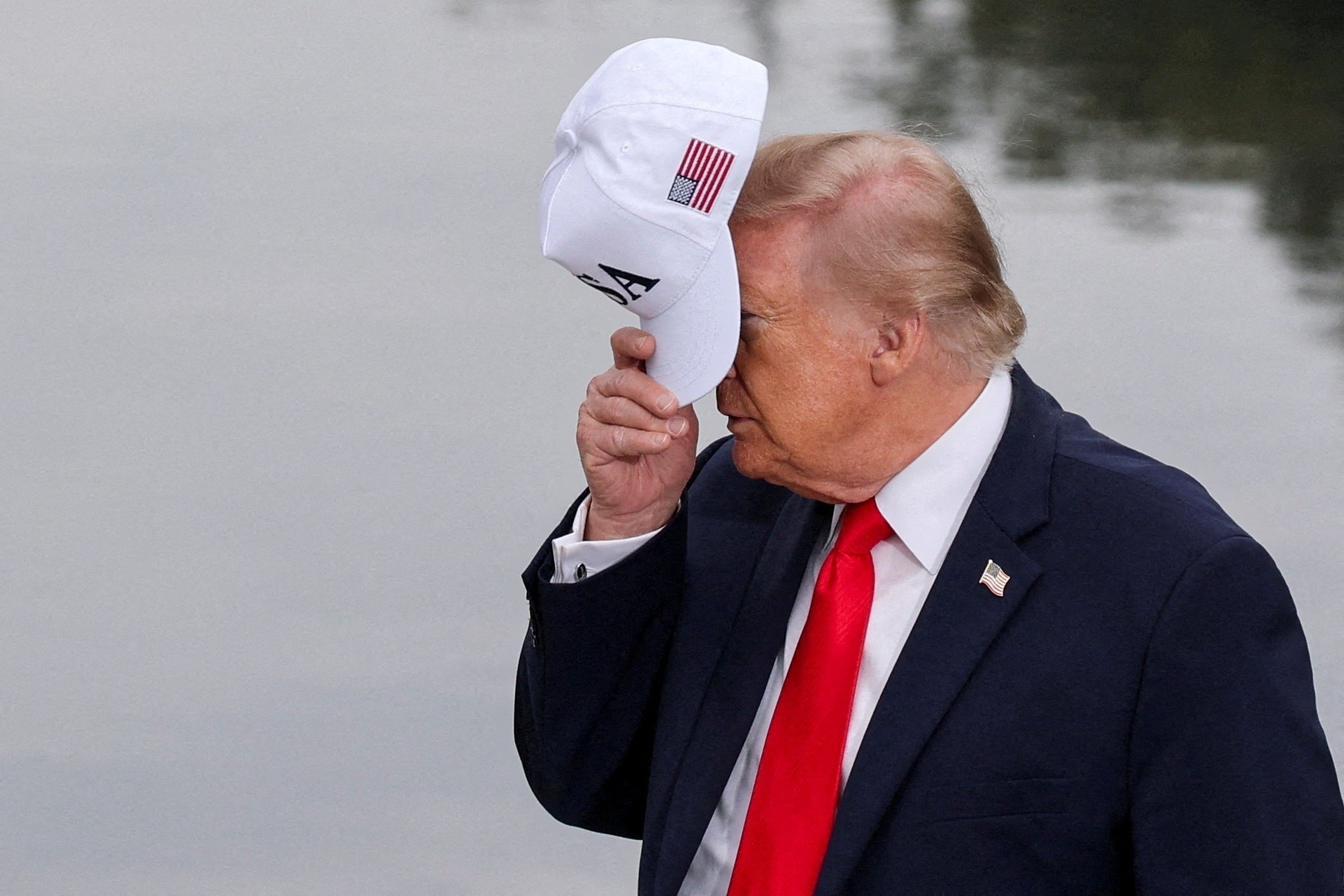
U.S. President Donald Trump’s victory in 2016 coincided with the rise of right-wing politics across Europe and indicated the beginning of a global change toward the radical right.
Trump’s victory energized right-wing movements in France, Germany, the U.K. and elsewhere in Europe. He described this shift as a response to neoliberal currents. In a speech in Germany, U.S. Vice President JD Vance even described neoliberal governments as left-leaning, authoritarian/dictatorial administrations, declaring that they were not allowing right-wing parties to work freely in their own countries.
The emerging new right in Europe and the U.S. did not suggest a clear vision yet. Instead, it built its political agenda largely on aggression and hatred.
When it came to addressing the fundamental problems facing their countries, they did not offer a proper analysis of Europe’s economic decline and the loss of prosperity. Instead, they blamed immigrants. Anti-immigrant right-wing parties gained increasing support in the U.S., Germany, the U.K. and France.
Both Trump’s policies in the U.S. and the xenophobia and religious hostility emerging across Europe were directed particularly against Islam. The rhetoric became very crude in European countries. They suddenly turned against the immigrant labor who had contributed to their development and prosperity for a century, sustaining their industries and filling gaps in their workforces.
At the same time, the European paradigm, built around the values that once defined the continent – democracy, human rights and a wide range of other fundamental rights, from environmental protection to breathing clean air, to access to water and food – was brought down by Israel’s genocidal policies and conduct, resembling Adolf Hitler’s era. European governments remained largely silent and paid a heavy price for that silence.
Israel’s genocidal campaign and destruction in Palestine, together with the silence of the West, created an environment in which right-wing parties in countries such as the U.S., France, the U.K. and the Netherlands could turn hostility toward immigrants and Muslims into a political instrument. In this sense, the developments surrounding Israel became a testing ground for the rising right.
The reaction against this radical, marginalizing mentality – which first gained momentum in Brazil, continued in the U.S. and found an echo in Israel – now appears capable of changing the entire political scene and disturbing the established political system.
Meanwhile, Democrats in the U.S. have begun to present new faces and new political figures, while placing issues that matter to ordinary people at the center of their agenda, like housing and health care security. By challenging the idea that the U.S. exists mainly to serve the wealthy and to defend Israel's interests, rather than the people who vote and live in its streets, Democrats have helped create the conditions for a new wave of left-wing politics around the world.
The election of Luiz Inácio Lula da Silva in Brazil, the victory of student movements in Serbia, the electoral success of the anti-Netanyahu bloc in Israel and Democrats’ recent victory in the U.S. midterm elections may all indicate that the radical right-wing wave – and the tradition of extreme-right racism that has spread across the globe for the past 45 years – is at last beginning to lose its momentum.
Spain’s Prime Minister Pedro Sánchez has argued that these successes are not isolated victories that happened by chance in Brazil and the U.S. He believes that a political outlook defending human dignity and fighting against cartels, Zionism and domestic monopolies can endure across countries. We will also be watching closely to see what happens in Spain’s forthcoming elections.
Of course, it is still too early to make sharp conclusions. Nevertheless, one thing has become increasingly clear: the European right-wing tradition, which has offered no coherent ideological vision and has relied almost exclusively on anti-immigrant sentiment, xenophobia and, above all, hostility toward Muslims, does not appear to have a particularly promising political future.
However, I do not believe that the alternative lies in a neoliberal, globalist mentality either. The new left within the U.S. Democratic Party faces a major test. Will it really defend the rights and interests of the majority in society, or will it too surrender to a handful of wealthy power brokers and monopolies?
In many ways, the answer will help determine the future direction of global politics.