Daily Sabah logo

Politics
Diplomacy Legislation War On Terror EU Affairs Elections News Analysis
TÜRKİYE
Istanbul Education Investigations Minorities Expat Corner Diaspora
World
Mid-East Europe Americas Asia Pacific Africa Syrian Crisis Islamophobia
Business
Automotive Economy Energy Finance Tourism Tech Defense Transportation News Analysis
Lifestyle
Health Environment Travel Food Fashion Science Religion History Feature Expat Corner
Arts
Cinema Music Events Portrait Reviews Performing Arts
Sports
Football Basketball Motorsports Tennis
Opinion
Columns Op-Ed Reader's Corner Editorial
PHOTO GALLERY
JOBS ABOUT US RSS PRIVACY CONTACT US
© Turkuvaz Haberleşme ve Yayıncılık 2026

Daily Sabah - Latest & Breaking News from Turkey | Istanbul

  • Politics
    • Diplomacy
    • Legislation
    • War On Terror
    • EU Affairs
    • Elections
    • News Analysis
  • TÜRKİYE
    • Istanbul
    • Education
    • Investigations
    • Minorities
    • Expat Corner
    • Diaspora
  • World
    • Mid-East
    • Europe
    • Americas
    • Asia Pacific
    • Africa
    • Syrian Crisis
    • Islamophobia
  • Business
    • Automotive
    • Economy
    • Energy
    • Finance
    • Tourism
    • Tech
    • Defense
    • Transportation
    • News Analysis
  • Lifestyle
    • Health
    • Environment
    • Travel
    • Food
    • Fashion
    • Science
    • Religion
    • History
    • Feature
    • Expat Corner
  • Arts
    • Cinema
    • Music
    • Events
    • Portrait
    • Reviews
    • Performing Arts
  • Sports
    • Football
    • Basketball
    • Motorsports
    • Tennis
  • Gallery
  • Opinion
    • Columns
    • Op-Ed
    • Reader's Corner
    • Editorial
  • TV
  • Opinion
  • Columns
  • Op-Ed
  • Reader's Corner
  • Editorial

Strategic co-op, not antagonism, must define Turkish-German relations

by Doğan Eşkinat

Dec 01, 2025 - 1:49 pm GMT+3
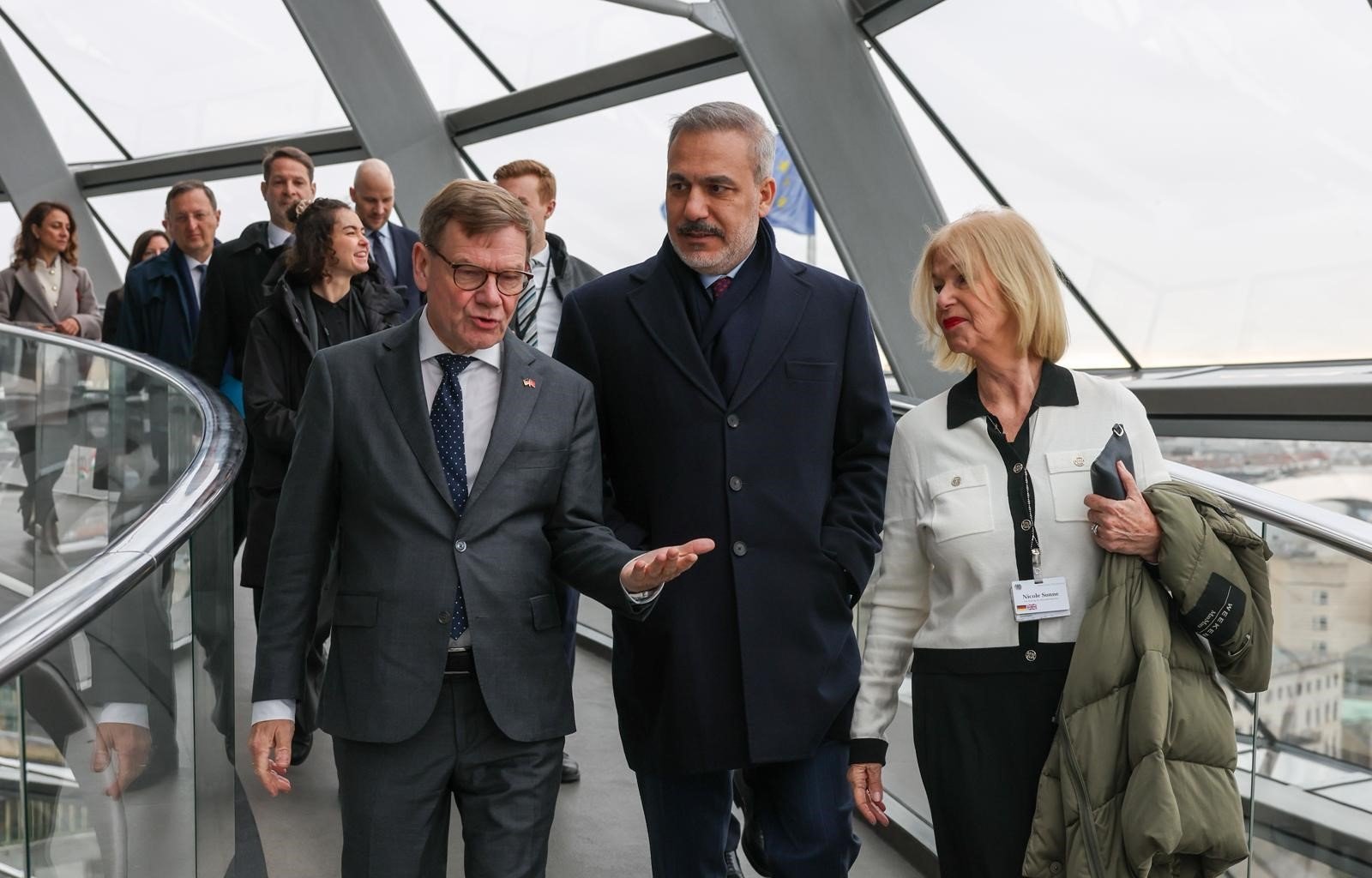
Minister of Foreign Affairs Hakan Fidan (C) walks with his German counterpart Johann David Wadephul (L), during their visit to the German parliament, Berlin, Germany, Nov. 28, 2025.(IHA Photo)
by Doğan Eşkinat Dec 01, 2025 1:49 pm

Recognizing the threats Türkiye foresaw, Germany should build a more mature NATO partnership

Every year, the Körber Foundation’s Berlin Foreign Policy Forum brings together a select group of policymakers, diplomats, journalists and scholars in the German capital. It is always an excellent venue to take the pulse of Europe and to hear, firsthand, how German officials are thinking about the world. This year’s gathering was no different. Yet, the opening address by Germany’s new foreign minister, Johann Wadephul, marked a clear and important departure from the style of his predecessor.

Wadephul’s language was unusually direct. He described Russia as an aggressor and an imperial power. He warned that German intelligence believes Moscow could create the conditions for a war against NATO “no later than 2029.” In his words, the threat against Europe’s homeland security “is no distant concern. It is already a reality today.” He framed this danger in the context of a broader great-power rivalry between China and the United States, arguing that Washington’s strategic attention continues to drift away from Europe.

He also pointed to “man-made humanitarian crises” in Sudan and the Gaza Strip, and lamented the ongoing replacement of cooperation and international law with what he called a “confrontative” style in global politics. Against that backdrop, the minister noted that 72% of Germans now support increased defense spending, an extraordinary shift for a country known for its cautious approach to military matters. Accordingly, he argued, Germany must “redefine its place in the world” and clearly articulate its national interests.

For longtime observers of Turkish-German relations, something was striking, almost ironic, about Wadephul’s speech. Much of what he described as Germany’s new strategic awakening has been Türkiye’s lived reality for the past decade. Ankara has long argued that the international order was entering a more dangerous era, that revisionist actors were willing to use force and that national resilience required a stronger, more autonomous foreign and security policy. Yet many European officials, including senior figures in Germany, openly criticized Türkiye for taking this position at the time.

From counterterrorism to regional crises, Ankara’s insistence on realism was often dismissed as unilateralism or overreach. Turkish calls for burden-sharing, for stronger defense spending, or for recalibrating relations with great powers were met with skepticism. Today, those very arguments are being presented in Berlin as a necessary course correction. The same German institutions that once questioned Türkiye’s warnings now echo them almost word for word.

This shift matters. It shows that European capitals are finally recognizing the scale of the challenges ahead from the war in Ukraine to the destabilizing dynamics of the Middle East and North Africa. It also highlights how Türkiye’s earlier assessments were not outliers, but early indicators of a world in transition. Ankara understood earlier than most that the post-Cold War order was fading and that security could no longer be outsourced.

As Germany debates its new role and contemplates its strategic responsibilities, there is room for a more honest conversation with Türkiye. The two countries do not agree on everything, nor should they. But a shared understanding of the threats facing Europe, and a recognition of Türkiye’s long-standing experience, could open the door to a more mature partnership within the NATO framework and vis-a-vis Türkiye’s admission into the European Union. If Berlin is indeed redefining its place in the world, it will find that it has far more in common with Ankara’s worldview than it once cared to admit.


About the author
Doğan Eşkinat is an Istanbul-based communicator, translator, and all-around word wrangler. After a decade in civil service, he returns to Daily Sabah as an occasional contributor.
  • shortlink copied
  • Last Update: Dec 01, 2025 4:33 pm
    KEYWORDS
    germany johann wadephul türkiye-germany relations nato
    The Daily Sabah Newsletter
    Keep up to date with what’s happening in Turkey, it’s region and the world.
    You can unsubscribe at any time. By signing up you are agreeing to our Terms of Use and Privacy Policy. This site is protected by reCAPTCHA and the Google Privacy Policy and Terms of Service apply.
    No Image
    In photos: London streets mostly deserted amid COVID-19 pandemic
    PHOTOGALLERY
    • POLITICS
    • Diplomacy
    • Legislation
    • War On Terror
    • EU Affairs
    • News Analysis
    • TÜRKİYE
    • Istanbul
    • Education
    • Investigations
    • Minorities
    • Diaspora
    • World
    • Mid-East
    • Europe
    • Americas
    • Asia Pacific
    • Africa
    • Syrian Crisis
    • İslamophobia
    • Business
    • Automotive
    • Economy
    • Energy
    • Finance
    • Tourism
    • Tech
    • Defense
    • Transportation
    • News Analysis
    • Lifestyle
    • Health
    • Environment
    • Travel
    • Food
    • Fashion
    • Science
    • Religion
    • History
    • Feature
    • Expat Corner
    • Arts
    • Cinema
    • Music
    • Events
    • Portrait
    • Performing Arts
    • Reviews
    • Sports
    • Football
    • Basketball
    • Motorsports
    • Tennis
    • Opinion
    • Columns
    • Op-Ed
    • Reader's Corner
    • Editorial
    • Photo gallery
    • DS TV
    • Jobs
    • privacy
    • about us
    • contact us
    • RSS
    © Turkuvaz Haberleşme ve Yayıncılık 2021