Türkiye is a country with a historical mission and significant strategic depth. When a nation is prepared across all sectors – from infrastructure and energy to investment – global developments inevitably create opportunities for that preparedness to be reflected in foreign politics. The Iran-Israel-U.S. conflict has provided such an opportunity, allowing a strong Türkiye to re-establish its presence on the global stage in entirely new manifestations.
Although the Iran-Israel-U.S. war did not fundamentally overturn the global balance of power, it profoundly shook the geopolitical landscape of the Middle East. In this context, the Gulf states, particularly Saudi Arabia, which had moved closer to Israel under the Abraham Accords during U.S. President Trump's first term, began reassessing their strategic positions following the Israeli attacks on Iran and other countries in the region.
Particularly after Israel started a campaign to invade Lebanon, many states in the region started to perceive Israel as a potential threat, believing that they too could eventually become targets of Israeli military aggression.
As regional countries increasingly viewed themselves as vulnerable and exposed to risk, they turned toward multidimensional diplomacy and diversified security arrangements. Türkiye emerged as perhaps the most prepared country to respond to this new environment, owing to both its historical legacy and its geographical proximity to the region. Ankara consequently began conducting dialogue with all regional actors individually.
Within this framework, relations between Türkiye and Saudi Arabia have acquired particular significance and deserve broader examination.
The redistribution of power is not limited to the Gulf or the Middle East; it is taking place across the globe. Following the Israel-Iran-U.S. conflict, the influence of China and Russia increased, as security concerns in Europe intensified once again.
Although these concerns are primarily linked to Russia, individual European states have also begun to recognize how far they have fallen behind in defense production and military preparedness.
Ironically, this development has created new opportunities for European countries to deepen cooperation with Türkiye in defense and security.
One of Türkiye's most important geopolitical advantages is its NATO membership. While this keeps the country within a broader security framework as an ally, Türkiye also retains the ability to act as an "independent variable" when its national interests require it.
This has enabled Ankara to pursue distinct policies in its relations with Russia, Ukraine and other international players.
Türkiye's second major advantage lies in its position at the crossroads of global energy corridors. The country maintains dialogue with virtually every major energy-producing region, including the Organization of Turkic States (OTS), Iran, the Gulf countries, the Eastern Mediterranean and Russia. These connections continue to strengthen Türkiye's role as a regional energy hub.
A further advantage is Türkiye's logistics infrastructure. Through its sea routes, air connections, highways and railway networks stretching from east to west and north to south, Türkiye no longer merely connects its own provinces. It increasingly serves as a transportation and logistics bridge linking countries across continents.
Thanks to its strong infrastructure and strategic advantages, Türkiye has developed a significant capacity for international mediation.
At the same time, it has become one of the most active implementers of multidimensional and multilateral diplomacy globally. In both regional and global crises, Türkiye has emerged as one of the world's most active diplomatic actors. This is an area in which Ankara has steadily expanded its capabilities over the past decade, offering an example for other states to follow.
Türkiye is also becoming a central actor in energy security. Beyond securing its own energy supply and distribution, it can transport natural gas and other energy resources from the Middle East, Russia and other suppliers to European markets.
At the same time, projects such as the modern transportation corridors extending from Saudi Arabia toward Europe and the Development Road initiative in Iraq demonstrate Türkiye's efforts to combine energy security with new models of economic development and connectivity.
The nature of warfare is changing rapidly. As Francis Fukuyama has observed, Selçuk Bayraktar, the chief technology officer (CTO) of Türkiye's drone magnate Baykar, has played a transformative role in reshaping modern warfare by demonstrating how relatively inexpensive drone technologies can neutralize military platforms worth millions of dollars.
The strengthening of Türkiye's defense industry has also expanded its international reach. From Africa to the Far East, from the Turkic world to the Middle East and Europe, Türkiye has developed the capacity to exchange expertise and provide defense equipment to a wide range of partners.
This growing defense cooperation complements Türkiye's broader strategy of multidimensional diplomacy. It contributes to the emergence of a more diversified security architecture.
While a fully multipolar world may not emerge overnight, its contours are increasingly visible.
Türkiye continues to maintain strong relations with its traditional allies, particularly the U.S. and European countries. Meanwhile, the OTS is steadily expanding its influence while moving toward greater economic integration, giving Türkiye a strategic asset unmatched by most countries.
It is within this evolving multipolar environment that Türkiye's historical mission becomes particularly relevant. Roughly two centuries ago, the Ottoman Empire governed territories covering nearly one-third of the known world. From Poland to Saudi Arabia, from Yemen to Morocco, Türkiye maintains historical connections with nearly 50 countries that once shared political, cultural, or administrative ties with it.
This historical legacy constitutes one of Türkiye's most significant advantages in an increasingly multipolar international system.
Such are the ironies of history that while many countries continue to struggle with recurring crises, Türkiye has spent decades addressing and overcoming its own challenges. As a result, it now possesses strong infrastructure, a growing defense industry, and an increasingly influential diplomatic capacity.
Rather than becoming a country defined by crises, Türkiye is increasingly positioning itself as a country of opportunities. Each new international crisis opens a new window of opportunity for Ankara.
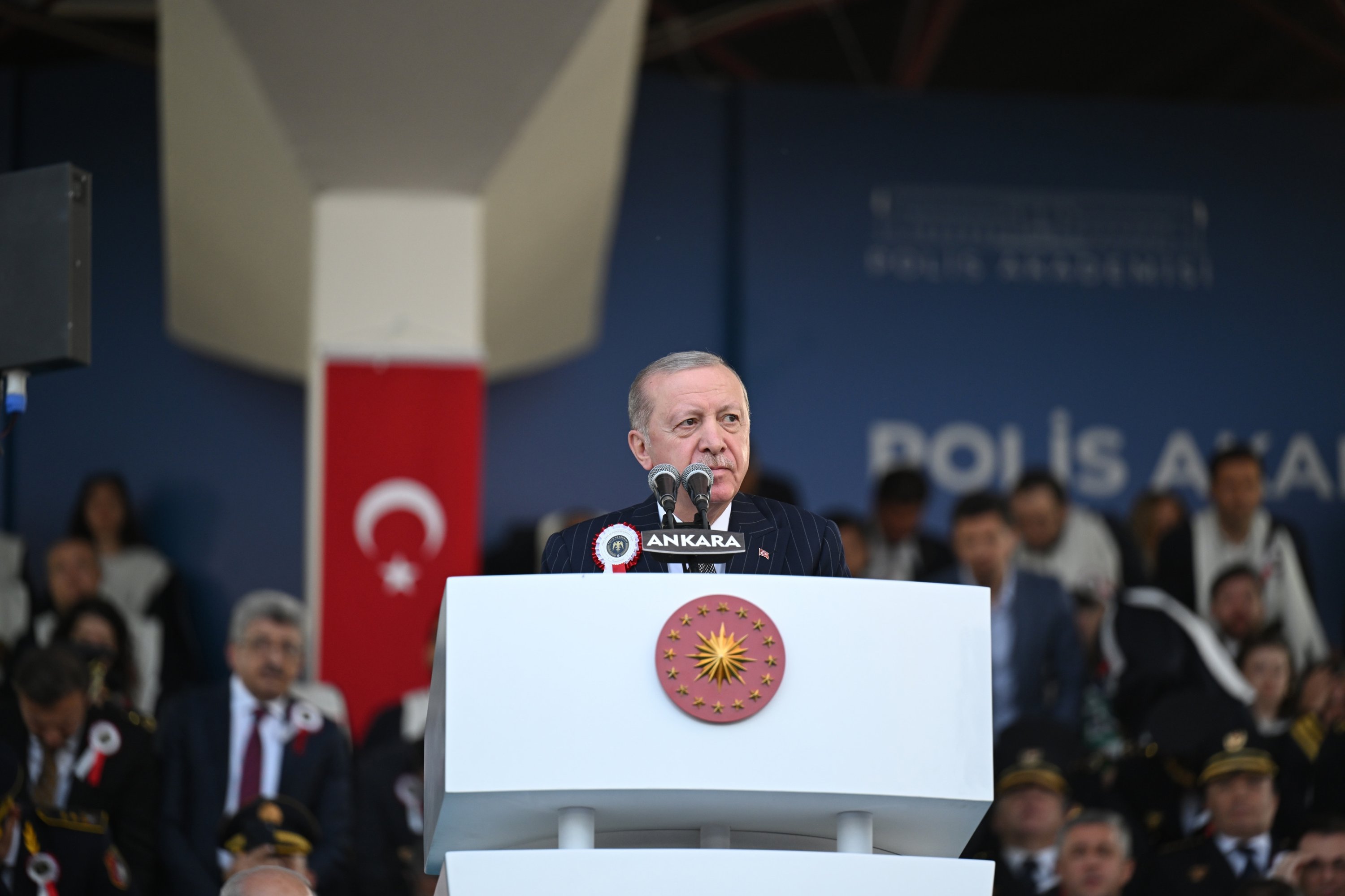
President Recep Tayyip Erdoğan, drawing on nearly four decades of political experience, has sought to manage these opportunities effectively. As the 21st century unfolds, Türkiye is increasingly emerging as a country that will attract attention across a wide range of political, economic, and strategic fields.