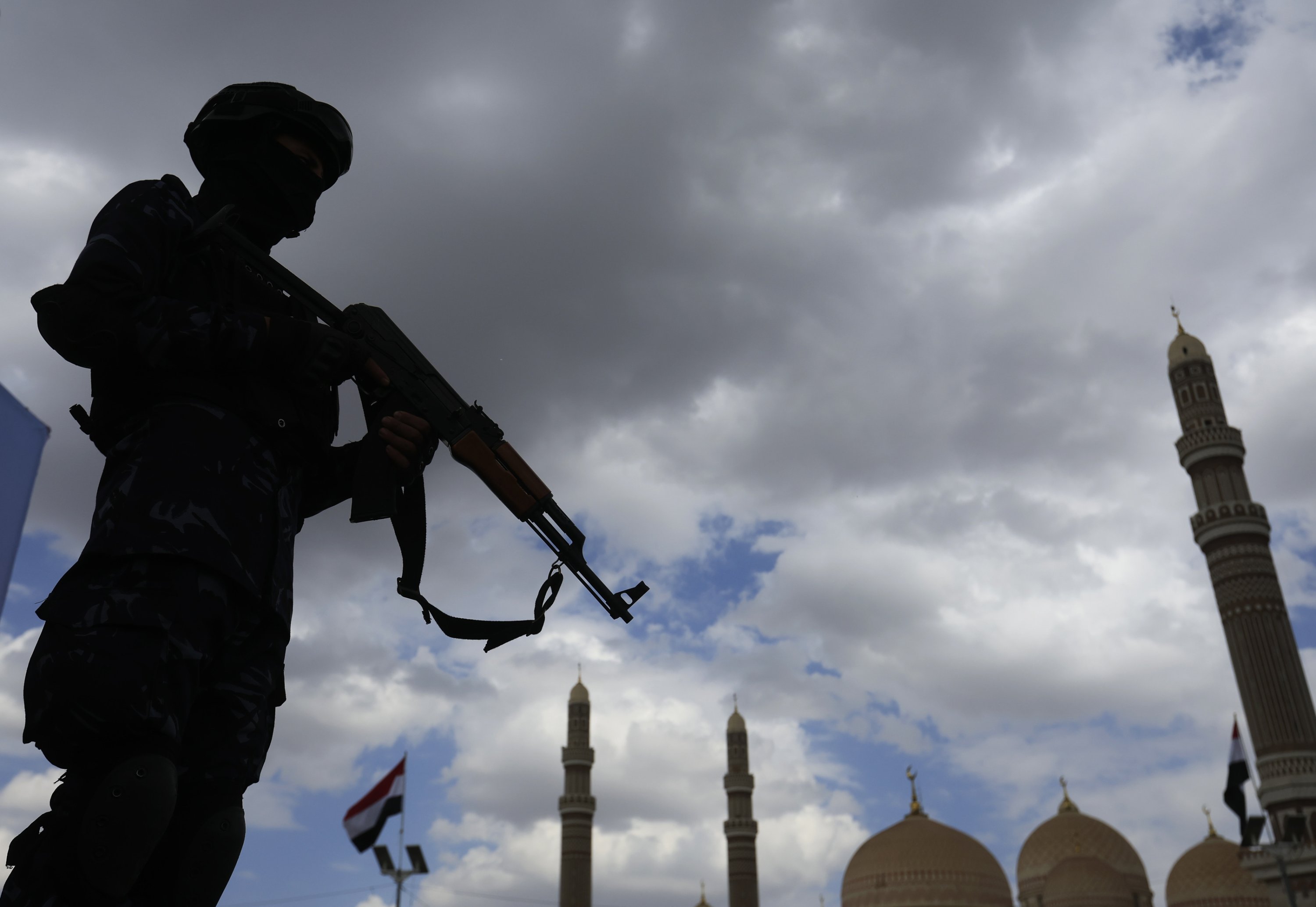
The latest wave of violence in Yemen started last July when Yemen’s internationally recognized government forces prevented an aircraft from Iran from landing at Sanaa airport. In return, the Houthis, claiming that this intervention ended the U.N. mediated truce of 2022, launched a massive offensive against not only government forces but also Saudi Arabia in late August. Thus, the fighting restarted in the already de facto divided country.
The Houthis attacked the Saudi capital city, Riyadh, but the drones launched by the Houthis were successfully intercepted and destroyed by the Saudi-led coalition. Both sides of the conflict affirmed that many sensitive targets in Riyadh were hit by the Houthis, including the Aramco facilities in Yanbu, a strategic port on the Red Sea. Many civilian infrastructure sites were also targeted. Last week, Saudi authorities accused the Houthis of targeting Mecca, the most sacred city of Islam, with a drone that was successfully intercepted. Although the Houthis have strongly denied the claim, many governments denounced the attempt and the Houthis.
It seems that the Houthis want to expand their control in the country. On the one hand, the Houthis want to control the strategic Bab al-Mandeb Strait, one of the most strategic shipping lines, in order to increase their deterrence power. By taking over some of the most strategic cities such as Mocha, Marib, Taiz, al-Bayda and Lahj, the Houthis want to control the passages in the straits. Thus, they will be able to deter the United States and other Western countries from attacking Iran. Control over the Bab al-Mandeb Strait by the Houthis has increased security concerns about the free passage of the Hormuz Strait.
On the other hand, they are determined to continue their attacks against Saudi targets and thus to escalate the tension to change the regional balance of power in favor of Iran, which was recently severely weakened by the U.S. and Israel’s attacks. Iran and its proxies blamed Saudi Arabia and other regional Arab states for being attacked by the U.S. and Israel. By mobilizing the Houthis, Iran attempts to expand the war's geographical scope and to diversify the fronts of the conflict. Eventually, Iran wants to open economic and political fronts in addition to the military one.
However, it seems that these “measures” taken by the Houthis are counterproductive. While they try to increase their deterrence against the attackers, they give excuses to other countries to attack Iran and the Houthis. Considering the upcoming elections in both the U.S. and Israel, it is highly likely that these two states will launch a massive attack against Iran to change the result of the elections in their favor. It seems that the only way that both Trump and Netanyahu can come out of the crisis that they face is the resumption of violence.
Similarly, the cost of the war increases for all countries involved, including the U.S. and Israel. Therefore, especially the U.S. does not want to open a new front that will influence not only the conflicting sides but the whole world. Therefore, the U.S. government negotiated with the Houthi officials in Oman and during the meeting, the Houthis assured the U.S. that they will not target American vessels.
The Houthis banned the passage of Saudi ships only. Thus, they want to put pressure on Saudi Arabia, which uses an alternative pipeline to the Strait of Hormuz. As a result of this thinking, the Houthis hit the East-West pipeline. These attacks ended up with the disruption of Saudi oil and thus increased the price of oil to over $100.
The eruption of violence in Yemen in the last two months demonstrates that the Houthis are a typical proxy actor. Although the Houthis have some independent interests, principles and objectives, they are heavily dependent on Iran. Instead of solving the humanitarian crisis in the country, they try to defend the regional policies of Iran. The Houthis gained international recognition, especially after they attacked Israel for its genocide in Gaza.
According to the United Nations and the International Organization for Migration (IOM), 22 million Yemenis, almost half of the country’s population, are in urgent need of humanitarian assistance. This makes the crisis the world’s worst humanitarian crisis. The country is facing the world’s worst cholera outbreak. Millions of Yemenis are unable to access food, water or health care. Therefore, it is expected that the Houthis should become a Yemeni national force and sever their ties with Iran. This is the only way to achieve political stability in the country and to prevent external interventions into the conflict.