Daily Sabah logo

Politics
Diplomacy Legislation War On Terror EU Affairs Elections News Analysis
TÜRKİYE
Istanbul Education Investigations Minorities Expat Corner Diaspora
World
Mid-East Europe Americas Asia Pacific Africa Syrian Crisis Islamophobia
Business
Automotive Economy Energy Finance Tourism Tech Defense Transportation News Analysis
Lifestyle
Health Environment Travel Food Fashion Science Religion History Feature Expat Corner
Arts
Cinema Music Events Portrait Reviews Performing Arts
Sports
Football Basketball Motorsports Tennis
Opinion
Columns Op-Ed Reader's Corner Editorial
PHOTO GALLERY
JOBS ABOUT US RSS PRIVACY CONTACT US
© Turkuvaz Haberleşme ve Yayıncılık 2025

Daily Sabah - Latest & Breaking News from Turkey | Istanbul

  • Politics
    • Diplomacy
    • Legislation
    • War On Terror
    • EU Affairs
    • Elections
    • News Analysis
  • TÜRKİYE
    • Istanbul
    • Education
    • Investigations
    • Minorities
    • Expat Corner
    • Diaspora
  • World
    • Mid-East
    • Europe
    • Americas
    • Asia Pacific
    • Africa
    • Syrian Crisis
    • Islamophobia
  • Business
    • Automotive
    • Economy
    • Energy
    • Finance
    • Tourism
    • Tech
    • Defense
    • Transportation
    • News Analysis
  • Lifestyle
    • Health
    • Environment
    • Travel
    • Food
    • Fashion
    • Science
    • Religion
    • History
    • Feature
    • Expat Corner
  • Arts
    • Cinema
    • Music
    • Events
    • Portrait
    • Reviews
    • Performing Arts
  • Sports
    • Football
    • Basketball
    • Motorsports
    • Tennis
  • Gallery
  • Opinion
    • Columns
    • Op-Ed
    • Reader's Corner
    • Editorial
  • TV
  • Opinion
  • Columns
  • Op-Ed
  • Reader's Corner
  • Editorial

Will the US withdraw from Iraq?

by Melih Altınok

Apr 25, 2024 - 12:05 am GMT+3
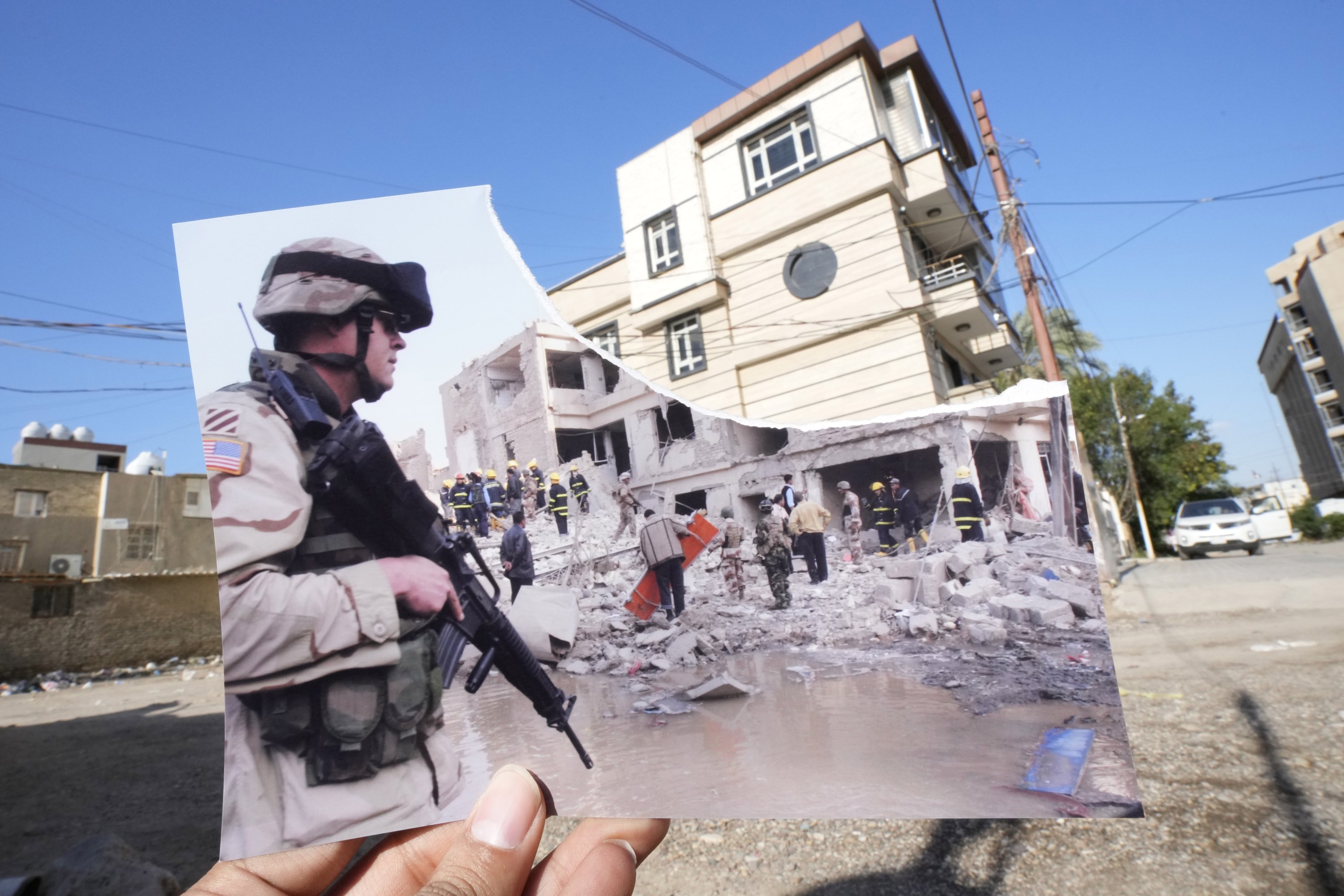
A photograph of a US soldier securing the area near a destroyed building after two car bombs detonated in a central Baghdad residential neighborhood on Nov. 18, 2005, killing at least six people and wounding dozens, is inserted into the scene at the same location, 20 years after the U.S. led invasion on Iraq and subsequent war, Baghdad, Iraq, March 10, 2023. (AP Photo)
by Melih Altınok Apr 25, 2024 12:05 am

For the Biden administration, the primary concern regarding Iraq is to avoid a recurrence of the chaotic scenes witnessed during the withdrawal from Afghanistan

It is being speculated that Israel's ongoing attacks on Gaza since October have prompted a reassessment of the United States' regional policies, sparking discussions within the Joe Biden administration about the potential withdrawal of U.S. troops from Syria and Iraq. Allegations initially raised by major media outlets like Reuters earlier in the year have resurfaced in light of recent developments in the region.

While these claims have not been officially verified, conflicting statements are emerging from official sources regarding the matter. It is widely recognized that the U.S. Department of Defense (Pentagon) has been the most resistant to the notion of ending the "endless wars," a concept often debated during the tenure of former President Donald Trump but never actualized. However, this issue transcends mere institutional sovereignty; arguments such as the ongoing fight against Daesh no longer suffice to convince the American public to support the expenditure of their tax dollars beyond their borders.

Furthermore, the consistent support for withdrawal in Trump's stance, coupled with his rising popularity in polls leading up to the upcoming elections, adds pressure on the Biden administration to address this matter decisively.

According to reports in the international press, the issue of U.S. withdrawal from Syria has not yet been addressed. The current focus lies on the U.S. presence in Iraq. Iraqi Prime Minister Mohammed S. Al Sudani has repeatedly stated that the mission of the U.S.-led coalition forces in the country has concluded and they should withdraw.

Additionally, the Iraqi Foreign Ministry has announced an agreement between Baghdad and Washington to establish a commission aimed at initiating discussions about the future of the U.S.-led military coalition in Iraq. This commission will be tasked with determining a timetable for the gradual withdrawal of troops and the eventual termination of the coalition's presence.

Iraq vs. Afghanistan contexts

For the Biden administration, the primary concern regarding Iraq is to avoid a recurrence of the chaotic scenes witnessed during the withdrawal from Afghanistan. As Trump emphasized, such "ineptitude" not only undermined U.S. hegemony in Afghanistan but also had repercussions extending from the Gulf to Eastern Europe. The resulting power vacuum led to new regional alliances, such as the Saudi-Iran rapprochement, which excluded the U.S. Moreover, it emboldened China and Russia in their pursuit of expanding spheres of influence.

Hawks in the U.S. assert that a scenario akin to the "apocalypse" witnessed in Afghanistan would unfold should they withdraw from Iraq. However, the contexts of the two nations differ significantly. Despite enduring years of U.S. occupation, Iraq maintains a functional state apparatus and an integrated democratic political system, setting it apart from Afghanistan. Moreover, its economy is self-sustaining.

The impediments to normalization in Iraq include not only the presence of the U.S. and proxy groups like the PKK but also Iran's military presence in the region.

In this context, Türkiye's role proves invaluable. Ankara boasts seamless political, commercial and cultural ties not only with Iraq's central government but also with the Kurdistan Regional Government (KRG) in the north. President Recep Tayyip Erdoğan's recent visit to Iraq unequivocally underscored Türkiye's pivotal role in fostering stability in the country.

Should the mutual occupation by the U.S. and Iran in Iraq cease, Türkiye could naturally assume a significant role as a mediator in the transitional phase. Such dialogue would serve as a crucial cornerstone for regional peace.


  • shortlink copied
  • KEYWORDS
    us-iraq relations us withdraw from iraq afghanistan
    The Daily Sabah Newsletter
    Keep up to date with what’s happening in Turkey, it’s region and the world.
    You can unsubscribe at any time. By signing up you are agreeing to our Terms of Use and Privacy Policy. This site is protected by reCAPTCHA and the Google Privacy Policy and Terms of Service apply.
    No Image
    Nature, protests and wildfire: Top pictures of the week
    PHOTOGALLERY
    • POLITICS
    • Diplomacy
    • Legislation
    • War On Terror
    • EU Affairs
    • News Analysis
    • TÜRKİYE
    • Istanbul
    • Education
    • Investigations
    • Minorities
    • Diaspora
    • World
    • Mid-East
    • Europe
    • Americas
    • Asia Pacific
    • Africa
    • Syrian Crisis
    • İslamophobia
    • Business
    • Automotive
    • Economy
    • Energy
    • Finance
    • Tourism
    • Tech
    • Defense
    • Transportation
    • News Analysis
    • Lifestyle
    • Health
    • Environment
    • Travel
    • Food
    • Fashion
    • Science
    • Religion
    • History
    • Feature
    • Expat Corner
    • Arts
    • Cinema
    • Music
    • Events
    • Portrait
    • Performing Arts
    • Reviews
    • Sports
    • Football
    • Basketball
    • Motorsports
    • Tennis
    • Opinion
    • Columns
    • Op-Ed
    • Reader's Corner
    • Editorial
    • Photo gallery
    • DS TV
    • Jobs
    • privacy
    • about us
    • contact us
    • RSS
    © Turkuvaz Haberleşme ve Yayıncılık 2021