For many people around the world, the Nakba is remembered as history. A political event from 1948. A chapter confined to archives, documentaries and black-and-white photographs. But for Palestinians, the Nakba was never simply a moment in the past.
I understood this while listening to the story of Um Hisham, the 93-year-old grandmother of Mohammad Yasin, my friend’s husband. Her story does not begin with politics or borders. It begins with a 16-year-old bride forced to leave her home.
In 1948, Um Hisham fled al-Khalisa, a Palestinian village located 28 kilometers north of Safad. Like more than 750,000 Palestinians displaced that year, she believed the separation would be temporary. Families left carrying house keys, official papers and whatever little they could hold, convinced they would return within days or weeks.
Instead, exile became a lifetime.
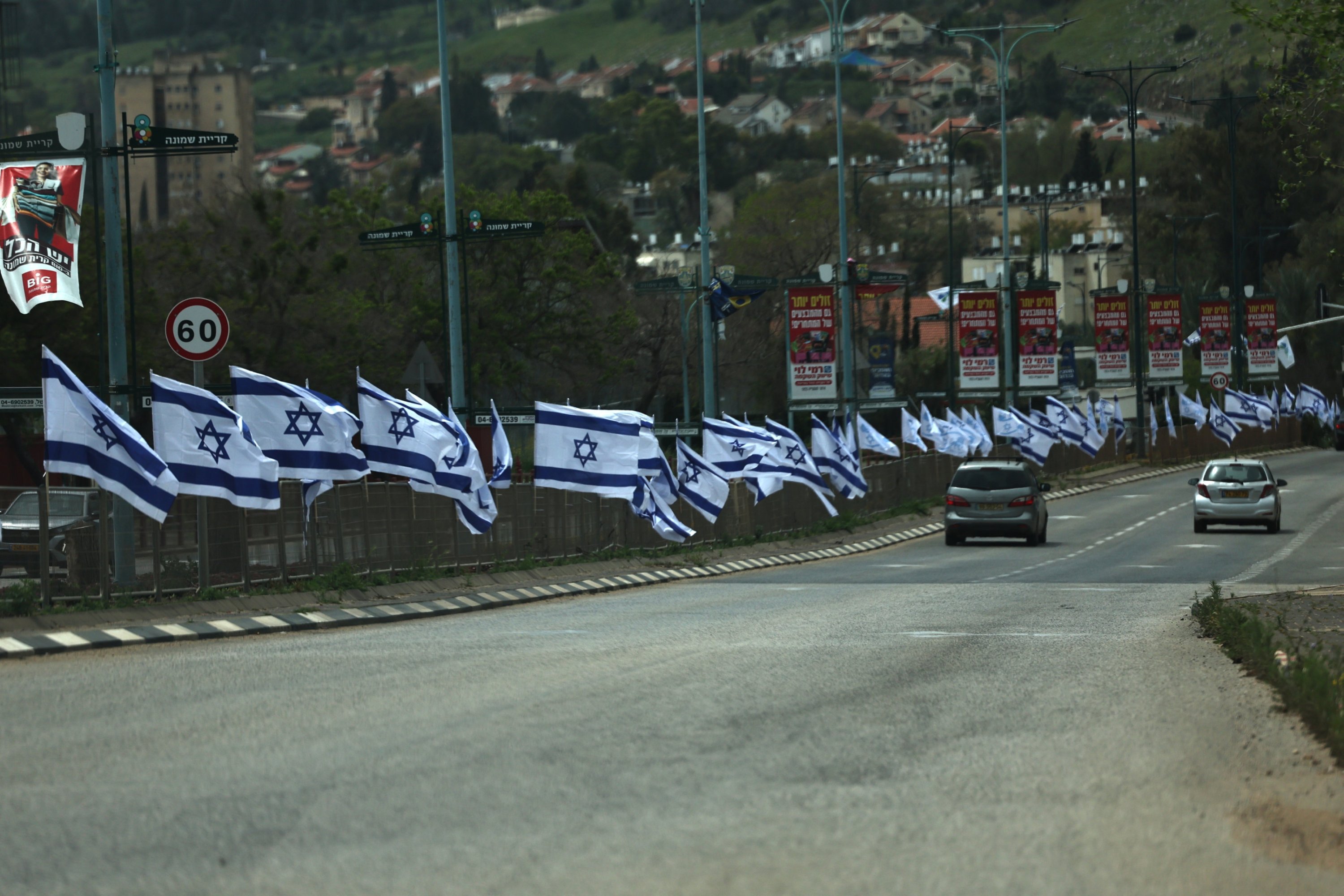
Today, the land where al-Khalisa once stood is known as "Kiryat Shmona." But for Um Hisham, names imposed on maps never replaced the village she carried inside her memory.
She spent the rest of her life in a refugee camp in Syria, where she raised eight sons and three daughters. Her children and grandchildren were all born in exile. None of them has seen Palestine with their own eyes. Yet somehow, al-Khalisa remained alive inside the family, as though they had all left it together yesterday.
Today, Um Hisham’s hearing has weakened. Her eyesight fades. Sometimes it takes her hours to remember who is sitting beside her. Conversations disappear quickly. Faces become unfamiliar.
But mention al-Khalisa, and suddenly everything changes.
She begins speaking for hours without stopping, recalling the smallest details as though she had left only yesterday. She remembers roads, neighbors, weddings, olive trees, seasons and stories with astonishing clarity. The woman who struggles to remember the present still remembers Palestine vividly.
And somewhere in the middle of these conversations, one sentence always returns: “When we return to al-Khalisa.” Not if. When.
I keep thinking about that certainty. About how a woman displaced as a teenager could spend nearly eight decades in exile and still speak about return so naturally, as though home is waiting just beyond the horizon. That is because the Nakba was never only about 1948.
If it were merely history, it would not continue living this powerfully inside generations born decades later. The Nakba survives because its consequences survive. Refugee camps still exist. Families remain separated from their homes. Children continue inheriting displacement before they even understand politics.
For Palestinians, memory became survival.
Grandmothers like Um Hisham became living archives, preserving village names, accents, recipes and histories others tried to erase. In refugee homes, children learn the geography of villages they have never seen before they fully understand the geography of the world around them.
Palestine becomes emotionally inherited.
Mohammad Yasin belongs to one of those generations born in exile. Born and raised in Syria, he has never visited Palestine. Yet whenever al-Khalisa appears in the news, his family’s eyes immediately light up. Not because they are seeing a foreign place, but because they are seeing fragments of themselves.
That is the part the world often fails to understand.
The Nakba does not survive through commemorations or slogans alone. It survives in ordinary human moments. In an elderly woman, remembering the streets of her village more clearly than the room around her. In grandchildren, emotionally attached to a homeland they have never touched. In families who continue speaking about Palestine not as history, but as home.
Colonial projects often rely on time. The expectation is that eventually memory fades, new generations disconnect and the displaced slowly forget where they came from.
But Palestinians continue to disrupt that expectation.
At 93 years old, Um Hisham sometimes struggles to remember who is sitting beside her. Yet she can still speak about al-Khalisa for hours, describing its roads, homes and people as though she left only yesterday.
This article is for Um Hisham and for the 8.1 million Palestinians in the diaspora still carrying home across generations of exile.
The occupation may have renamed it "Kiryat Shmona," but for Um Hisham and for millions of others, it will always remain al-Khalisa.
And perhaps that is what unsettles colonialism most of all: not only that Palestinians remember, but all those who stand with them refuse to forget.