On Christmas Day in 1914, amid the carnage of World War I, there was a series of informal cease-fires among soldiers of the Western powers who had been fighting one another. During the unofficial truce, troops exchanged presents, and perhaps warm blessings too, before resuming the fight all the same. It was a symbolic pause, marking a mutual truce and a temporary halt to death and destruction, justified by the significance of a very holy day. Christmas was meant to be a time of festivities, not of war. Or so it was thought, but not anymore.
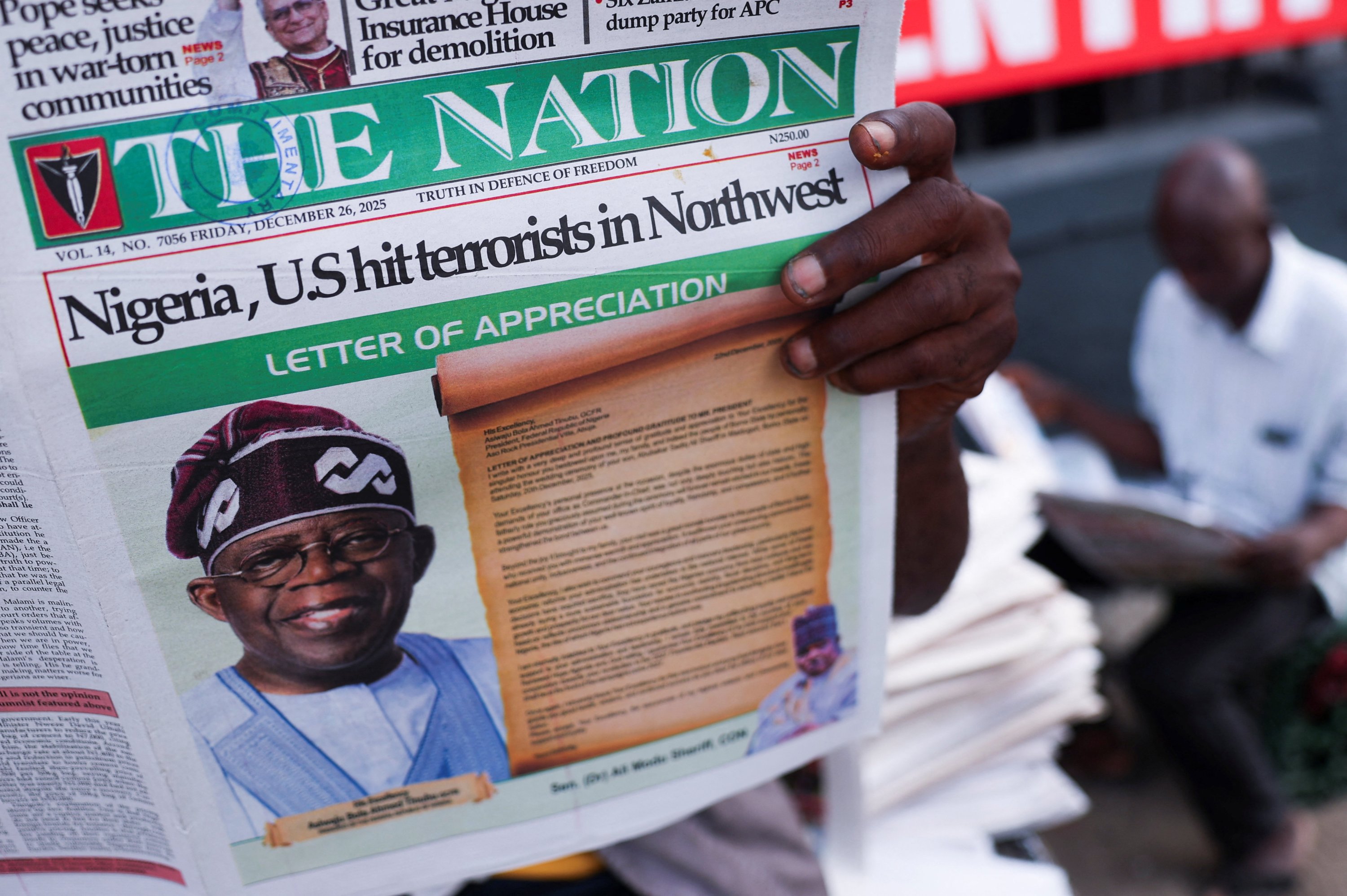
On Christmas Day in 2025, in contrast, U.S. President Donald Trump decided to give a rather twisted “Christmas present” to his adversaries. He ordered “a powerful and deadly strike” against alleged Daesh targets in Nigeria. The purpose of the action, we are told, was mainly to prevent a “Christian genocide” in that part of Africa where “barbarism” was apparently still common. Of course, a reference to “Radical Islamic Terrorism” was not missing in the description either, for otherwise the strike would have served no real purpose for the decision-makers.
For many, any effective military operation against a vicious terrorist organization such as Daesh would be more than welcome, if it were indeed that. Yet, the vulgarity of the language describing the action betrays a certain insincerity, and the very fact that Trump, who self-reportedly lost all his hope of ever going to heaven, would embellish his rhetoric around such actions with a religious flavor gives it all away. If not really a crusade to protect a “peaceful” religious group from a “radical and evil” one, then what is it? What is the purpose of all of this?
Nigeria is deemed “a country of particular concern” by the U.S. State Department, ostensibly because of its “severe violations of religious freedom.” This follows a new strategy of “affirmative action” of promoting various old school “freedoms,” or perhaps a scheme to stop the spread of “censorious” behavior. Whatever it is, it is certainly not limited to Nigeria.
Another country of particular concern, Somalia, for example, was likewise labeled for being “a decadent, backwards and crime-ridden nation, which is essentially not even a country,” in Trump’s words. His particular obsession with U.S. Representative Ilhan Omar has been a frequent theme in the empire’s attacks on that “crime-ridden” nation over the last few months, and the latest discussions around the U.S. residents of Somali descent in Minnesota have seen the peak of racial animosity in the contemporary American political discourse, mainly intended to distract from what is actually happening. Somalians were not criticized for persecuting Christians or even each other. Rather, they were insulted for supposedly being “inferior.” Perhaps the subtext was actually exactly the same in the case of Nigeria – who knows?
Incidentally, sticking to its commitment to the demonization of any perceived “inferior” people, Israel joined in U.S. attacks against Somalia, most notably by recognizing the breakaway region of Somaliland as a sovereign state, blatantly dismissing and indeed violating the sovereignty of the former. Somaliland's leader, Abdirahman Mohamed Abdullahi, welcomed the Israeli move, promising to visit Tel Aviv soon to join the Abraham Accords, hoping to benefit from its many earthly advantages. For such advantages, there appears to be very little Abdullahi would not do – in fact, according to Somali President Hasan Sheikh Mohamud recently and The Grayzone journalist Kit Klarenberg’s report back in April 2025, Somaliland agreed to take in expelled Palestinians from Gaza, essentially in exchange of “legitimization” by the empire – this, maybe initially in the form of official recognition by Israel, as we see today.
It seems that racial animosity in domestic life has its mirror image in foreign policy in the U.S. Or is it the other way around? Is it because a certain foreign policy decision has already been made that now the focus in domestic life demands a suitable shift? Despite having received such an unorthodox Christmas present, the alleged Daesh elements in Nigeria apparently do not pose a direct threat to the heartland of the empire, nor to its favourite regional proxy Israel, whereas Somalis as a national group are supposed to represent just that. Surely, then, by supporting Somalia and condemning the illegal recognition of Somaliland, many of the powerful nations in the region, including Türkiye and Saudi Arabia, would have signaled their fondness for “decadence” and “backwardness” in the eyes of the decision-makers. And, crucially, it may be this fondness that will save them in the end.