The news of Palestinian journalist Anas al-Sharif’s assassination in Gaza struck like a blow to the chest. One image will stay with me forever: the day he was reporting live from Al-Shifa Hospital and suddenly broke down in tears, as the war’s horrors finally shattered his composure. He cried, not because he was weak, but because no human being can endlessly absorb the sight of death, the sound of bombs and the constant shadow of fear.
For more than 600 days, Gaza’s grief has been on repeat. Yet in that moment, Gazans refused to let their voice fall. “Anas, keep going. You are our voice ... keep going,” they called out. And he did, gathering the last threads of strength and hope, rooted in his homeland like an ancient olive tree weathering every storm. His breakdown was not a defeat. It was a reminder that vulnerability and resilience can live in the same breath.
This was the man they killed: a witness, a voice and a conscience. And now, his trust rests with us.
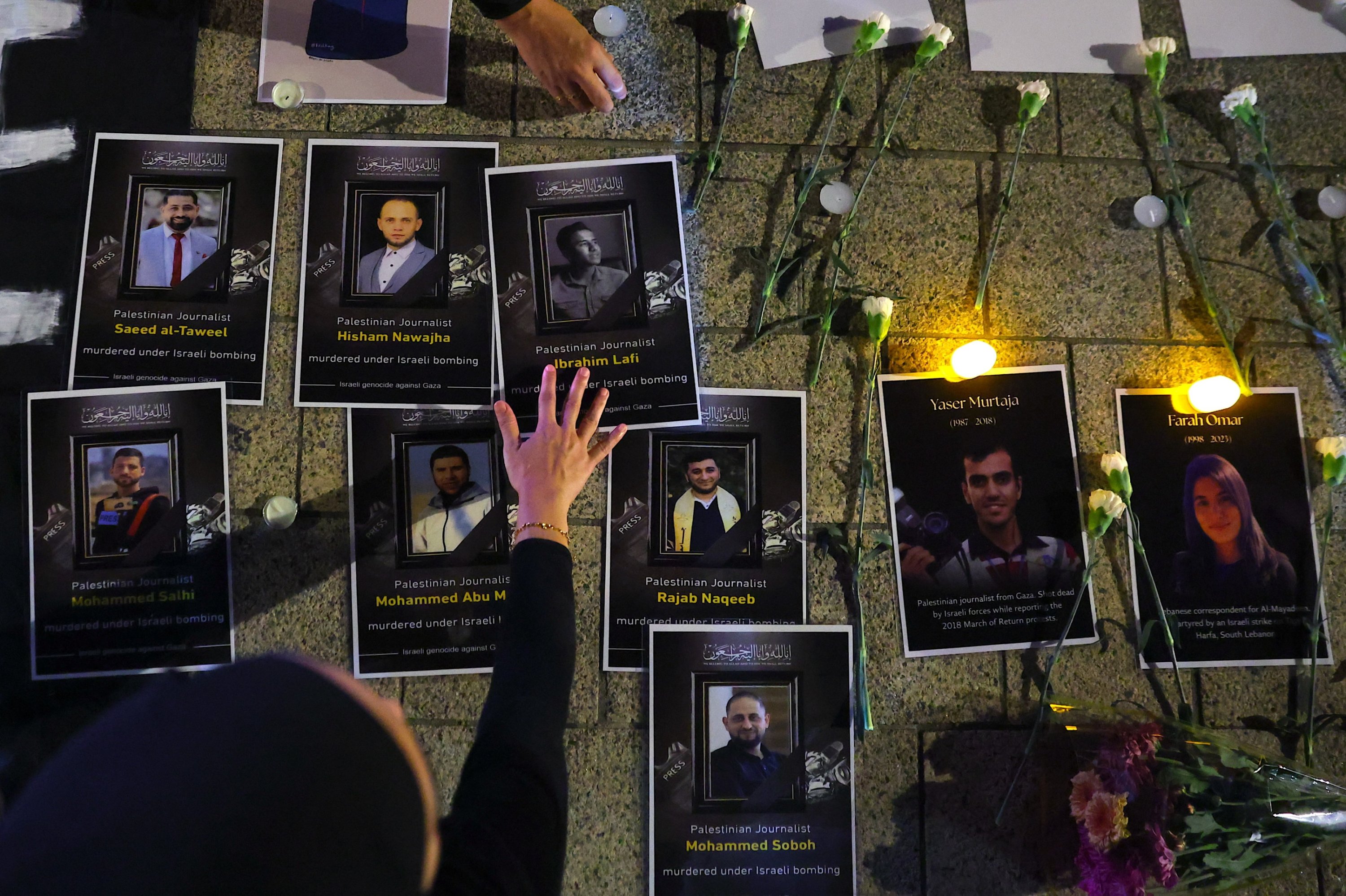
The killing of Anas al-Sharif is not an isolated tragedy. It is part of a deliberate pattern of the targeted assassination of reporters on the ground in Gaza. In a place where foreign press access is tightly controlled and communication is often cut, local journalists are the last remaining witnesses. They document the strikes on homes, the bodies pulled from rubble, the desperate search for food and water. Their cameras and voices are shields against the erasure of truth. And that is precisely why they are targeted, because silencing them means silencing Gaza’s story.
According to Brown University’s Costs of War project, more journalists have been killed in Gaza since the war began on Oct. 7, 2023, than in the U.S. Civil War, World Wars I and II, the Korean War, the Vietnam War, the wars in the former Yugoslavia, and the post-9/11 war in Afghanistan combined. This staggering reality underscores that Gaza has become the most dangerous place for journalists in modern history.
Every image they capture, every testimony they record, chips away at the official narrative that seeks to justify every bomb as “self-defense.” By killing the messengers, those in power hope to control the message to make the world see Gaza only through the lens they choose. It is also psychological warfare: the death of a beloved journalist sends a chilling warning to all others; your voice could be next. Yet, even this cruelty has failed to break Gaza’s will. Reporters there rise each morning, not knowing if they will see the night, because they understand that without their words and images, the people of Gaza would be buried twice; once under the rubble and again in silence.
In every genocide, the battle is fought not only on the ground but also in the realm of narrative. The story that reaches the world determines whether the victims are humanized or erased, whether the perpetrators are held accountable or allowed to act with impunity. In Gaza, controlling the narrative is as strategic as controlling the battlefield. If the truth is silenced, the crime can be reframed as necessity, the victims painted as threats, and the genocide disguised as self-defense.
This is why journalists in Gaza are not just reporters; they are lifelines. Through their images, we see the child clutching a bloodied schoolbook, the father digging with bare hands through rubble, the hospital corridors overflowing with the wounded. They pierce through propaganda and expose the human cost of war. Without them, the world would be left with a single, sanitized version of events, a version in which Gaza’s suffering is invisible and its people vanish from the story of their own destruction. The narrative is not merely a record of events; it serves as a shield for the living, a memorial for the dead, and a warning to the future.
We owe it to Anas and every journalist murdered in Gaza to keep their work alive. They are not casualties of war; they are heroes of truth. And the best way to honor them is to ensure the genocide they died showing us is never forgotten, and never denied.
To Anas, and to every journalist in Gaza who fell with a camera in hand or a microphone still warm from their last breath, thank you. Thank you for standing in the line of fire so the world could see, for speaking when silence would have been easier, for refusing to turn away when the truth was too heavy to carry. You did not just report, you bore witness, you held memory, you gave dignity to the dead and hope to the living.
To your beloved Sham and Salah, know that your father’s work was a thread stitched into the very fabric of Palestine. It was more than reporting; it was an act of love, a promise to his people, a vow never to let their story be buried. He carried Gaza in his heart and his lens, and now the world holds him. Though his body is gone, his voice moves through us still steady, unflinching, alive. We will remember him as more than a journalist. We will remember him as a keeper of truth, a guardian of memory, and a voice that even death could not silence.
To Palestine, you are not just a place on a map, but a trust, a promise and a heartbeat we will never let go of. As Anas carried your story with unshakable courage, we will take your torch too – until the winds of freedom finally sweep across your skies.