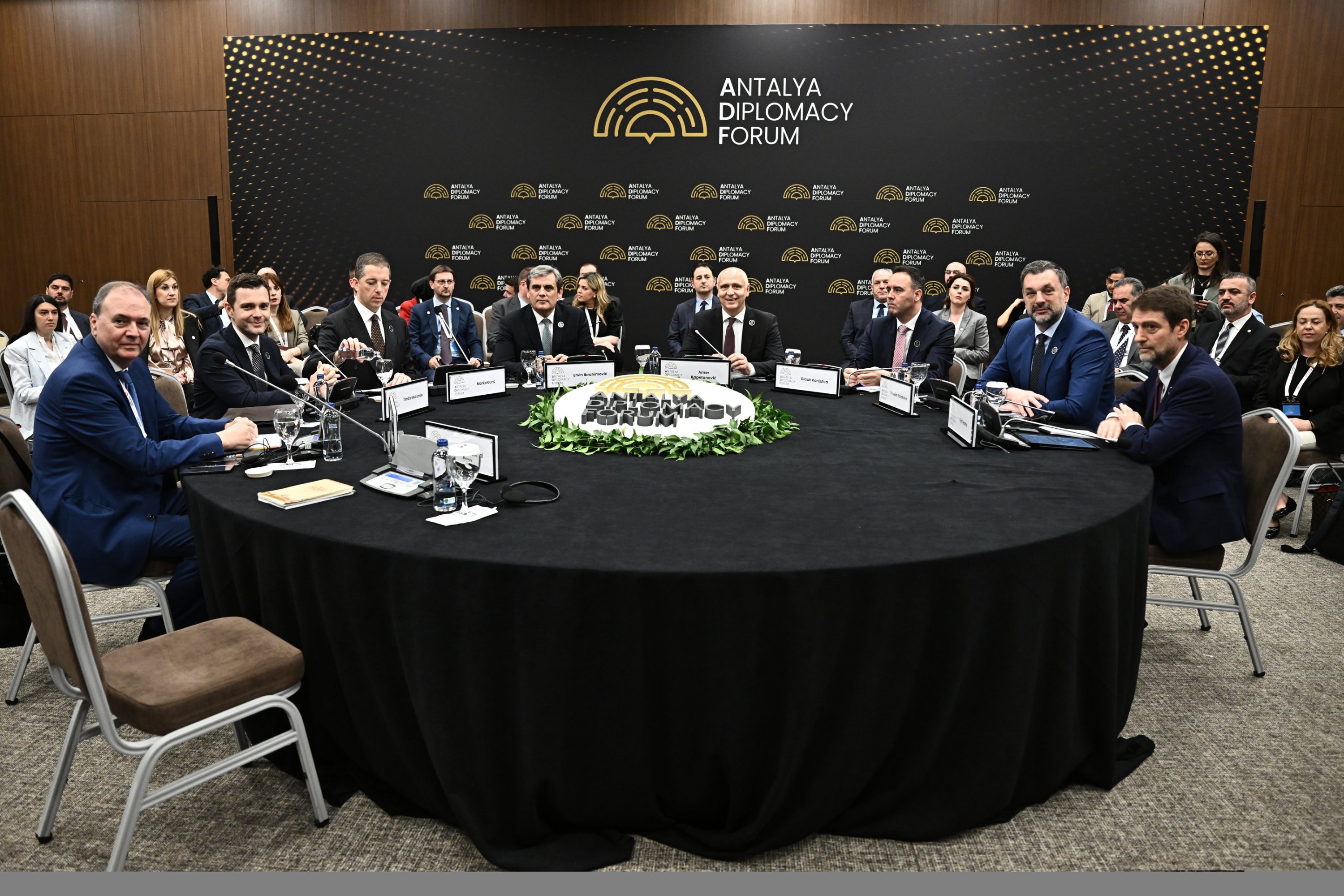
The world has changed, and the rules of international politics have changed with it.
In today’s system, being right is no longer enough. Without power, capacity and strategic resolve, even the most legitimate claims struggle to produce results. The idea of a rules-based global order, built on norms, values and shared principles, has been increasingly tested in recent years. From Ukraine to the Middle East, from energy corridors to migration routes, one reality has become unmistakably clear: Rules only matter when they are backed by power.
Sovereignty in the 21st century is therefore no longer purely political. It is technological, economic and military. States that fail to build these capacities find themselves sidelined, regardless of how justified their positions may be.
This contradiction is particularly visible in the Balkans. For years, the European Union has invested significant resources into the region, offering financial support, institutional frameworks and the long-promised perspective of membership. Yet progress remains limited.
Why? Because the problem is not a lack of money, it is a lack of political will.
EU membership remains the most credible pathway to lasting peace in the region. The union’s greatest achievement has been to transform historically rival states into partners that no longer go to war with one another. However, enlargement fatigue and internal divisions have slowed this process, weakening the EU’s transformative leverage.
Meanwhile, key fault lines persist. Bosnia-Herzegovina continues to face institutional fragility. Tensions between Kosovo and Serbia remain unresolved. Nationalist rhetoric is once again gaining ground across the region.
The most immediate risk is not the outbreak of open conflict but the steady accumulation of unresolved crises. History shows that deferred problems rarely disappear; they deepen, harden and eventually erupt under less manageable conditions.
At the same time, the Balkans are being shaped by a broader strategic drift. The U.S. has become more selective in its engagement, prioritizing other global theaters. The EU, while still present, often appears slow, fragmented and reactive rather than decisive.
This combination creates a vacuum, and in geopolitics, vacuums do not remain empty for long. When credible actors hesitate, others step in. And not all external involvement contributes to stability.
This is where Türkiye’s role becomes both distinct and indispensable.
Unlike distant powers, Türkiye does not approach the Balkans as a peripheral arena or a sphere of influence. It sees the region as a shared space of history, geography and strategic interdependence. Stability in the Balkans is not a policy preference for Türkiye; it is a national interest.
Accordingly, Türkiye’s engagement rests on three principles: dialogue over imposition, partnership over tutelage and prevention over crisis management.
This approach is reflected in a multi-layered presence through investments, active diplomacy, development cooperation and cultural ties rooted in deep historical connections. At the same time, Türkiye maintains open channels with all sides, positioning itself not as a partisan actor but as a stabilizing one.
The evolving global order leaves little room for passivity. A stark reality increasingly shapes international relations: If you are not at the table, you might be on the menu. Türkiye has drawn the necessary conclusions from this change. It no longer defines its role through invitations extended by others but through its own capacity to shape agendas and outcomes.
This reflects not just a change in tone, but a deeper transformation in statecraft.
Türkiye’s multi-directional foreign policy is not a deviation from tradition, but an adaptation to a fragmented and multipolar world. Engaging simultaneously with the U.S., the EU, Russia, China and neighboring regions is not a contradiction. It is a strategic necessity dictated by geography and global dynamics.
The Balkans today are no longer simply Europe’s periphery, nor merely a theater for great power competition. They are a critical junction where security, energy, migration and political stability intersect.
In this context, one conclusion stands out: No sustainable regional order in the Balkans can be built without Türkiye. Türkiye is no longer a peripheral actor observing developments from the margins. It is a central player with the capacity to influence outcomes, manage risks and contribute to stability.
Any strategy that seeks to bypass or exclude Türkiye will ultimately undermine its own effectiveness. Because in the Balkans, as in geopolitics more broadly, a vacuum is not an option. And when the stakes are this high, stability depends not only on intentions, but on actors capable of delivering it.