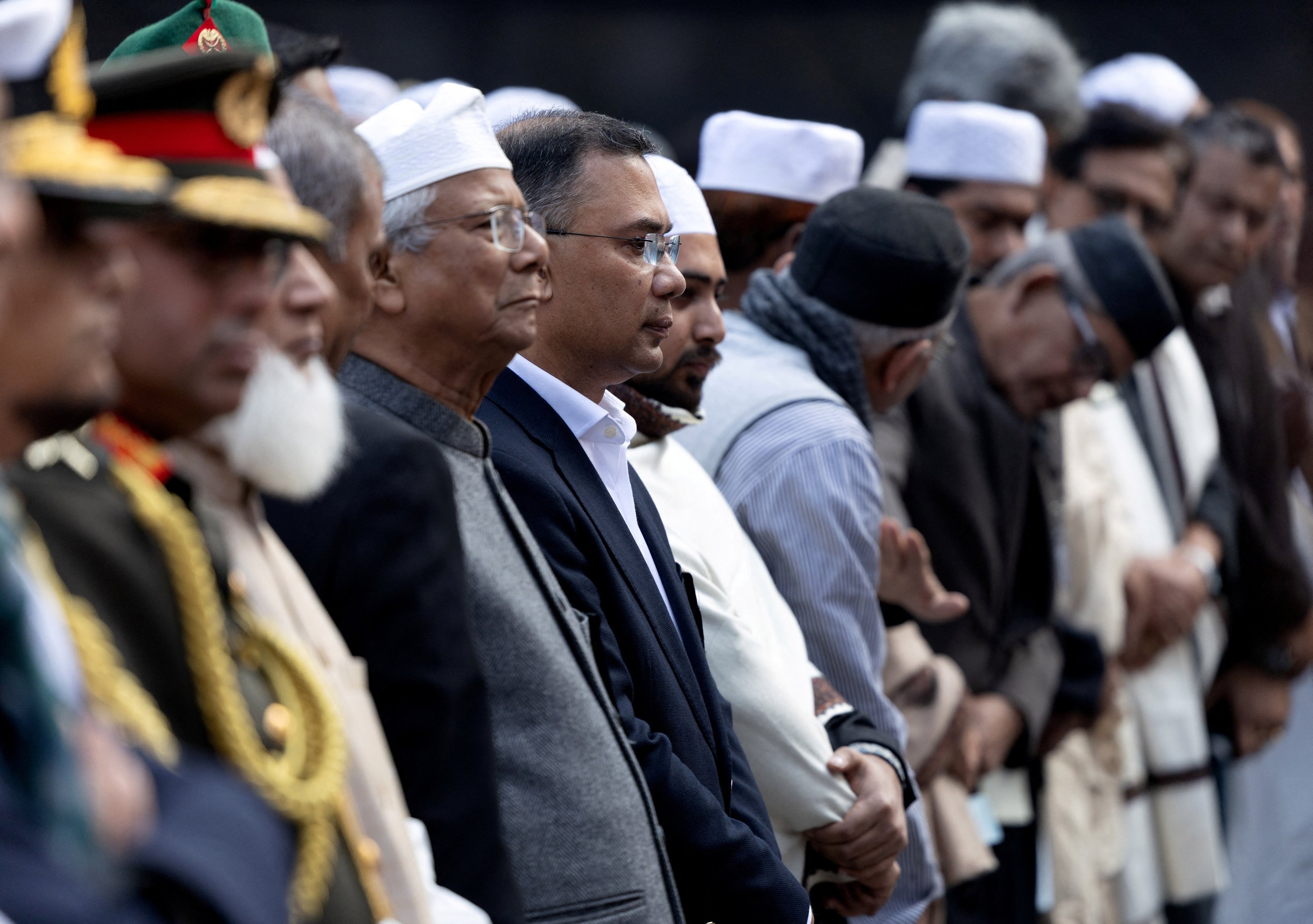
The killing of Sharif Osman Hadi, a popular student leader of Inqilab Mancha, a few weeks ago, has emerged as a defining political shock for Bangladesh at a critical transitional moment. Shot in the head by an unidentified masked assailant in Dhaka on Dec. 12 and later succumbing to his injuries in a Singapore hospital, Hadi’s death has triggered widespread protests, deepened political polarization, and exposed the fragility of both domestic governance and foreign relations under the interim Yunus administration.
Osman Hadi was not merely another student activist. He was a central figure in the student-led uprising that played a decisive role in the ousting of former Prime Minister Sheikh Hasina Wajid. Vocal, charismatic and unapologetically critical of India’s role in Bangladesh’s internal affairs, Hadi had become a symbol of resistance against what he frequently described as “Indian interference” in Dhaka’s political trajectory. His criticism intensified after India granted refuge to Sheikh Hasina, a move that many Bangladeshis viewed as direct political patronage.
Following his death, Inqilab Mancha issued a highly charged statement declaring: “In the struggle against Indian hegemony, Allah has accepted the great revolutionary Osman Hadi as a martyr.” This framing immediately elevated the killing from a criminal act to a politically symbolic event, intensifying street mobilization and radicalizing public discourse. The situation was further inflamed by violent protests targeting media houses such as Prothom Alo and The Daily Star, both perceived by demonstrators as pro-India. Offices were stormed, and at least one building was set ablaze, which were clear sign that the unrest had moved beyond peaceful dissent.
Domestically, Hadi’s assassination represents a severe challenge to the Yunus administration’s credibility. Hadi was widely expected to contest the February 2026 elections from a key Dhaka constituency, making him one of the most prominent emerging political figures of the post-Hasina era. His removal from the political landscape has fueled suspicions of electoral manipulation and targeted violence aimed at reshaping the political field ahead of the polls.
These suspicions were further compounded by statements from Hadi’s brother, Omer Hadi, who publicly accused the interim government of complicity. He alleged that elements within the Yunus administration orchestrated the killing to disrupt the upcoming elections and warned that failure to “immediately expose the entire group involved” would force the government to face consequences similar to the downfall of the Awami League regime. Such accusations, coming from within the victim’s family, have deepened mistrust and placed enormous pressure on the interim authorities.
The domestic crisis is unfolding alongside a rapidly deteriorating security environment. The following shooting of Motaleb Sikder, a senior leader of the student-led National Citizen Party (NCP) and another leader who led the 2024 uprising, by unidentified gunmen, has reinforced fears of a systematic campaign to eliminate prominent anti-establishment figures. The resignation of officials from the Home Ministry only adds to the perception of institutional breakdown and weak civilian control over law and order.
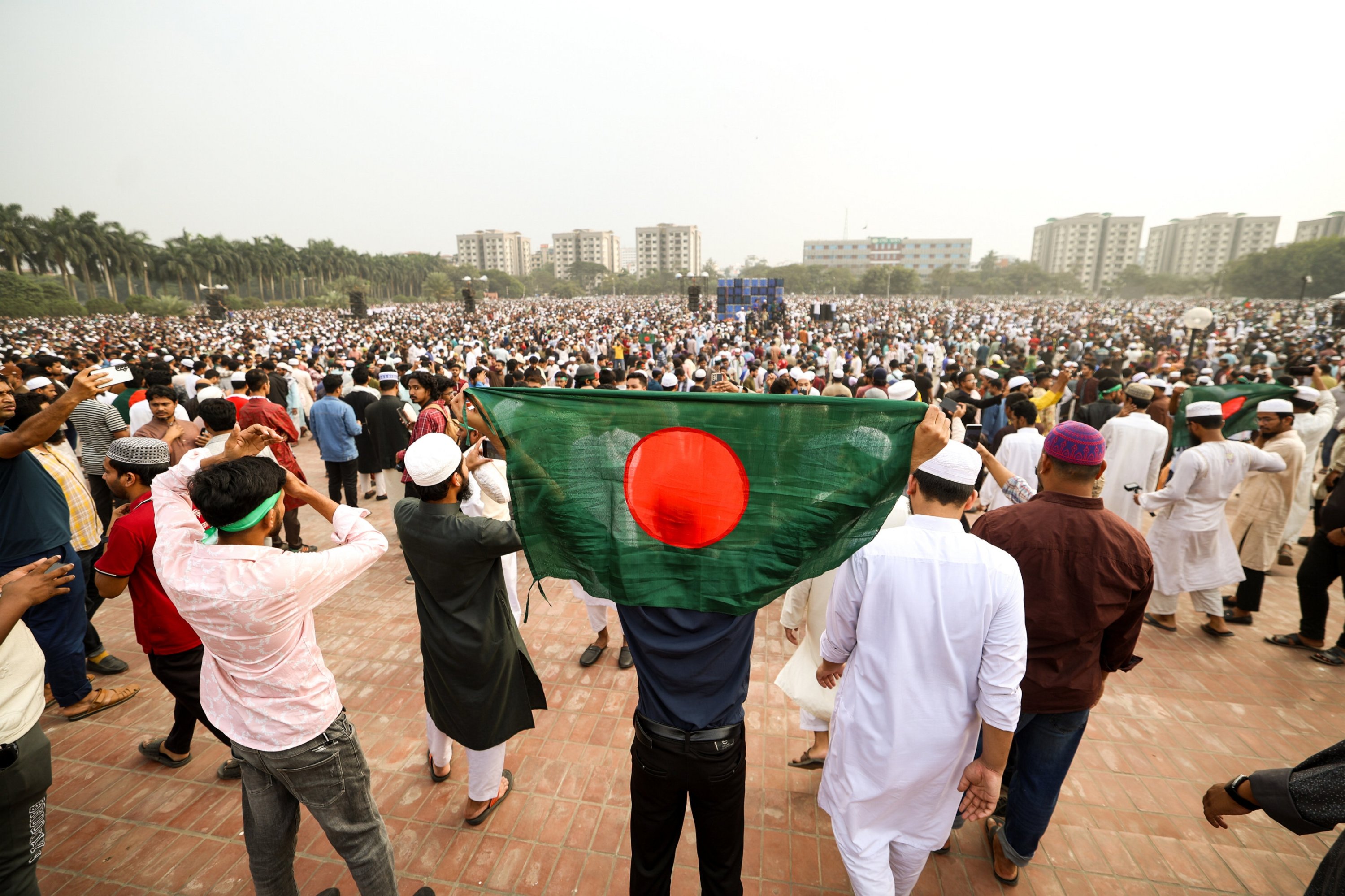
In this scenario, Bangladesh's towering figure and former prime minister, Khalida Zia, has died. Her death has further deepened the political scenario. However, Khalida Zia's son, Tarique Rahman, has returned to Bangladesh after a long exile. His presence to lead the Bangladesh Nationalist Party (BNP) has filled the vacuum of the leadership, and the BNP may be consolidated and emerge as a dominant party in the coming elections.
Rahman's return at this critical juncture is not exclusive of challenges. During his long self-imposed exile, Bangladesh as a society has progressed, and he has to understand the needs of the people. Moreover, his name appeared in WikiLeaks cables in charge of corruption, so his legacy as a politician who doesn't have a clean past will have to put extra effort to gain his reputation. However, the death of his mother will create a soft corner for him in the upcoming elections.
Additionally, his intentions of making an inclusive society based on liberal and secular norms may attract the population at large, which is in search of stability. BNP's disassociation with Jammat-e Islami also signals a more moderate agenda in the upcoming elections, which may also be well received in the international realm.
The Awami League's repressive and long tenure has also brought in the factor of fatigue with one political mandate, so this may also help the BNP to claim the space left by its main rival, while the students led a new political party, NCP, may face challenges in turning their street power into electoral wins.
Equally significant are the foreign policy repercussions, particularly for India-Bangladesh relations. If BNP wins and comes into power with a political mandate, individually or in coalition, it will stress the return of Sheikh Hasina Wajid, which will then be a challenge for India to sustain the pressure. Moreover, in the aftermath of Hadi’s killing, social media narratives have proliferated alleging Indian involvement or indirect facilitation, including claims that the perpetrators fled to India, where Sheikh Hasina herself remains in refuge. While unproven, these narratives have gained traction due to India’s continued refusal to repatriate Hasina despite formal requests from Dhaka, even after she was charged with crimes against humanity. India’s legal justifications have failed to resonate with Bangladeshi public opinion and have instead reinforced perceptions of selective justice and regime favoritism.
For the Yunus administration, this presents a foreign policy dilemma of exceptional magnitude. Failure to address public anger risks further erosion of domestic legitimacy, while escalation against India could destabilize an already sensitive bilateral relationship. The longer the investigation into Hadi’s killing remains inconclusive, the more space opens for conspiracy narratives to dominate public discourse, undermining state authority and regional stability alike.
Ultimately, the killing of Osman Hadi and the shooting of Motaleb Sikder are not isolated acts of political violence. They are stress tests for Bangladesh’s transitional order. If the perpetrators are not swiftly and transparently brought to justice, the February elections risk losing all credibility. At the same time, real or perceived unresolved suspicions surrounding India’s role threaten to push bilateral relations into one of their most hostile phases in recent history.
The Yunus administration now faces a daunting task: restoring public trust, ensuring the safety of political actors, guaranteeing free and fair elections, and recalibrating foreign relations under intense public scrutiny. How it responds to the assassination of Osman Hadi may well determine not only the fate of the upcoming elections, but the broader direction of Bangladesh’s democracy and its regional standing.