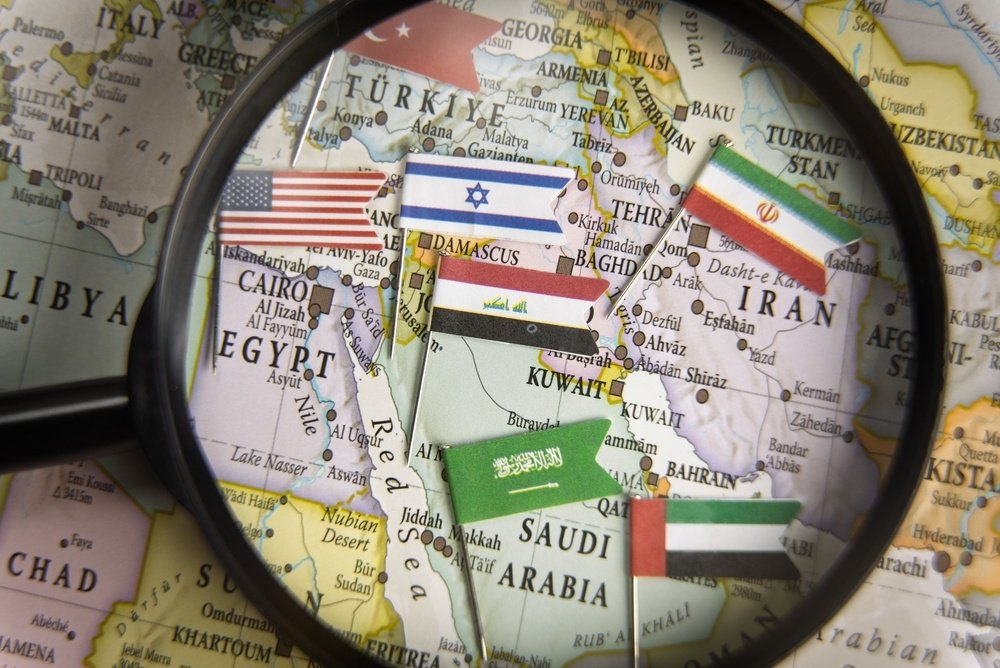
The greatest danger of being a major power is not overestimating one’s strength, but confusing other countries’ calculations with one’s own strategic interests. Türkiye stands at precisely such a geopolitical crossroads today. On one side is the pursuit of independent decision-making, a wider sphere of influence and freedom of action within the international system. On the other is the risk of losing that autonomy by being drawn into regional rivalries.
The interview with Greek Cypriot academic Zenonas Tziarras in Berliner Zeitung and the article in Al-Akhbar discussing Türkiye’s possible military engagements in the Middle East reveal two sides of the same question: can Türkiye turn its growing regional power into strategic independence, or will it exhaust that power in other countries’ conflicts?
Tziarras’s assessment of Türkiye’s pursuit of a “third pole” in the international system is important for understanding the direction of Ankara’s foreign policy. Türkiye seeks strategic autonomy, unwilling to remain entirely dependent on the West but equally reluctant to align itself with a Eurasian axis centered on Russia and China. Nevertheless, it may be premature to argue that Türkiye has acquired the capacity to constitute an independent global pole.
Being a pole requires more than the ability to build relationships with different centers of power: it demands economic resilience, technological superiority, financial depth, military capability and decisive influence over the international order. Although Türkiye has made significant progress in these areas, it has yet to reach a position where it can single-handedly set the rules of the global system. It is, however, a regional power capable of influencing the balance across a vast area stretching from the Balkans to the Caucasus and from the Black Sea to the Middle East and Africa. Its NATO membership and the relations it has developed with the Turkic world and the countries across Asia are the clearest indicators of this position.
Diversifying relationships does not, by itself, secure strategic autonomy, but what matters is how far these relationships strengthen Türkiye’s freedom to make its own decisions. Just as NATO membership does not require Türkiye to follow the same policy as the West on every issue, closer ties with Russia or China do not automatically mean dependence. Strategic autonomy is the capacity to safeguard national priorities without being buffeted between different centers of power.
Türkiye’s ambition to become a third pole should be seen as a goal for the future rather than a reflection of power already attained. The central test in pursuing this goal is to underpin military and diplomatic gains with economic, technological and institutional resilience. Confusing potential with realized power is, after all, one of the strategic mistakes that can exact the highest costs in foreign policy.
The article published in Al-Akhbar assesses Türkiye’s role in the Middle East through Yemen’s historical memory and the consequences of possible military interventions. It suggests that Türkiye and Pakistan could deploy military forces to Saudi Arabia, and that this could lead to a new conflict in Yemen. Yet the text cited does not present this claim as a development substantiated by independent documentary evidence. It would therefore be wrong to treat a hypothetical deployment as settled state policy. Even so, the strategic risk highlighted by the discussion is significant: as Türkiye strengthens its regional partnerships, it may face the danger of taking on other countries’ conflicts. Iran, Yemen and Saudi Arabia are three important, interconnected examples in this respect.
Iran is a country in the region with which Türkiye both competes and cooperates. Although their interests differ in Syria, Iraq and matters of regional security, the two countries’ economic relations, energy ties and shared security concerns make diplomatic dialogue essential. Growing ties with Saudi Arabia, meanwhile, offer Türkiye new economic, political and defense opportunities. Yemen, in turn, is a reminder of the human and historical cost of this rivalry. The Yemen folk song, passed down from the Ottoman era into Anatolia’s collective memory, symbolizes the suffering left behind by wars in distant lands. Historical memory, however, does not automatically impose military obligations on present-day foreign policy decisions.
Türkiye’s past should be regarded less as a reason for new interventions than as experience through which to assess their consequences. The central conclusion to draw from these three countries is this: Türkiye’s increasing regional influence does not require it to become a party to every conflict in the region. Managing competition with Iran, developing cooperation with Saudi Arabia and supporting a political solution in Yemen are not mutually exclusive choices. On the contrary, Türkiye’s strategic autonomy depends on its ability to balance these relationships according to its own priorities. Alliance relationships should not mean adopting other states’ definitions of every threat. Every military engagement must have a clear political objective, a legal basis, a calculated cost and a realistic exit strategy. Otherwise, short-term gains in influence can turn into long-term dependencies. For Türkiye, real success lies not in opening new fronts, but in building the diplomatic weight needed to contain existing conflicts.
The fundamental choice facing Türkiye is less about positioning itself between West and East than about building its own strategic weight in a changing world order. At a time when the global balance of power is being reshaped, traditional alliances are being questioned, and regional actors are gaining greater room for maneuvre, Türkiye’s geographical position, accumulated historical experience, military capabilities and diplomatic relationships offer it significant opportunities. Yet turning these opportunities into lasting geopolitical power depends on Ankara’s ability to manage regional crises and its resolve to safeguard national priorities. This is also where the true substance of its ambition to become a third pole must be sought.
The Türkiye of the future must be a power that underpins its military deterrence with economic and technological independence, deepens its relations with Eurasia, Central Asia, the Middle East and Africa while maintaining its position within NATO and can deliver diplomatic solutions to regional conflicts. To do so, it needs to turn strategic autonomy into a lasting capacity of the state that extends beyond temporary alliances or military interventions. In the period ahead, Türkiye’s weight in the international system will be determined less by the number of regions in which it maintains a military presence than by the number of crises whose course it can change and the areas in which it can implement its own decisions free from external pressure.
The historical suffering recalled by the Yemeni folk song and the ambition for the future embodied in the debate over a third pole place the same strategic responsibility on Türkiye: to know the limits of its power and to use that power at the right time and in the right place. Türkiye’s future position will be shaped not by how effective it is on fronts defined by others, but by how far it can set the agenda according to its own priorities. The real challenge for Türkiye is not to declare itself a third pole, but to establish its own strategic center without being beholden to the will of any pole. The powerful states of the future will not be those capable of entering every war, but those capable of deciding which wars to stay out of and which peace settlements to take the lead in forging.